
← Back
01/05/1917 • 5 views

Rumors of Rasputin's 'Return' Spread Through Petrograd
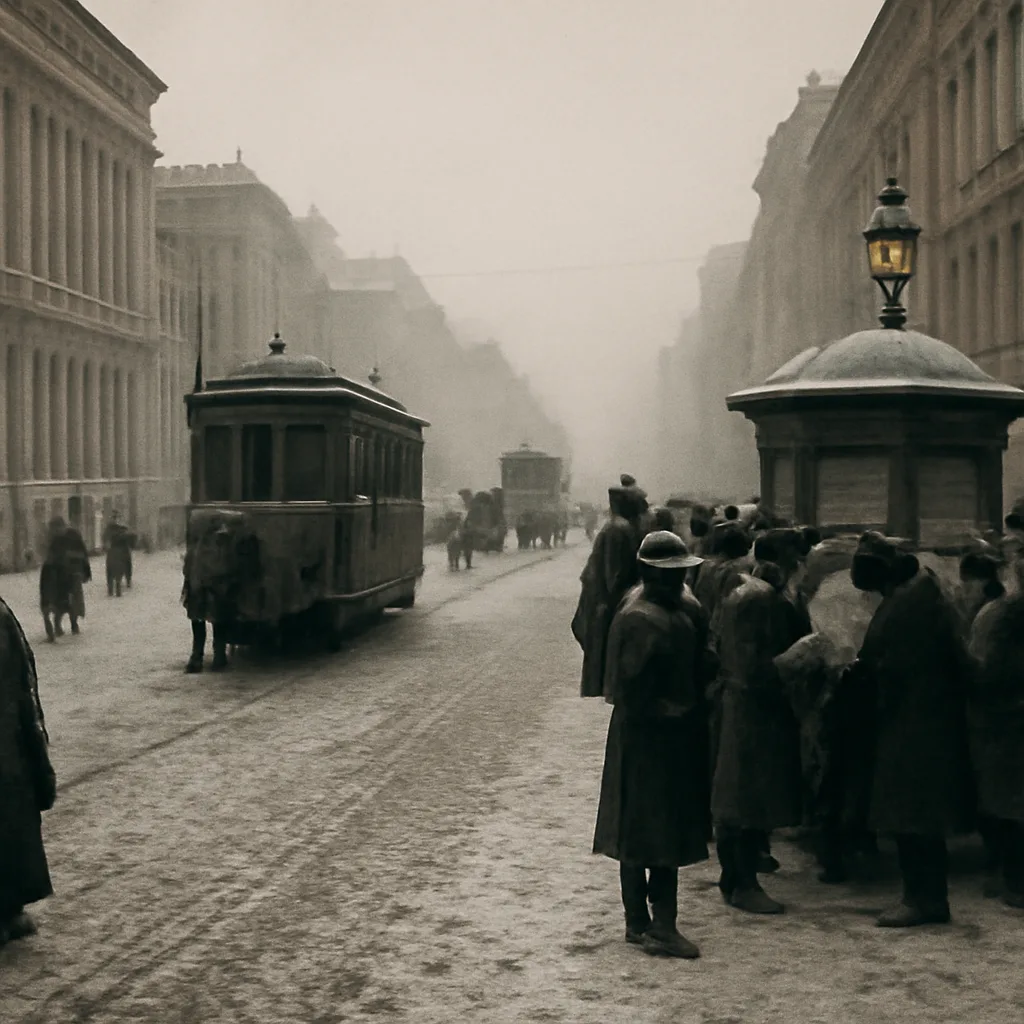
Early 20th-century Petrograd street scene in winter with crowds and horse-drawn trams outside classical buildings, capturing a tense urban atmosphere shortly after Rasputin's death.

After reports of Grigori Rasputin's death reached Petrograd on January 5, 1917, unverified stories and rumors about his possible survival and supernatural return circulated widely, reflecting public confusion and the charged political atmosphere.


On January 5, 1917, news that Grigori Rasputin had been killed in Petrograd circulated rapidly through the capital. Alongside factual reports of his shooting and apparent death, contemporaries and later observers recorded a parallel current of rumor: claims that Rasputin had somehow survived, reappeared, or been resurrected. These accounts did not derive from a single source but emerged from a mix of sensational newspaper items, word-of-mouth in taverns and tramcars, and the fertile imagination of a society already primed by political crisis and mystical talk.

Rasputin—an influential Siberian peasant who had become a controversial figure at the Romanov court because of his perceived influence over Tsarina Alexandra and the health of the heir, Alexei—had long attracted both popular devotion and fierce hostility. By the winter of 1916–17, he was a symbol: for opponents, proof of court corruption and decadence; for some followers, a holy man with purported healing powers. His murder by a group of nobles and conspirators on the night of December 29–30 (Old Style) / December 16–17 (New Style) 1916 was thus an event loaded with significance and emotion.

The spread of resurrection rumors must be understood in this context. Stunned, polarized public opinion and limited, sometimes contradictory press reporting created space for extraordinary explanations. In oral culture, where sensational or supernatural elements enlivened stories, eyewitness reports could be recast or embellished as they moved through social networks. Some witnesses and journalists wrote later that initial accounts of the killing were chaotic: shots, attempts to move the body, and hurried burials or transfers that left details muddy. Such confusion encouraged speculation that Rasputin had not died where or when claimed.

Newspapers of the period—some aligned with political factions, others simply competing for readers—occasionally published unverified rumors or sensationalized versions of events. Satirical journals and pamphlets amplified caricatures and tall tales about Rasputin's supposed mystical powers, which in turn fed rumors of miraculous survival. In poorer districts and among religiously inclined groups, stories that Rasputin would return as a sign or that divine forces would intervene found sympathetic ears.

Historians caution that many of the more supernatural-sounding claims are later embellishments rather than contemporary facts. Primary documentary evidence—police reports, memoirs of participants, and later forensic examinations—supports that Rasputin was murdered and that his body was recovered. However, the persistence of rumors about his resurrection reveals how public belief and rumor can operate independently of official records, especially in moments of crisis. Such narratives served varied social functions: as political commentary, as a way to process trauma, or as entertainment.

The episode also illustrates the limits of authority in policing information. With censorship uneven and the rumor mill active, official statements sometimes had difficulty countering vivid local stories. In the weeks and months after Rasputin's death, his figure continued to loom large in public discourse—as a martyr to some, a demonized scapegoat to others—and rumors of miraculous return underlined the intensity of feeling he provoked.

In sum, while verified evidence supports that Rasputin was killed in late 1916, contemporary Petrograd experienced a wave of rumors that he had survived or been resurrected. These rumors reflected social anxieties, political polarization, and the cultural tendency to interpret extraordinary events through supernatural or symbolic frameworks rather than straightforward factual narratives.

Share this

Email Share on X Facebook Reddit

Did this surprise you?