
← Back
01/05/1981 • 6 views

FBI Admits It Monitored John Lennon
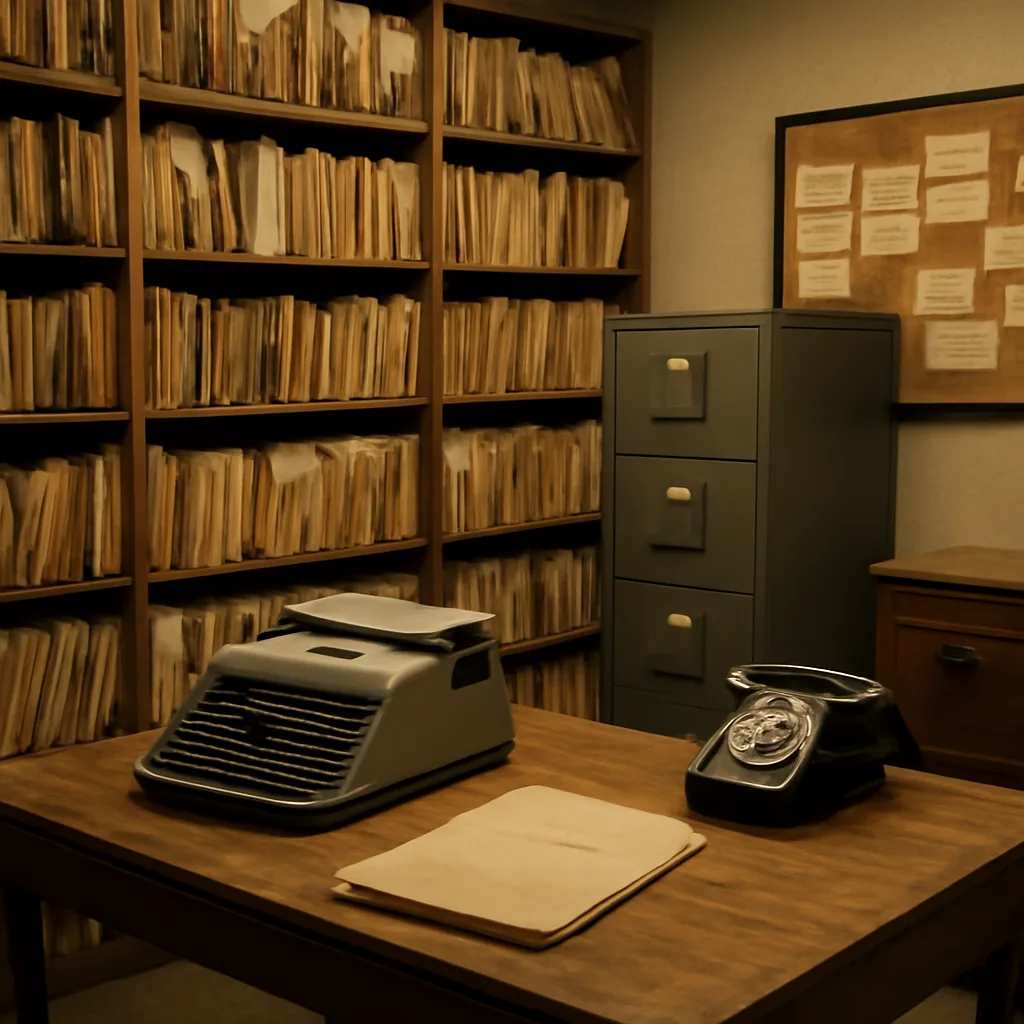
Archival-style scene of a 1970s-era file room with stacked government folders and a typewriter on a wooden table, cast in muted light.

In 1981 the FBI acknowledged surveillance of John Lennon during his years in the United States, confirming long-suspected monitoring tied to his antiwar activism and immigration battles.


Summary
In January 1981 the FBI publicly acknowledged that it had monitored John Lennon while he lived in the United States, confirming investigations and file-keeping that had been suspected by historians, journalists and civil libertarians. The surveillance related primarily to Lennon’s outspoken anti–Vietnam War activism, his association with political activists, and the U.S. government’s efforts to deport him in the early 1970s.
Background and scope
John Lennon, a former member of the Beatles who settled in New York City in 1971, became an outspoken critic of U.S. foreign policy and a visible participant in antiwar and human-rights campaigns. His public activism — including public demonstrations, rallies and his marriage to Yoko Ono, who had connections with political circles — drew the attention of U.S. authorities. The FBI’s interest also intersected with the Immigration and Naturalization Service’s (INS) efforts to revoke or deny Lennon’s residency on grounds including alleged undesirable political associations.
What the FBI admitted
The agency acknowledged the existence of investigative files documenting surveillance and information gathering on Lennon. These files included reports, memos and correspondence compiled by FBI agents and other government officials. The records show monitoring of Lennon’s public statements, contacts with activists, and activities that the bureau deemed relevant to national security or public order at the time.
Legal and political context
The surveillance occurred during a period of heightened government scrutiny of domestic dissent following the 1960s and early 1970s protests. U.S. agencies, including the FBI under J. Edgar Hoover, conducted investigations of antiwar organizers, civil rights leaders and other prominent dissidents. Lennon’s case became notable because it combined First Amendment–related concerns with immigration enforcement: the INS cited alleged past convictions and alleged political affiliations in its attempts to bar Lennon from remaining in the U.S.
Responses and significance
Lennon, his supporters and civil liberties advocates argued that the surveillance and deportation attempts amounted to political harassment aimed at silencing dissent. Scholars and commentators have used the admitted FBI files to illustrate broader patterns of government monitoring of political activists during this era. The admission underscored tensions between national-security rationales and protections for free speech and political association.
Limitations and disputes
Publicly released documents and official admissions provide a partial record. Some specific details, such as the full extent of surveillance techniques used or every internal deliberation, remain unclear or redacted in released files. Historians rely on the available FBI documents, contemporaneous press reporting, INS records and testimony from participants to reconstruct events, noting where records are incomplete or disputed.
Legacy
The FBI’s acknowledgment of monitoring John Lennon contributed to ongoing debates about government surveillance, civil liberties and the treatment of high-profile political critics. Lennon’s experience is frequently cited in discussions about the balance between security and free expression, and it remains a reference point in assessments of U.S. intelligence and law-enforcement activity directed at domestic political figures during the Cold War era.

Share this

Email Share on X Facebook Reddit

Did this surprise you?