
08/18/2020 • 4 views
California Wildfires Annihilate Several Small Towns in August 2020
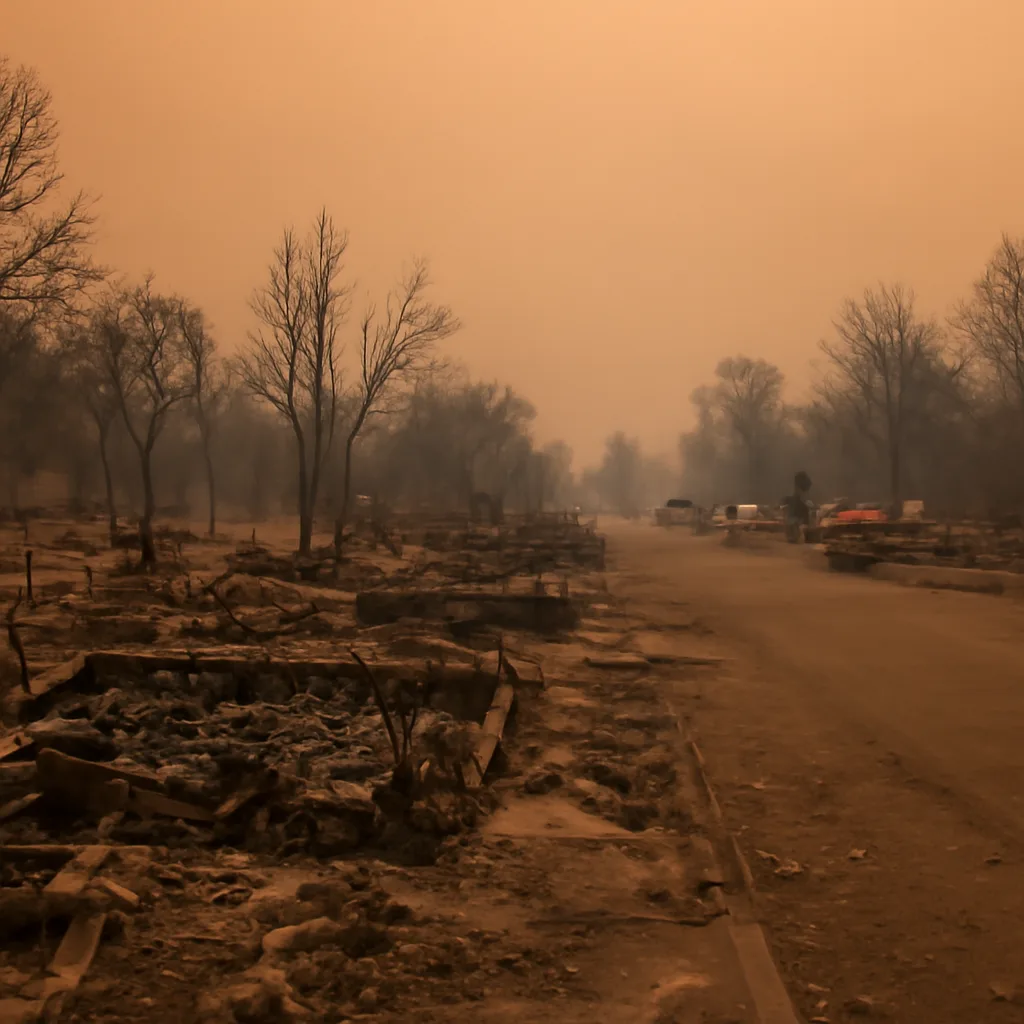
In mid‑August 2020, a series of fast‑moving wildfires in Northern and Central California burned entire communities, destroying homes and infrastructure, prompting mass evacuations and straining firefighting resources amid historic heat and drought.
Among the most heavily impacted areas were parts of Sonoma, Napa, Lake, Butte, and Shasta counties, where entire neighborhoods and small towns suffered catastrophic losses. The August Complex, originally ignited earlier in the summer by lightning and later expanding, became the largest recorded wildfire in California history by area burned. Other major incidents included the LNU Lightning Complex and the Glass Fire in the North Bay, the CZU Lightning Complex on the Santa Cruz Mountains' north slopes, and the Creek and North Complex fires in Northern California, each contributing to town‑level destruction.
Several factors combined to produce the scale of destruction. California was in the midst of a long‑running drought and experienced record‑breaking heat in August 2020; a statewide lightning storm on August 16–17 sparked hundreds of new fire starts. Strong, dry winds such as the Diablo and Santa Ana wind patterns accelerated fire spread and caused spot fires well ahead of main fire fronts. Many of the destroyed structures were wood‑frame residential buildings; older town cores with dense development and limited evacuation routes proved especially vulnerable.
Emergency response involved local, state and federal firefighting agencies, mutual aid from other states and use of fixed‑wing aircraft and helicopters where conditions permitted. Evacuations were ordered for tens of thousands of residents; numerous temporary shelters were established. Utility companies faced scrutiny and legal action over equipment and pre‑fire vegetation management practices, while state officials debated and implemented a mix of power shutoffs, burn bans and resource allocations to reduce near‑term risk.
The human toll included lives lost, injuries, and the displacement of many thousands of residents. Financial losses were substantial: insurance claims, local revenue shortfalls, and the cost of rebuilding public infrastructure all imposed long‑term burdens on affected communities. The fires also caused significant environmental damage, including loss of vegetation, impacts to watersheds and wildlife habitat, and short‑ and long‑term air quality degradation across the region; smoke from the fires traveled long distances, producing hazardous air for millions of residents.
The 2020 wildfires prompted renewed public discussion about climate change, forest management, land‑use planning, and community preparedness. Experts and officials pointed to the interaction of climate‑driven higher temperatures and drier fuels with historical fire suppression practices and expanded development in fire‑prone landscapes as key contributors to increased risk. In the aftermath, many communities faced difficult decisions about rebuilding, defensible space and evacuation infrastructure, while state and local governments pursued planning, funding and policy changes aimed at reducing future losses.
Because wildfire impacts vary by location and the situation evolved over weeks, exact counts of destroyed structures, economic losses and other metrics were updated repeatedly by county offices, Cal Fire and federal agencies. For local residents and researchers, official post‑fire reports, county assessor records, and agencies such as Cal Fire and the U.S. Forest Service provide the most detailed, verified data on damage and recovery progress.