
← Back
08/18/1931 • 4 views

Catastrophic 1931 floods inundate China’s Yangtze basin
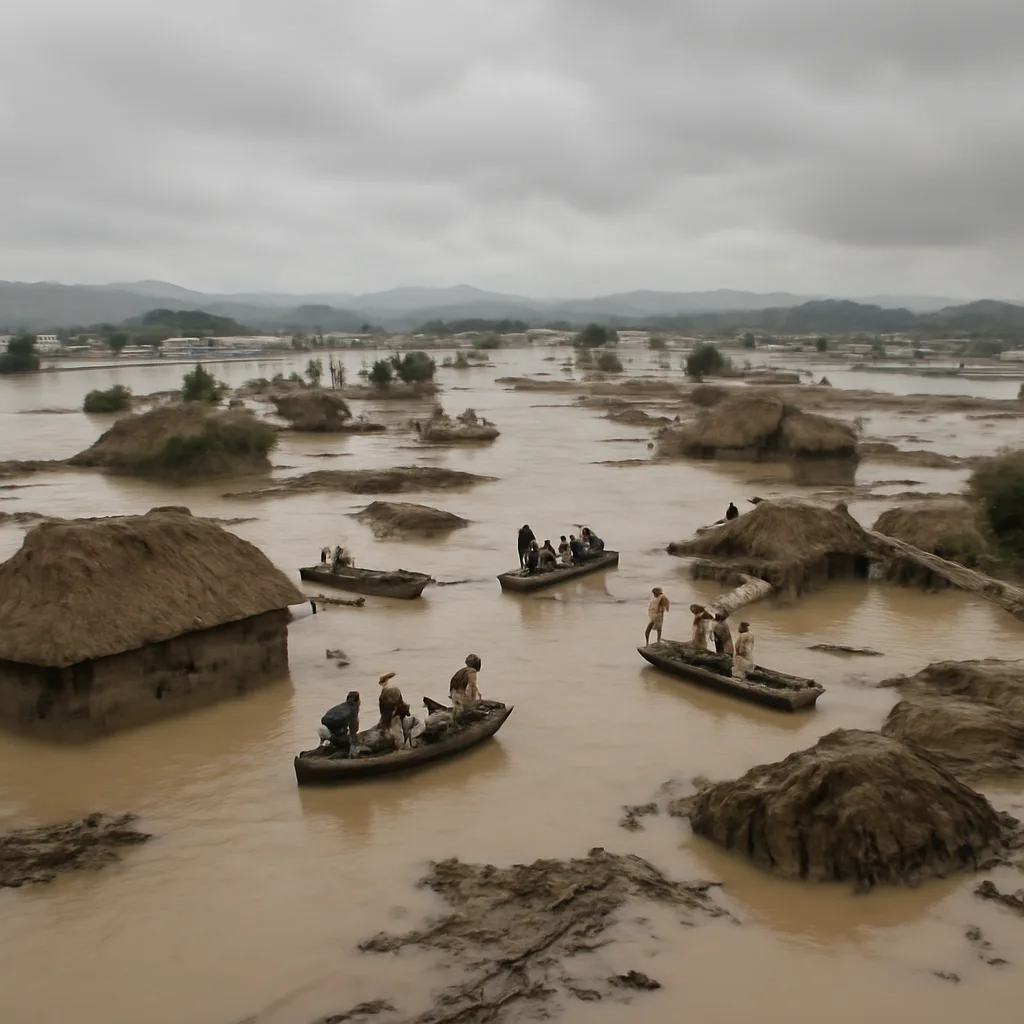
Flooded Yangtze River plain in 1931 showing submerged fields, damaged dikes and scattered thatched houses partly underwater; people and boats navigating shallow floodwaters in a rural landscape.

Flooding across the Yangtze River basin in August 1931 produced some of the deadliest inundations in modern Chinese history, displacing millions, destroying crops and infrastructure, and triggering widespread famine and disease.


In the summer of 1931, China experienced one of the most severe and widespread flood disasters of the 20th century when unusually heavy rains and swollen rivers converged across the Yangtze (Chang) River basin. Beginning with concentrated downpours in the spring and aggravated by a typhoon season and a sequence of intense rainstorms, river levels rose dramatically through July and August. On and around 18 August 1931, many sections of the Yangtze and its tributaries breached dikes or overtopped flood defenses, sending vast quantities of water across the surrounding plains.

The geographical scope was extensive: provinces along the middle and lower Yangtze — including Hunan, Jiangxi, Anhui, Jiangsu and parts of Hubei and Zhejiang — were particularly hard hit. Urban centers and rural counties alike saw protective levees fail, inundating farmland, towns and transportation routes. Contemporary and later estimates of the human toll vary; conservative counts of deaths directly and indirectly associated with the flooding range into the hundreds of thousands, while some sources and aggregate tallies that include ensuing disease, starvation and displacement report fatalities exceeding a million. Record-keeping at the time was inconsistent, and scholars note wide variation in casualty figures depending on methodology and the inclusion of indirect deaths.

Beyond immediate loss of life, the floods caused catastrophic economic and social disruption. Millions were made homeless as houses and villages were swept away or left uninhabitable; large areas of cropland were submerged for extended periods, destroying harvests and seed stock at a critical moment for food production. The inundations severed rail and river transport lines, crippled local markets and impeded relief efforts. In the weeks and months that followed, outbreaks of waterborne disease, shortages of drinking water and limited access to food relief compounded the humanitarian crisis.

Relief responses came from a mix of local initiatives, charitable organizations, private donors and limited government resources. Relief work faced major logistical challenges: damaged infrastructure, the scale of displacement and shortages of supplies made coordination difficult. International media coverage and foreign aid were significant factors in some areas, but many survivors relied on local coping mechanisms and mutual assistance. The disaster also had political and social consequences in a period of internal upheaval in China; it intensified public debate over disaster preparedness, water control and the capacity of authorities to protect vulnerable populations.

Hydrologists and historians identify multiple contributing factors to the 1931 catastrophe. Climatic conditions that year included heavy monsoon rains and anomalously persistent storms; some analyses point to a series of meteorological events that produced unusually high runoff across the Yangtze watershed. At the same time, existing dike systems, river channels and floodplain management practices were inadequate for the scale of floodwaters experienced. Deforestation, land-use changes and the limits of contemporary hydraulic engineering also played roles in how floodwaters propagated across the plains.

The 1931 Yangtze floods remain significant for their scale and consequences. They prompted efforts — unequal and uneven across regions — to reassess flood-control strategies, including dike reinforcement, river management and broader infrastructural interventions. The event is studied as a stark example of how extreme weather, environmental conditions and human infrastructure interact to produce large-scale disasters, and it is remembered for the profound human suffering it caused amid a turbulent period in China’s twentieth-century history.

Because primary sources and casualty estimates from the period differ, historians caution against citing a single definitive death toll. Instead, the 1931 floods are best understood as a catastrophic, multifaceted disaster with long-term social, economic and environmental impacts across the Yangtze basin.

Share this

Email Share on X Facebook Reddit

Did this surprise you?