
← Back
10/11/1972 • 4 views

British troops raid nationalist neighborhoods in Belfast amid unrest
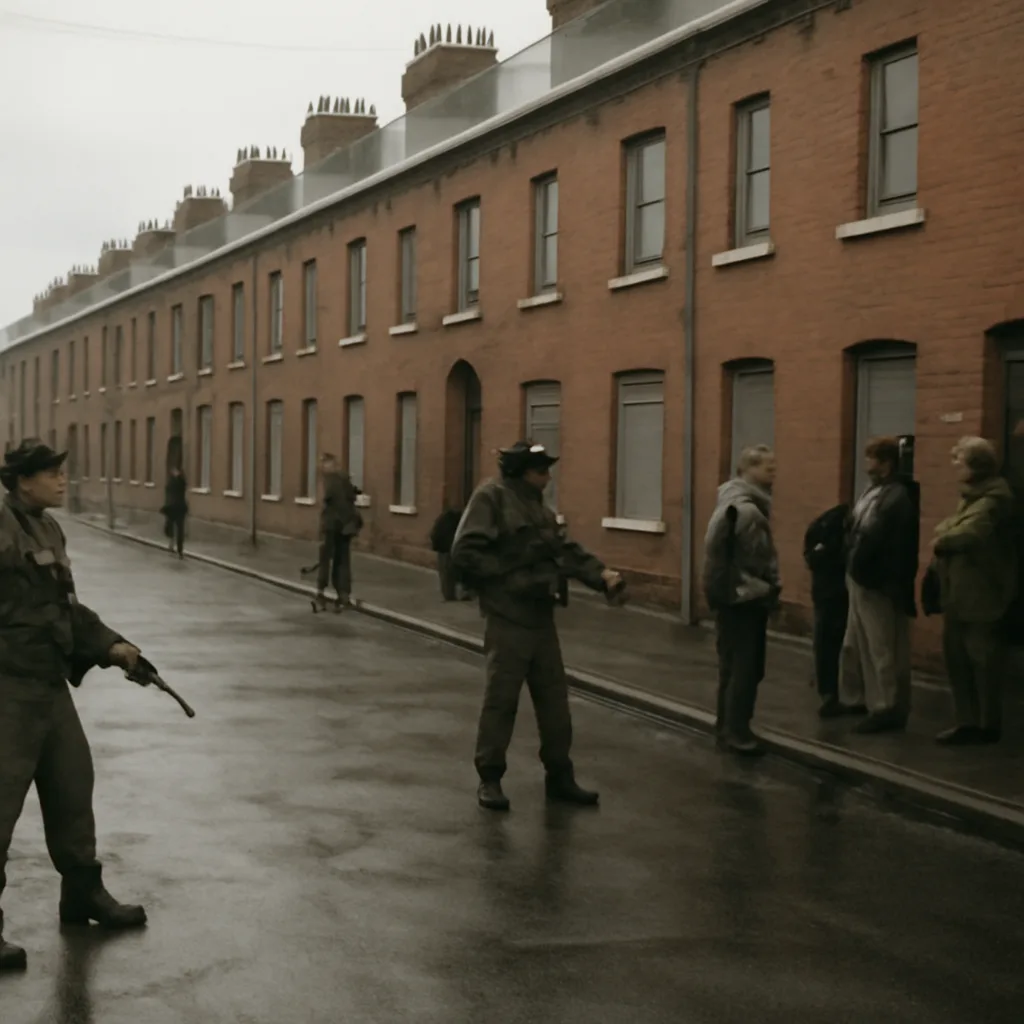
British soldiers conducting a street search in a Belfast nationalist neighbourhood in 1970s-era clothing and gear, with shuttered terraced houses and residents watching from doorsteps.

On 11 October 1972, British Army units conducted raids in nationalist areas of Belfast during a period of intense sectarian violence and security operations in Northern Ireland. The actions formed part of wider efforts to locate weapons and detain suspects amid escalating conflict.


On 11 October 1972 British Army units carried out raids in predominantly nationalist (Catholic) districts of Belfast as part of ongoing security operations during a year marked by intense violence in Northern Ireland. 1972 was the most lethal year of the Troubles: after Bloody Sunday in January and frequent bombings, loyalist and republican paramilitaries, the Royal Ulster Constabulary (RUC), and the British Army were engaged in sustained operations and counter-operations across Northern Ireland.

The raids of October 11 fit into a pattern of British security strategy at the time, which involved house searches, cordons and searches, and targeted detentions aimed at disrupting paramilitary activity and seizing arms. In Belfast, such operations were often concentrated in nationalist neighborhoods—areas where the Army and RUC suspected support for the Provisional Irish Republican Army (PIRA). Soldiers would enter residential streets, secure properties, and carry out systematic searches. These actions frequently provoked protests, confrontations, and claims of heavy-handedness from nationalist residents and political representatives.

Contemporary reports and later scholarship note that searches could lead to the temporary detention of local men for questioning, seizure of weapons or explosives when found, and significant disruption to everyday life. The practice of conducting raids at night or in the early hours heightened tensions, as residents reported fear, property damage, and sometimes physical clashes with security forces. Nationalist politicians and community leaders criticized the operations as collective punishment or indiscriminate, while unionist leaders and security officials defended them as necessary measures to protect the public and suppress paramilitary activity.

The legal and political context shaped reactions to the raids. In 1972 direct rule from Westminster had been imposed (March 1972) after Stormont was suspended, and security policy was under close scrutiny in London and in Northern Ireland. Allegations of rights abuses, internment without trial (which had been used earlier in 1971), and excessive use of force were recurring controversies. Independent inquiries, press accounts, and human rights groups documented incidents where searches and arrests were contested; however, precise accounts of any single raid on 11 October 1972 vary between sources, and detailed, corroborated records of every operation are not always available publicly.

Local civilians affected by raids often described long-term social consequences: erosion of trust between communities and security forces, increased support for paramilitary protection in some quarters, and psychological trauma from repeated night-time operations. Conversely, security authorities reported that searches contributed to the disruption of bombings and shootings by seizing arms or intelligence. The immediate tactical outcomes of the October 11 operations—such as numbers detained or weapons recovered—are reported inconsistently in contemporary media and official statements, reflecting the chaotic and contested information environment of the period.

Historically, actions like the October raids must be seen against the broader trajectory of the Troubles, which combined political conflict, communal division, and a pervasive security presence in everyday life. For historians and researchers, examining primary sources—newspaper archives, official military and police records, eyewitness testimony, and later academic studies—helps build a fuller picture, while acknowledging disputes over detail, scale, and legality. The October 11 raids in Belfast are one episode among many that illustrate how security policies and community responses interacted during one of Northern Ireland’s most turbulent years.

Share this

Email Share on X Facebook Reddit

Did this surprise you?