
02/25/1872 • 7 views
The first documented disappearance of a ship without a wreck: the brigantine Hawaiian Maid, 1872
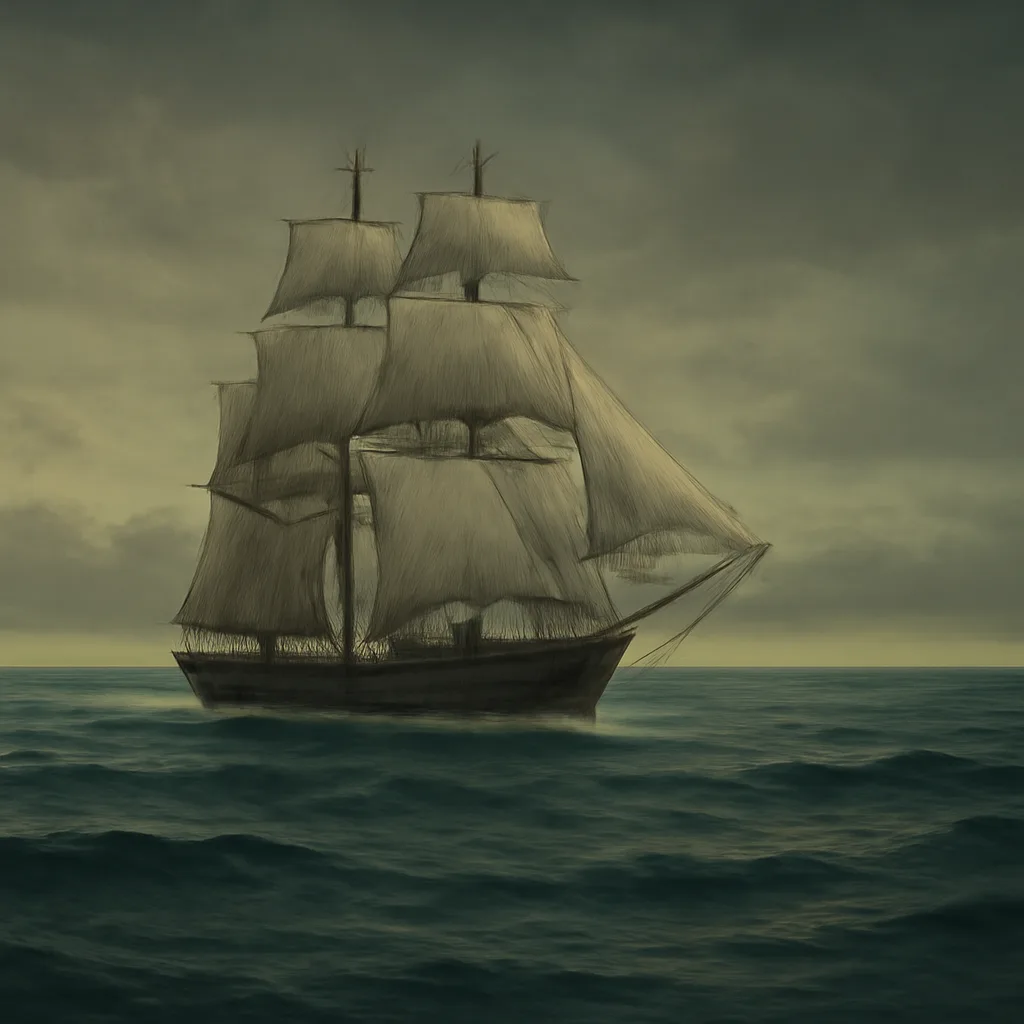
On 25 February 1872 the American brigantine Hawaiian Maid sailed from San Francisco for Honolulu and vanished without trace; no confirmed wreckage or survivors were ever found, making it one of the earliest well-documented cases of a complete disappearance at sea in the merchant era.
Owners and insurers advertised the ship as missing, and newspapers of the period carried notices and sparse reports. Over subsequent months several vessels reported sighting debris and an oil slick in locations not inconsistent with her projected course, but none of the material could be definitively tied to the Hawaiian Maid. No survivors, bodies, logbooks, masts, spars, or identifiable wreckage were recovered. Local maritime records and contemporary news accounts treated the vessel as lost with all hands.
Maritime loss without wreckage was not unknown in the 19th-century Pacific—storms, sudden squalls, fires, explosions, or catastrophic structural failures could send a ship to the bottom quickly, leaving little or nothing afloat. Collisions with submerged hazards or uncharted reefs could likewise result in rapid sinking. The Hawaiian Maid’s disappearance is notable in historical records because of the combination of an established last known position, an expected arrival window, and the absence of any corroborating wreckage or survivors despite searches.
Historians and maritime researchers treat the case as an early, documented example of a ship vanishing at sea during the merchant-sailing era. Because records from 1872 are fragmentary and contemporaneous investigative techniques limited, hypotheses about cause remain speculative. No surviving official inquiry report has been located that attributes the loss to a particular event. The lack of physical evidence leaves the Hawaiian Maid’s fate unresolved in the historical record.
This disappearance sits within a broader pattern of 19th-century maritime losses that shaped improvements in safety and communication: more systematic logkeeping, better charting of hazards, the later adoption of steam-powered assistance, and, in the decades that followed, wireless telegraphy and organized search procedures. While the Hawaiian Maid itself did not prompt a single identifiable reform, cases like it contributed to the perception that long-distance sea voyages carried catastrophic, sometimes inexplicable risks.
Because primary sources on the Hawaiian Maid are limited to period newspapers, shipping registers, insurance notices, and port records, specific details such as exact passenger lists (if any beyond the crew), the vessel’s build particulars, and contemporaneous eyewitness testimony are incomplete or absent. Where archives hold copies of ship registers or insurance filings, they confirm the vessel’s departure and subsequent classification as missing, but they do not provide conclusive cause. As with many 19th-century disappearances, the absence of wreckage is the defining fact preserved in surviving documentation.