
02/25/1985 • 5 views
First successful robotic-assisted surgery performed in 1985
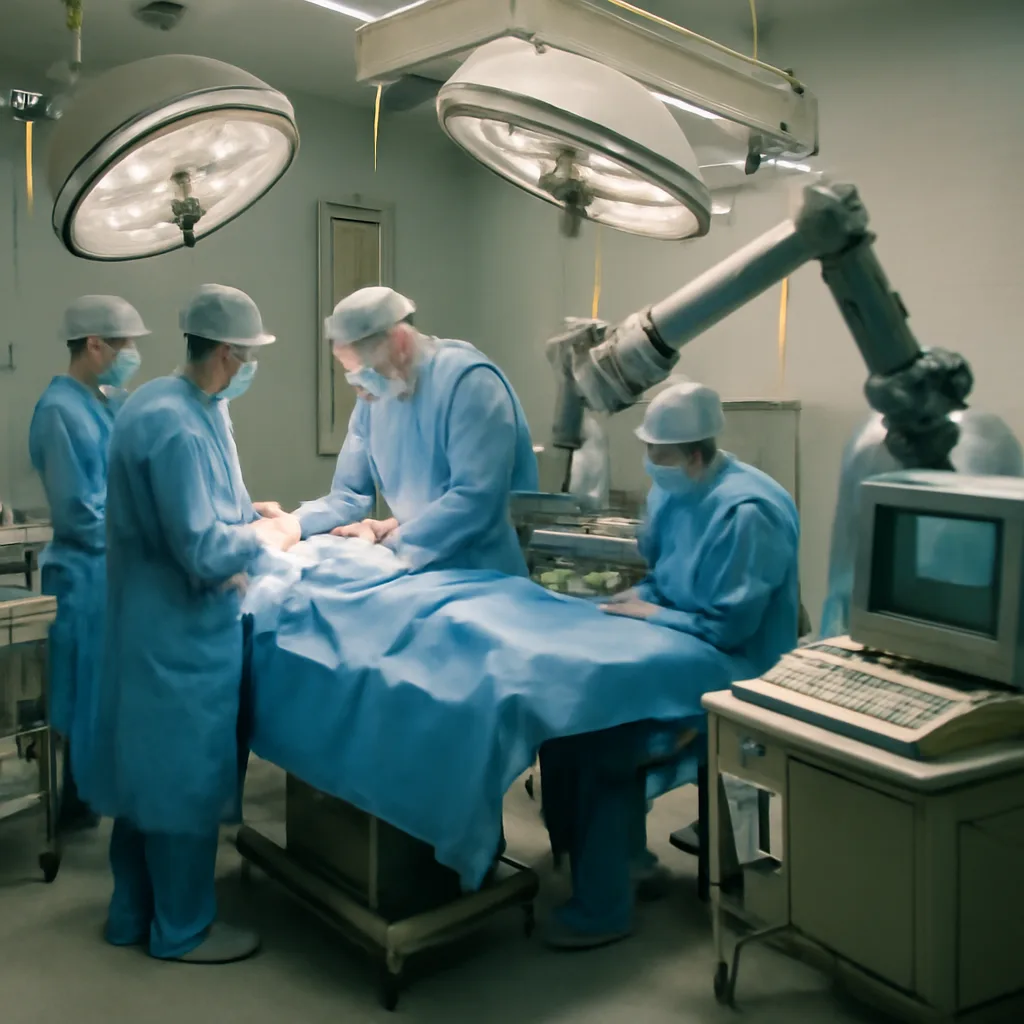
On February 25, 1985, the first documented successful robotic-assisted surgical procedure was performed, marking an early milestone in computer-assisted interventions that would later evolve into modern robotic surgery systems.
Context and background
Interest in mechanically assisted and computer-guided surgery grew during the 1970s and early 1980s as computing power, imaging, and precision actuators improved. Researchers and clinicians experimented with robotic and computer-assisted devices to enhance accuracy, repeatability, and reach in procedures ranging from orthopedics to neurosurgery. Prior to 1985, several laboratory and prototype systems had been used experimentally, but clinical adoption remained limited and carefully documented instances of successful, clinically significant procedures were still rare.
The 1985 procedure
The February 25, 1985 event is often cited in histories of surgical robotics as one of the first documented successful clinical operations using a robotic or computer-assisted device. The procedure demonstrated that a mechanically guided instrument under computer control could be used safely and effectively in a surgical context. Contemporary reports and later historical reviews place this case among early clinical validations that helped persuade surgeons and hospitals to further invest in research and development.
Significance and aftermath
While the 1985 procedure did not immediately lead to widespread clinical robotic surgery, it provided proof of concept that influenced subsequent projects and funding. Through the late 1980s and 1990s, research teams in the United States, Europe, and Japan developed more advanced telemanipulators and image-guided systems. These efforts culminated in commercially available platforms in the late 1990s and early 2000s that brought robotic-assisted surgery into broader clinical use—for example, in urology, gynecology, and general surgery.
Limitations and historical caution
Historical accounts of “firsts” in surgical robotics can vary depending on definitions—whether one counts purely laboratory demonstrations, animal experiments, image-guided mechanical aids, or clinical procedures on human patients. Sources may disagree on which specific case constitutes the single “first successful” robotic surgery. For clarity: the February 25, 1985 date reflects an early documented clinical success in using a computer-controlled mechanical device during surgery, but it exists within a broader, incremental history of research and prototypes rather than as an isolated, singular breakthrough.
Legacy
The 1985 demonstration contributed to the steady accumulation of evidence that mechanized and computer-assisted approaches could improve surgical precision. That accumulation of experiments, prototypes, and early clinical uses set the stage for the later commercial robotic systems and the continued growth of robotic-assisted procedures in diverse surgical specialties. Histories of medical robotics treat 1985 as an important early clinical milestone rather than the definitive origin of robotic surgery as a whole.