
06/04/1938 • 4 views
First Public Performance Featuring an Electric Guitar Startles 1938 Audiences
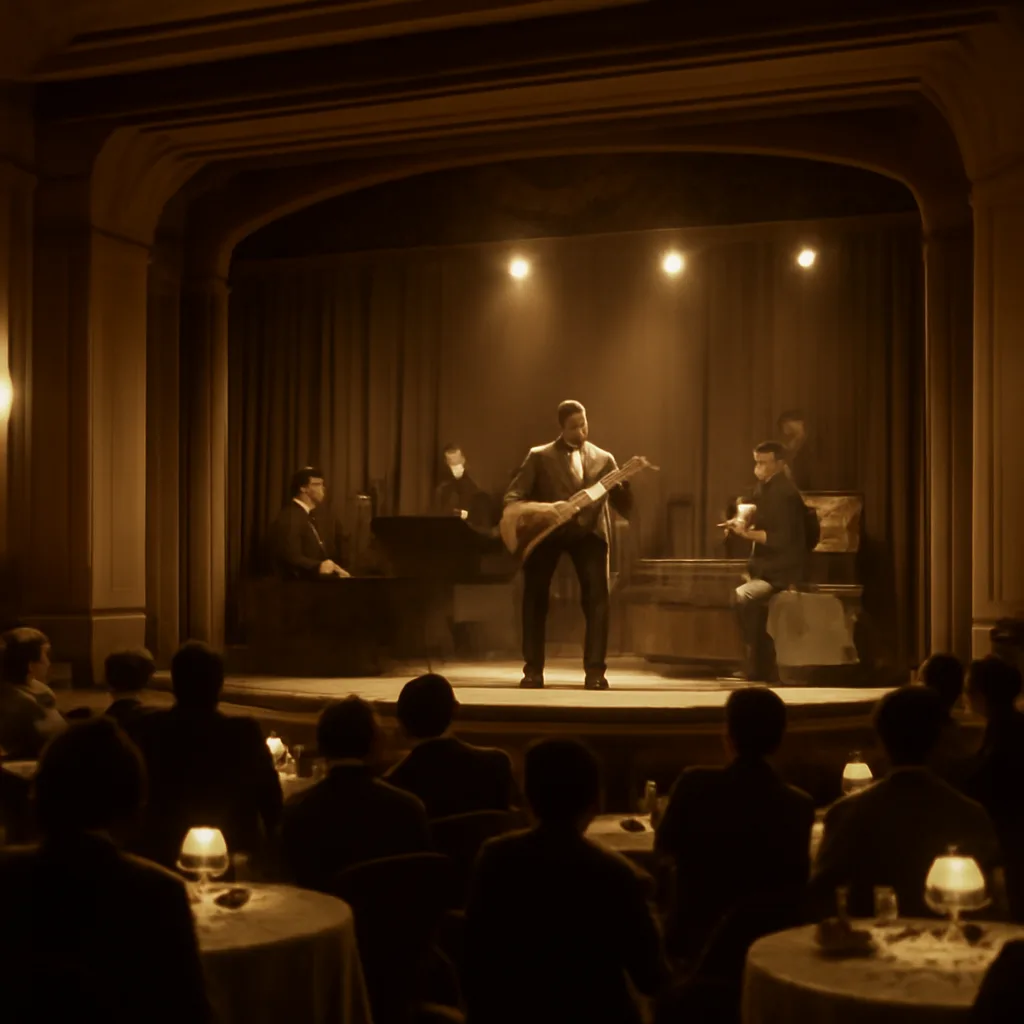
On June 4, 1938, a public concert in Los Angeles featured an amplified electric guitar—an early commercial pickup fitted to a guitar—introducing amplified string sound to mainstream audiences and provoking surprise and debate about modern music technology.
Background: experiments and early pickups
By the mid-1930s, instrument makers and inventors were experimenting with ways to amplify stringed instruments so they could be heard alongside louder bands and in larger venues. Early approaches included resonator guitars, microphones placed near soundholes, and various electromagnetic and piezoelectric pickup prototypes. Companies such as Electro String (later Rickenbacker) and Gibson were developing commercially available devices; the electric pickup was becoming a small but growing industry by the late 1930s.
The June 4, 1938 performance
Contemporary newspaper coverage and surviving promotional materials indicate that a Los Angeles concert on June 4 featured a guitar fitted with an electric pickup and connected to amplification equipment. The exact billing and performer lineup varied among sources; some accounts name a Hawaiian-style guitarist using a commercially made pickup, while others describe a demonstration of amplified instruments as part of a larger program of modern music and technology. Audience reaction, as reported at the time, ranged from astonishment at the novel amplified tone to skepticism from listeners accustomed to purely acoustic sound.
Why the date matters
This performance is significant because it illustrates how electric amplification entered public performance not as a single dramatic breakthrough but through incremental technical innovation and demonstration. June 1938 sits between earlier laboratory and workshop experiments (early 1930s) and the wider adoption of electric guitars by jazz and popular musicians in the 1940s and 1950s. It shows manufacturers and performers testing public appetite for amplified string sound in real-world settings.
Contested details and limitations
Precise details about the instrument used, the performer’s identity, and the venue differ across sources; some contemporary reports conflated demonstration events with commercial concerts, and promotional copy sometimes overstated novelty. Surviving primary sources (newspaper notices, trade press articles, and company catalogs) confirm that commercially produced pickups existed and were being demonstrated publicly by 1938, but they do not support a single definitive “first” moment that all historians accept. Scholars generally treat the June 4 appearance as an important early public demonstration rather than a singular origin point for the electric guitar.
Legacy
The Los Angeles demonstration is part of a patchwork of early episodes that together paved the way for the electric guitar’s later prominence. Over the following decades, improvements in pickup design, amplification, and instrument construction—and changing musical tastes—led to the instrument’s central role in jazz, blues, country, and rock music. The June 1938 performance stands as a documented instance of audiences encountering amplified string tone in public, an early step on that path.
Sources and further reading
Primary documentation for this period includes contemporary newspaper accounts, music trade journals of the late 1930s, and company catalogs and advertisements from early pickup manufacturers. For readers seeking in-depth verification, consult archives of Los Angeles newspapers from June 1938 and trade publications such as The Music Trades and Variety, as well as histories of companies like Rickenbacker and Gibson that trace early pickup development.