
← Back
04/25/1845 • 6 views

The Vanished Franklin Expedition: Britain's Lost Arctic Squadron of 1845
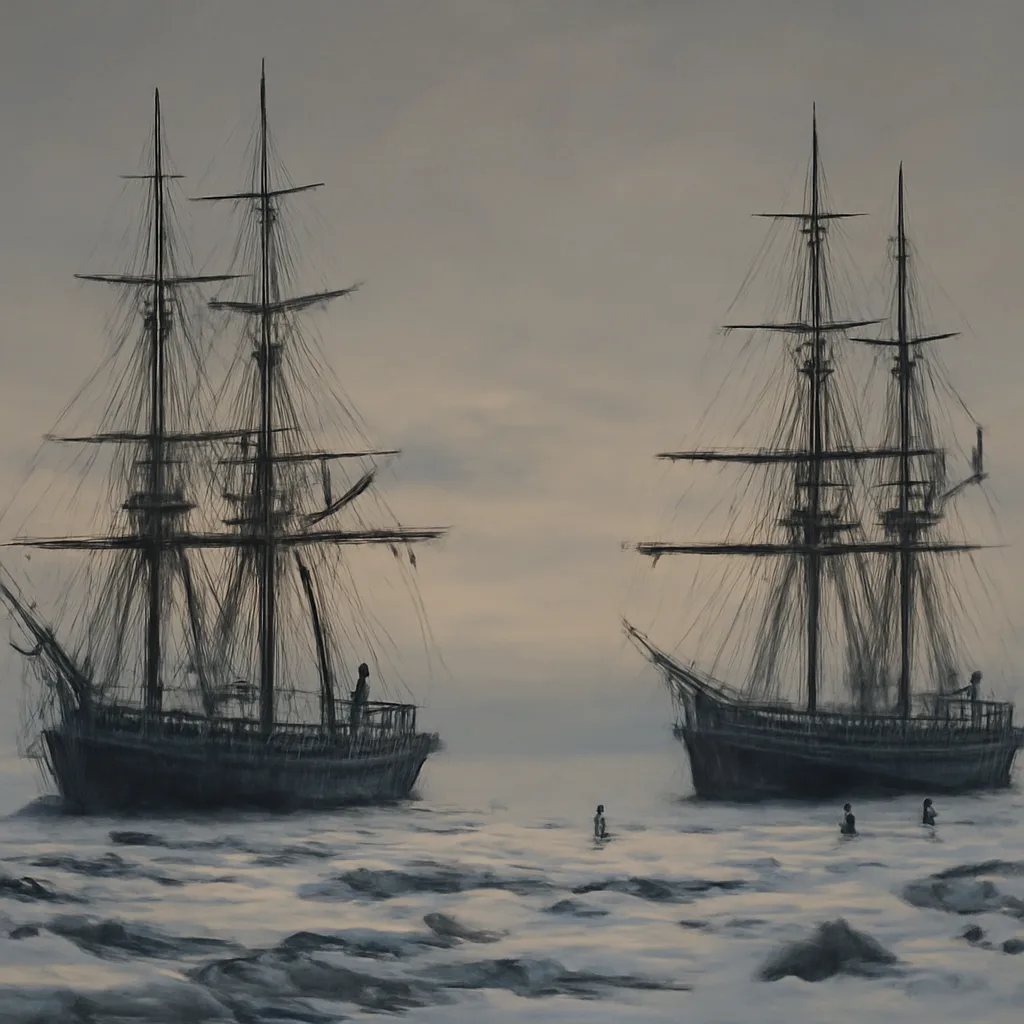
Two mid-19th-century Royal Navy ships beset by Arctic sea ice in a muted polar landscape, with scattered ice floes and low winter light; no identifiable faces.

On April 25, 1845, Sir John Franklin set sail from England with HMS Erebus and HMS Terror on what became the first widely recorded disappearance of an entire naval expedition—an Arctic voyage that ultimately left no survivors and spurred decades of searches and changing understandings of polar exploration.


In the spring of 1845 the Royal Navy launched one of the most ambitious polar expeditions of the era. Commanded by Sir John Franklin, two ships—HMS Erebus and HMS Terror—departed England on April 25, 1845, with the principal objective of charting and traversing the remaining un-navigated sections of the Northwest Passage. The squadron carried 129 officers and men, provisions for several years, and equipment intended to support wintering in the high Arctic.

Initial reports reached Britain in 1846, when the ships were seen entering Baffin Bay and anchoring in Lancaster Sound. Thereafter silence descended. When winter passed without the squadron’s return, concern grew into alarm. Beginning in 1848, the Admiralty and private sponsors organized successive search parties—by sea, by land, and later by air and dog sledge—across vast stretches of the Canadian Arctic. These searches would persist intermittently for more than a century and became major undertakings involving British, Canadian, American, and Indigenous participants.

Contemporary and later evidence established that Erebus and Terror did not return. In the absence of definitive shipboard logs from the final months, investigators relied on scattered archaeological finds, Inuit testimony collected by searchers, recovered artefacts, and, in the late 20th and early 21st centuries, forensic analysis of human remains. Inuit accounts—recorded by explorers and traders—described encounters with starving, weakened, or dead Europeans and with camps and graves on nearby islands and mainland coasts. European searchers found tattered clothing, fragmented equipment, and a small number of graves whose occupants were later identified by investigation.

Scientific study in recent decades has refined the chronology and probable causes behind the expedition’s failure, though some details remain debated. Factors identified by researchers include prolonged entrapment in sea ice, scurvy and other nutritional deficiencies, lead poisoning likely originating from tinned provisions or ship water systems, infectious disease, and the physiological effects of starvation and exposure. Evidence also indicates that some crew members attempted to depart the ships and travel on foot toward safety, leaving cairns, written messages, and personal items that became clues for searchers.

The loss of Franklin’s expedition marked the first widely recorded disappearance of an entire naval expedition in the modern era and had immediate and long-term consequences. In Britain it spurred public fascination and national anxiety, prompting numerous search missions and fueling debates about the costs of exploration. For Arctic cartography and navigation, the searches substantially improved geographical knowledge of the region: mapping coasts, cataloging islands, and gathering meteorological and ethnographic information. The searches also involved—and often depended upon—the knowledge and assistance of Indigenous Inuit people, whose testimonies and guidance were essential to locating sites and understanding what had occurred.

The story of Franklin’s expedition remains historically significant for several reasons. It highlights the limits of mid-19th-century naval technology and provisioning for extreme polar environments, the interplay between imperial ambition and human vulnerability, and the ways in which catastrophe can drive scientific inquiry and cross-cultural encounters. Archaeological discoveries in the 21st century—most notably the rediscovery of HMS Erebus in 2014 and HMS Terror in 2016 in locations consistent with Inuit testimony—have provided new physical evidence that complements archival and forensic research. These finds have clarified aspects of the final movements of the ships but have not resolved every question about the fates of individual crew members.

Because records from the final phase of the voyage are incomplete and some evidence is subject to interpretation, certain specifics—exact timelines, locations of all deaths, and the relative contributions of various medical and environmental causes—remain matters for ongoing research. Nonetheless, the Franklin expedition endures as a cautionary and poignant chapter in the history of exploration: a high-profile mission that disappeared in the Arctic and reshaped understanding, policy, and scholarship related to polar travel.

Share this

Email Share on X Facebook Reddit

Did this surprise you?