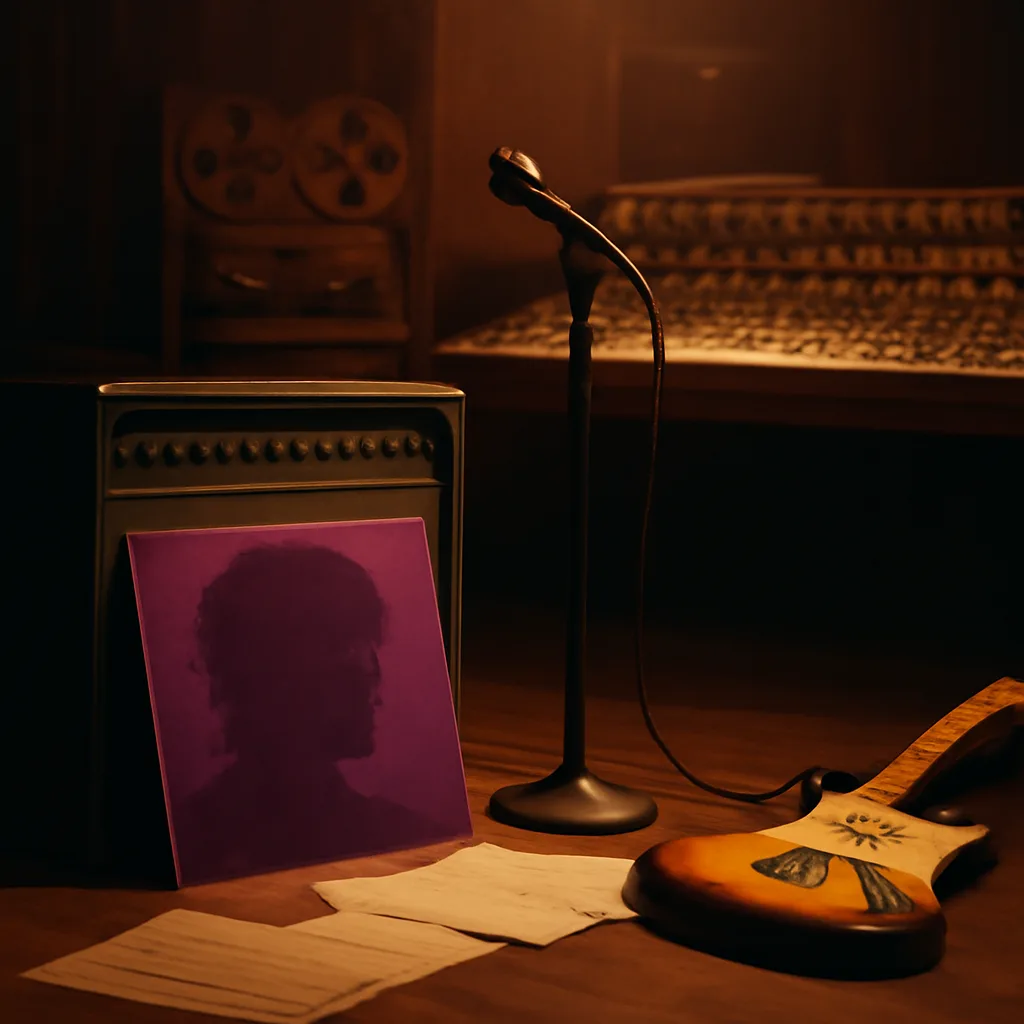
Prince Releases Purple Rain, a Genre-Bending Landmark
On April 25, 1984, Prince released Purple Rain, the sixth studio album credited to Prince and the Revolution. Blending rock, funk, pop and R&B, the record became a commercial and cultural milestone tied to the film of the same name.
On April 25, 1984, Prince and the Revolution released Purple Rain, an album that expanded his reach from a critically acclaimed artist into a global star. Credited as Prince and the Revolution and serving as the soundtrack to the contemporaneous film Purple Rain, the record fused rock, funk, pop and R&B with theatrical production and a heightened focus on guitar-driven arrangements. The result was a set of songs that resonated across radio formats and demographics.
Recording and context
Prince recorded much of Purple Rain between 1983 and early 1984, working with longtime collaborators including Wendy Melvoin, Lisa Coleman, Bobby Z., and Brown Mark—musicians who were formally identified as the Revolution. The album followed a string of increasingly successful releases and coincided with a semi-autobiographical film project that further amplified public attention. Prince’s growing interest in cinematic and performance spectacle informed the album’s ambitious scope.
Music and themes
Purple Rain opens with the high-energy “Let’s Go Crazy,” an exuberant track that frames the record with a celebratory yet existential tone. The title track, a slow-burning ballad built around a plaintive guitar solo, became one of Prince’s signature songs. Other singles—“When Doves Cry” and “I Would Die 4 U”—demonstrated his willingness to strip conventional arrangements (notably the absence of a bass line on “When Doves Cry”) and to blend lyrical intimacy with pop accessibility. Across the album, Prince explored themes of love, spiritual longing, sexuality, and the pressures of fame.
Production and style
Prince produced Purple Rain himself, employing layered instrumentation, synthesizers, drum machines, and prominent guitar work. The album’s sound married the rawness of live-band performance with studio polish, and the Revolution’s contributions shaped its arrangements and dynamics. The mix of uptempo anthems and slower, emotive songs displayed Prince’s versatility as songwriter, instrumentalist and bandleader.
Reception and impact
Upon release, Purple Rain achieved immediate commercial success, topping charts and yielding multiple hit singles. It significantly widened Prince’s audience and earned both critical praise and mainstream awards recognition. The album is widely cited in retrospective assessments as one of the most influential records of the 1980s, helping to blur boundaries between R&B, rock and pop and influencing subsequent artists across genres.
Cultural significance
Purple Rain’s release was tightly linked to the film, which amplified the songs’ narratives and Prince’s onstage persona. The album’s prominence during the mid-1980s coincided with notable changes in video-driven promotion and crossover radio formats, factors that helped propel Prince into international stardom. Its legacy endures in its continued presence on best-of lists, frequent sampling and covers, and its role in shaping perceptions of genre fluidity in popular music.
Notes on sources and disputes
Details above summarize widely reported facts about the album’s release, collaborators and musical features. Specific recording-session dates and contributions by individual musicians have been variously reported in interviews, liner notes and biographies; where accounts differ, broader consensus about the album’s release date, personnel credited on the record, and its cultural impact is reflected here.