
← Back
05/05/1973 • 5 views

Wrestler Revealed as Undercover Police Officer in 1973
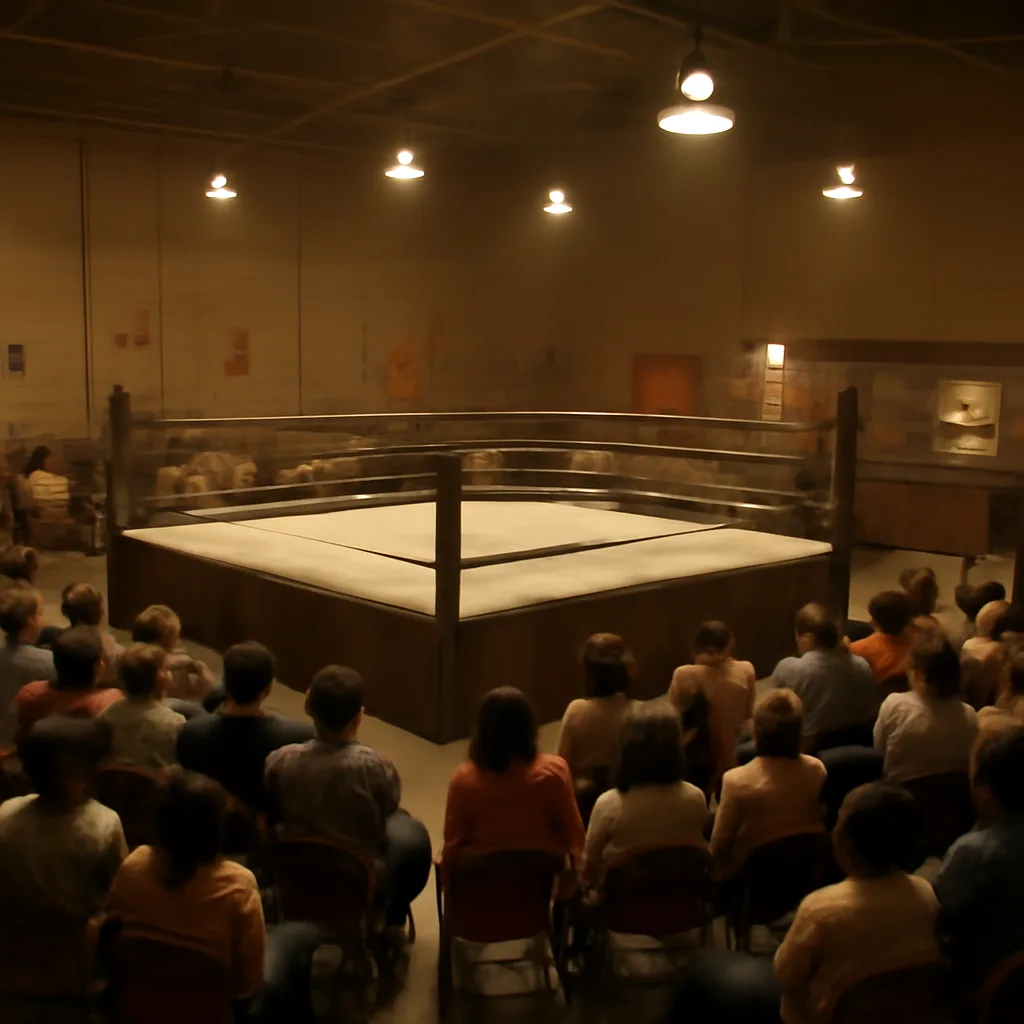
1970s wrestling arena with empty ring, ticketed crowd area, and vintage signage; atmosphere of a regional arena in the early 1970s.

On May 5, 1973, a professional wrestler was publicly exposed as an undercover police officer, a revelation that highlighted tensions between law enforcement operations and the performative world of pro wrestling.


On May 5, 1973, a professional wrestler’s dual role as an undercover police officer became public knowledge, prompting discussion about the ethics and tactics of undercover work in the early 1970s. The disclosure drew attention because professional wrestling relied on a crafted public persona and staged rivalries, while undercover policing depended on secrecy and direct engagement with suspects or informants.

Context

The early 1970s in the United States were a period of heightened scrutiny of law enforcement methods, including undercover operations. Police departments increasingly used covert assignments to investigate organized crime, narcotics trafficking, and corruption. At the same time, professional wrestling was a regional entertainment industry in which performers—often billed under colorful stage names—maintained kayfabe, the convention of presenting staged events and characters as real to preserve audience engagement.

The revelation

On the date given, reports emerged identifying a wrestler who had been working with police in an undercover capacity. Exact details vary across contemporary accounts: some accounts emphasize the officer’s investigative purpose, while others focus on the potential breach of trust between performer and audience or the legal and procedural implications for law enforcement. Public reactions ranged from surprise to debate over whether the use of a public entertainer in covert operations was appropriate.

Implications for wrestling and policing

For the wrestling community, the episode raised questions about performers’ private lives intersecting with their staged identities. The practice of kayfabe encouraged fans to accept wrestlers’ personas as authentic, and learning that a performer had an active role in police work complicated perceptions of authenticity and trust.

For law enforcement, critics and defenders offered competing assessments. Supporters argued that unconventional undercover assignments could be effective in accessing certain circles or gathering intelligence. Critics warned that using a public entertainer in undercover roles risked operational security and could expose investigations when performers toured or appeared publicly. There were also legal and ethical concerns about informed consent, entrapment, and accountability for actions taken while undercover.

Media coverage and public debate

Press coverage at the time varied by outlet and locality, reflecting differing attitudes toward both the police and professional wrestling. In some places, the story was treated as a curiosity highlighting an unusual law-enforcement tactic. In others, it became fodder for broader critiques of policing practices. Exact contemporary sources and their accounts differ, and researchers should consult archival newspaper databases or local records for primary reporting from May 1973.

Legacy and historical note

The 1973 disclosure sits at the intersection of two social phenomena: the professionalization and centralization of undercover police work, and the regional, performative culture of professional wrestling before the national expansion and television consolidation that came later in the decade. While not a widely remembered landmark event nationally, it illustrates how unconventional undercover methods could generate public controversy and raise lasting questions about transparency, performance, and the public roles of entertainers.

Because details and interpretations vary among sources, historians and interested readers should consult contemporaneous news reports, police records where accessible, and wrestling-industry archives to verify specifics about the individual involved and the precise nature of the undercover assignment.

Share this

Email Share on X Facebook Reddit

Did this surprise you?