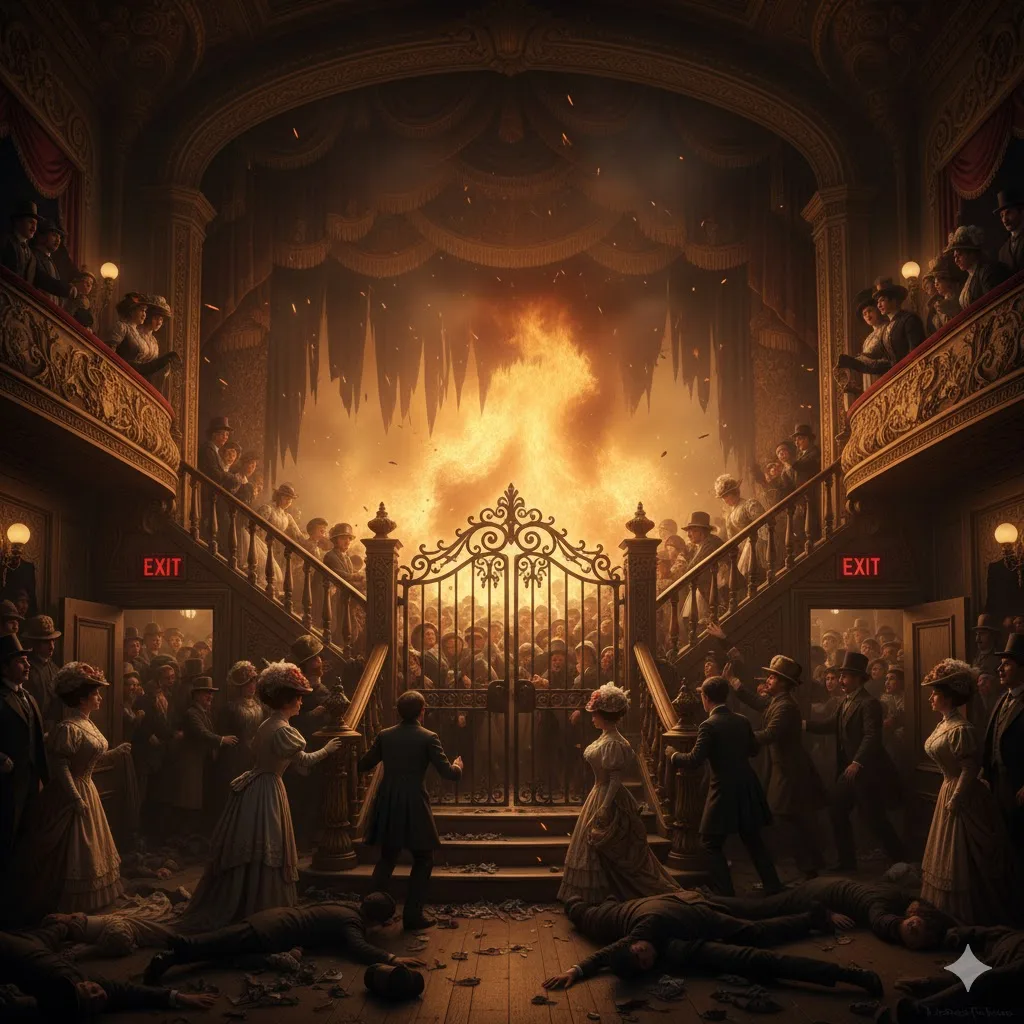
The Iroquois Theatre Fire on December 30, 1903, remains the deadliest single-building fire in U.S. history. Billed as "absolutely fireproof," the brand-new Chicago theater became a death trap for more than 600 people, many of whom were children attending a holiday matinee.
The Iroquois Theatre Fire on December 30, 1903, remains the deadliest single-building fire in U.S. history. Billed as "absolutely fireproof," the brand-new Chicago theater became a death trap for more than 600 people, many of whom were children attending a holiday matinee.
The Spark in the "Pale Moonlight"
During the second act of the musical Mr. Bluebeard, a popular double-octet song titled "In the Pale Moonlight" was being performed.
The Ignition: An arc light used to create a blue moonlight effect sparked and ignited a nearby muslin curtain.
The Failure of "KilFyre": Stagehands tried to douse the flames with "KilFyre," a tube-based chemical powder, but it was useless against a fire that was already climbing into the highly flammable scenery hanging in the loft.
The Jammed Curtain: As the fire spread, they attempted to lower the asbestos safety curtain to seal the stage from the audience. It snagged on a light reflector just a few feet down, leaving a massive gap that allowed the fire to pour into the auditorium.
A Perfect Storm of Failures
The staggering death toll wasn't just caused by the fire itself, but by a series of catastrophic design and safety failures:
The Inward-Swinging Doors: Most of the exit doors opened inward. As the panicked crowd rushed the exits, the weight of the people pressing against the doors made it physically impossible to pull them open.
The "Death Alley": Many actors fled through a large rear stage door. This created a massive backdraft, sucking oxygen in and blowing a giant fireball over the audience in the upper balconies. Those who made it to the fire escapes in the alley found they were unfinished; some leaped to their deaths while others were pushed off by the crush behind them.
The Iron Gates: To prevent "gate-crashers" from the cheap seats (the gallery) from moving down to the expensive orchestra level, the theater had installed locked iron gates across the stairways. Hundreds of victims were found piled up against these bars.
Ornamental Deception: Some "exits" were actually just windows made to look like doors, leading people into dead ends as smoke filled the room.
The Legacy: Safety Written in Blood
The horror of the Iroquois fire led to a total revolution in building codes. If you look around a modern public building today, you are seeing the direct results of this tragedy:
Panic Bars: The "crash bar" (or panic bar) was invented specifically in response to this fire, allowing doors to be opened from the inside simply by the weight of a body pushing against them.
Outward-Swinging Doors: It became a legal requirement for all exit doors in public spaces to swing outward.
The Glowing Red Exit Sign: Clear, illuminated exit signs (often with independent battery backups) became mandatory.
Fire Drills and Sprinklers: The fire prompted the first major requirements for automatic sprinkler systems and regular fire drills for theater staff.
The actor Eddie Foy was hailed as a hero that day for staying on the burning stage to try and calm the crowd while his own son was in the building.