
← Back
05/28/1945 • 7 views

USS Indianapolis Departs on What Would Be Its Final Voyage
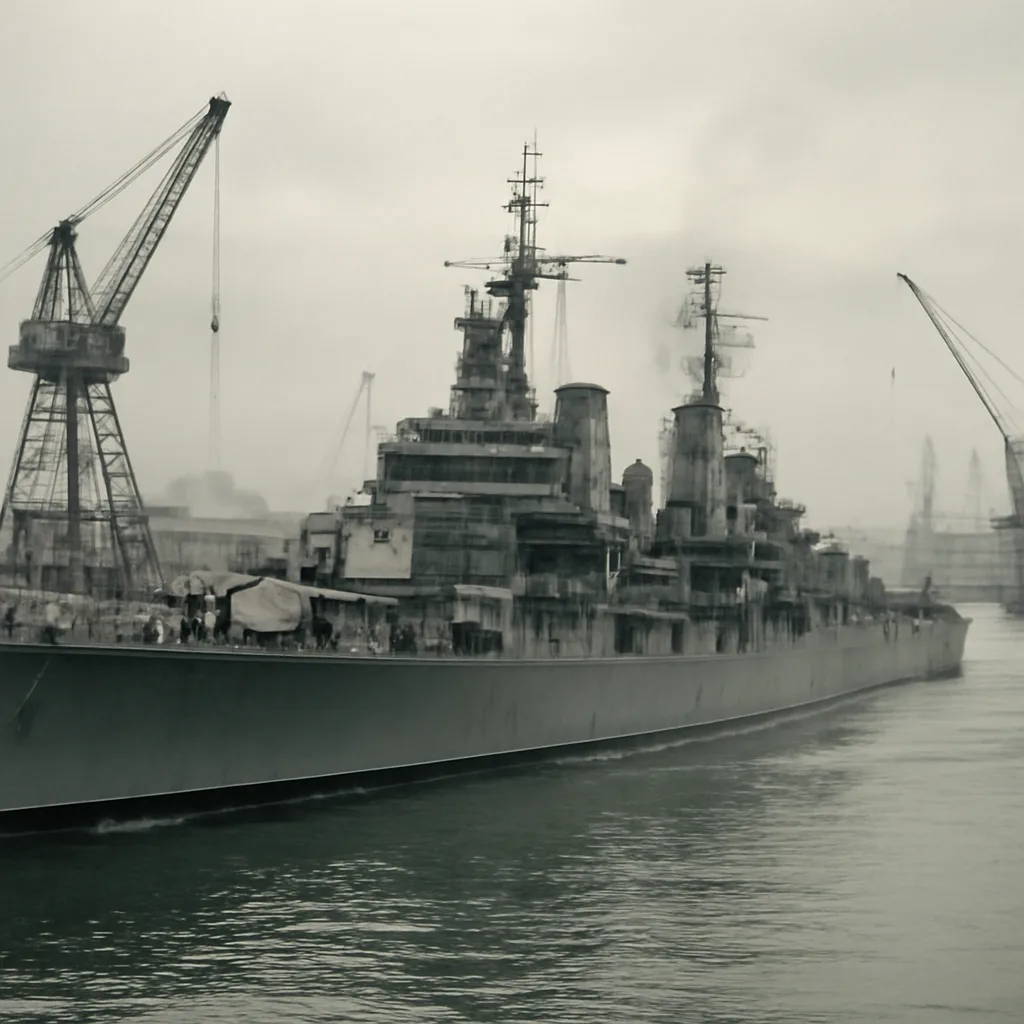
The heavy cruiser USS Indianapolis (CA-35) underway off a World War II-era U.S. naval shipyard in 1945, showing her profile, superstructure and gun turrets; sailors visible on deck in period uniforms.

On May 28, 1945, heavy cruiser USS Indianapolis (CA-35) slipped from Mare Island Naval Shipyard to begin a voyage that would end in one of the U.S. Navy's worst maritime disasters after she completed a secret mission delivering parts for the first atomic bomb.


On May 28, 1945, the Portland-class heavy cruiser USS Indianapolis (CA-35) departed Mare Island Naval Shipyard in Vallejo, California, to join the Pacific Fleet for continued operations against Japan. The ship had recently completed a clandestine high-priority mission: transporting critical components and enriched uranium for the atomic bomb that would be used on Hiroshima. That mission had been performed in strict secrecy and without fanfare; after delivering the cargo to Tinian Island on July 26, 1945, Indianapolis rejoined normal duties and prepared for further combat-related tasks.

The voyage that began on May 28 was part of routine redeployment and training as the Navy concentrated forces for the final push against Imperial Japan. Indianapolis had a distinguished record: commissioned in 1932, she saw extensive service across the Pacific, including actions in the Guadalcanal campaign, the Battle of the Philippine Sea, and operations supporting amphibious landings. By mid-1945, she had been modified with additional anti-aircraft armament and radar upgrades to meet evolving threats.

Commanded by Captain Charles B. McVay III, Indianapolis was a fast, well-armed cruiser designed for scouting and surface action. Her speed and armament made her suitable for rapid transport missions as well as fleet screening. The departure from Mare Island on May 28 took place in the context of an accelerating end to the war in Europe and intensifying operations in the Pacific. Personnel aboard would have expected continued frontline duties, and the ship's schedule over the subsequent weeks included further deployments across the central Pacific.

Operational security surrounding the atomic mission and other wartime movements meant many contemporaneous records were tightly controlled, and crew members did not publicly discuss certain voyages until after the war. The secrecy contributed to confusion in the aftermath when Indianapolis was torpedoed and sank in late July 1945: delayed reporting and the fact that the ship had left orders and movements that were not widely disseminated complicated rescue efforts. Historians and official investigations in later years examined issues of communication, routing, and command decisions that shaped the ship's final voyage and its tragic end.

The departure on May 28 is remembered as the beginning of the sequence of events that placed Indianapolis back into active Pacific operations during the war's closing weeks. Contemporary and later accounts emphasize the ship's experienced crew, the modifications made to keep her combat-ready, and the broader operational pressures on the Navy in summer 1945. While the cruiser had completed a successful and secret delivery of critical materials weeks later, the subsequent sinking in late July and loss of life overshadowed those earlier movements and left a complex legacy involving questions of command, responsibility, and the costs of wartime secrecy.

Share this

Email Share on X Facebook Reddit

Did this surprise you?