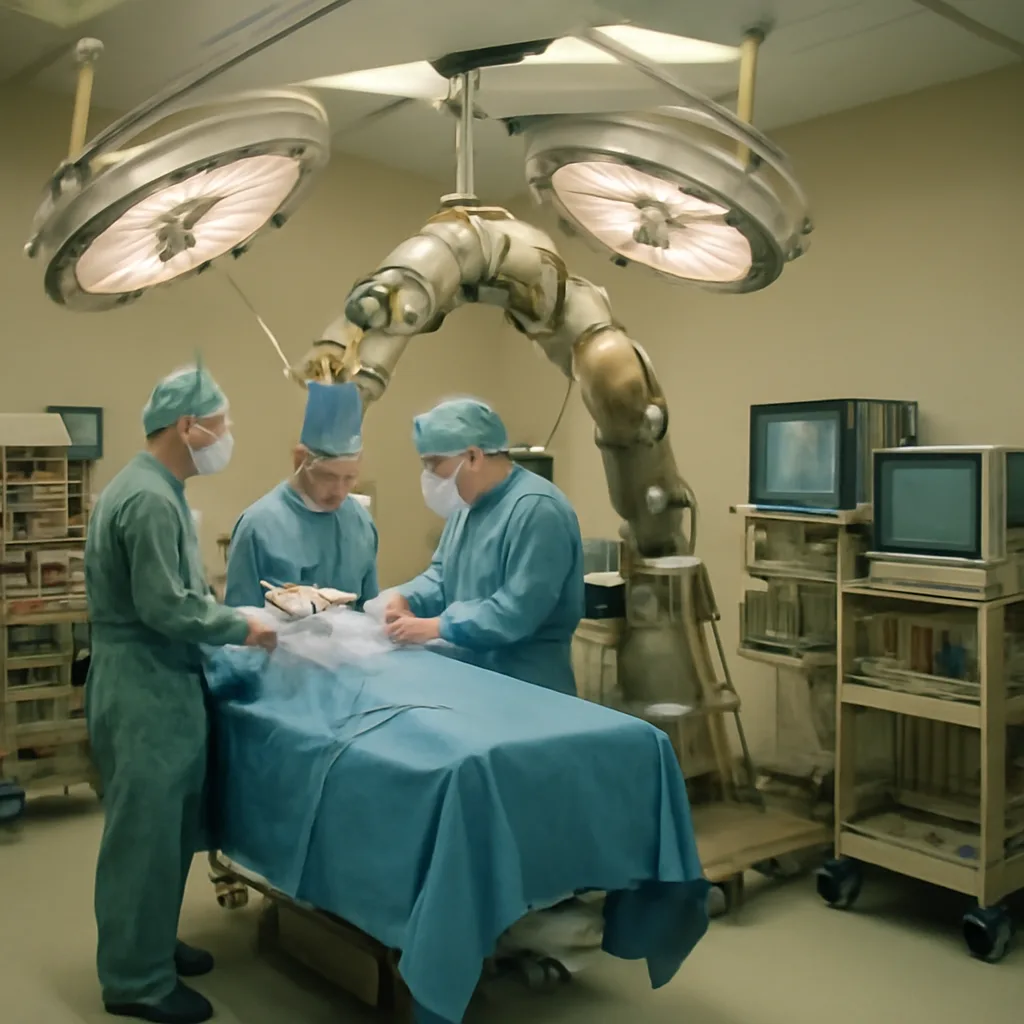
First successful robotic-arm-assisted surgery performed
On May 28, 1985, surgeons used a computer-controlled robotic arm to assist in a surgical procedure, marking an early milestone in the development of robot-assisted surgery that would later evolve into widely used systems for minimally invasive operations.
On May 28, 1985, surgeons carried out what is widely cited as the first successful operation assisted by a robotic arm, an early and influential milestone in the history of computer-assisted surgery. The procedure was performed using a programmable robotic manipulator that augmented the surgeon’s capabilities for precise instrument positioning and steadying during delicate tasks. This event is often referenced in histories of medical robotics as a key demonstration that mechanical devices could be integrated into the operating room to enhance surgical accuracy.
Background
The 1970s and early 1980s saw growing interest in applying computers and robotic technology to surgical problems. Researchers sought ways to improve precision, reduce tremor, and enable new methods of minimally invasive surgery. Early projects combined industrial-style robotic arms with specialized end-effectors and imaging guidance. By the mid-1980s, prototypes capable of controlled, repeatable motion had advanced enough for limited clinical use under close supervision by surgical teams.
The 1985 procedure
Accounts of the May 28, 1985, operation describe the use of a computer-controlled robotic arm to assist the operating surgeon rather than replace human decision-making. The robot provided stabilized positioning and fine movements that complemented the surgeon’s skills. The operation was judged successful by the treating team, and it demonstrated that a robotic manipulator could perform repeatable, precise actions in a live surgical setting without causing harm attributable to the device itself.
Significance and legacy
This early success helped validate the concept of robot-assisted surgery and encouraged further research and development. Over the following decades, research teams and companies refined robotic systems, integrating improved imaging, haptic feedback, teleoperation, and user interfaces. These developments contributed to commercial systems that became widely used for procedures such as prostatectomy, gynecologic surgery, and complex general surgery, where enhanced dexterity, stability, and minimally invasive approaches offer clinical benefits.
Context and caveats
Descriptions of ‘‘the first’’ robotic surgery can vary depending on how the term is defined. Earlier uses of mechanical aids, computer-guided tools, and automated devices in surgical settings predate 1985; what distinguishes the May 28, 1985, case in many histories is the use of a programmable, articulated robotic arm under direct surgeon control in a clinical operation. Contemporary sources and later reviews note the event as an important demonstration rather than as the sole origin of surgical robotics. Precise technical details, team composition, and institutional records for that specific date are found in specialized medical and engineering literature; summaries in the public record sometimes condense or generalize those primary sources.
Conclusion
The May 28, 1985, robotic-arm-assisted operation stands as an early, influential example that helped launch the field of robot-assisted surgery. It provided practical evidence that robotic manipulators could augment surgical performance in the operating room, setting the stage for further innovation that has since become integrated into modern surgical practice.