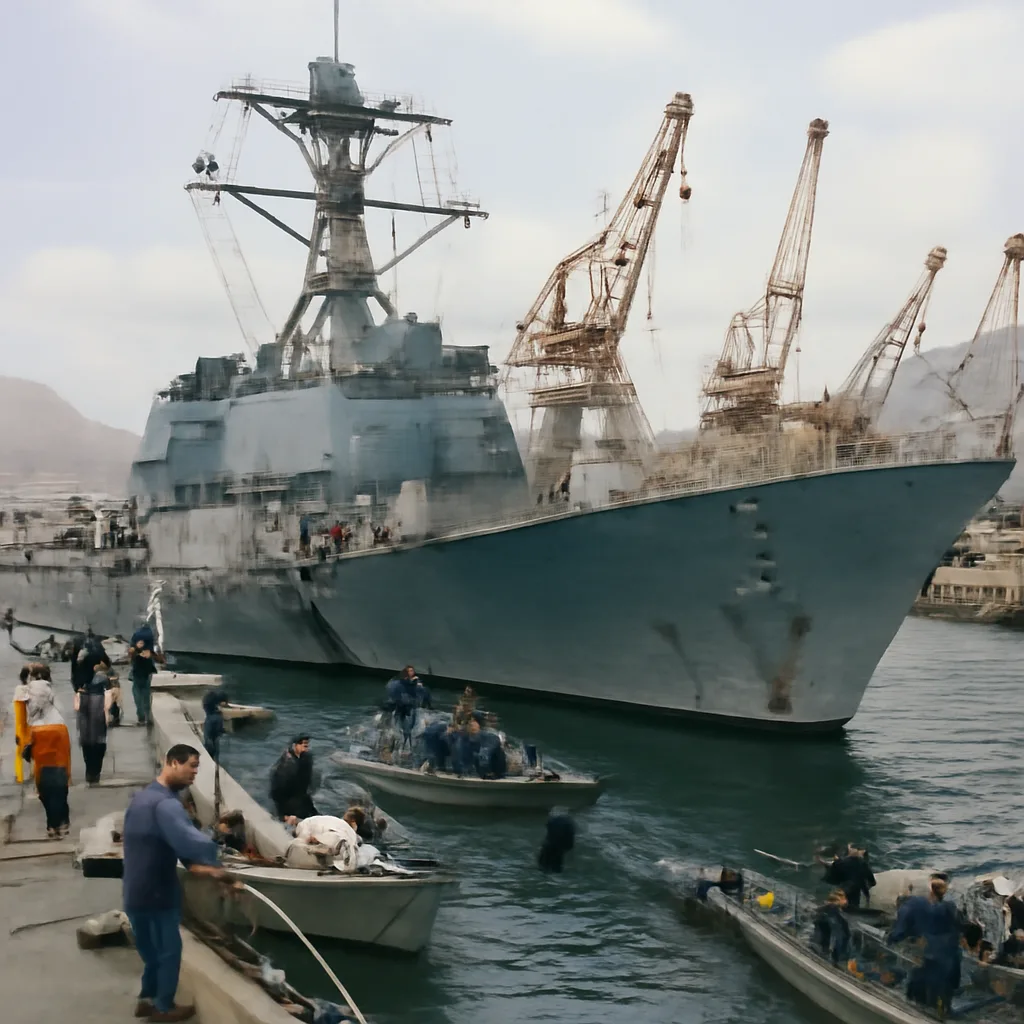
Al-Qaeda's Suicide Bombing of USS Cole Kills 17 Sailors
On October 12, 2000, two suicide bombers in a small boat detonated explosives alongside the guided-missile destroyer USS Cole while it refueled in Aden, Yemen, killing 17 U.S. sailors and injuring 39 others in an attack later attributed to Al-Qaeda.
On October 12, 2000, the USS Cole (DDG-67), a U.S. Navy Arleigh Burke–class guided-missile destroyer, was struck by a small explosive-laden boat while it was refueling in the port of Aden, Yemen. The blast occurred at approximately 11:18 a.m. local time, tearing a roughly 40-foot-wide hole in the ship's port side near the galley and engineering spaces. Seventeen American sailors were killed and 39 were wounded. The damage breached multiple compartments, flooded engineering spaces and left the ship dead in the water; crew and nearby Yemeni civilians and coalition personnel conducted immediate rescue and firefighting operations.
Initial investigations by U.S. naval authorities and intelligence agencies concluded the attack was a suicide bombing carried out by two attackers in a small craft that approached the Cole during its scheduled fuel stop. Within weeks, U.S. officials publicly attributed responsibility to the Al-Qaeda network. Subsequent probes, including criminal investigations and military inquiries, identified operational links to Al-Qaeda militants based in Yemen and Afghanistan; in 2002, a federal grand jury indicted several suspects affiliated with Al-Qaeda in connection with the attack. Some perpetrators were later killed in counterterrorism operations; others were captured, prosecuted, or remained at large, and legal and diplomatic efforts to hold sponsors and facilitators accountable continued for years.
The attack on the Cole highlighted evolving maritime threats from nonstate actors and prompted the U.S. Navy and allied navies to reassess force protection measures during in-port and littoral operations. Immediate changes included revised refueling procedures, increased shipboard force protection, and greater caution when operating in high-risk ports. The Cole itself was patched in Aden, then sailed to the United States under its own power, arriving at Naval Station Norfolk for extensive repairs that lasted over a year. The ship returned to service in 2002.
The bombing also had broader strategic repercussions. Coming less than a year before the September 11, 2001 attacks, the Cole incident was one of several high-profile Al-Qaeda operations that signaled the group’s growing capability and willingness to strike U.S. military targets abroad. The attack intensified U.S. counterterrorism efforts in Yemen and contributed to increased cooperation among international intelligence and law enforcement agencies targeting Al-Qaeda’s leadership and facilitators.
Commemoration and investigations followed. The names of the 17 fallen sailors have been memorialized by the Navy and veteran organizations, and ceremonies mark the anniversary of the attack. Official reviews examined tactical and procedural lapses as well as intelligence leads prior to the event; some analyses emphasized the difficulty of detecting suicide small-boat attacks in crowded ports and the challenge of anticipating decentralized terrorist operations.
The USS Cole bombing remains a significant event in early 21st-century counterterrorism history—a deadly example of how extremist groups adapted asymmetric tactics against well-equipped military forces and a catalyst for changes in maritime security protocols.