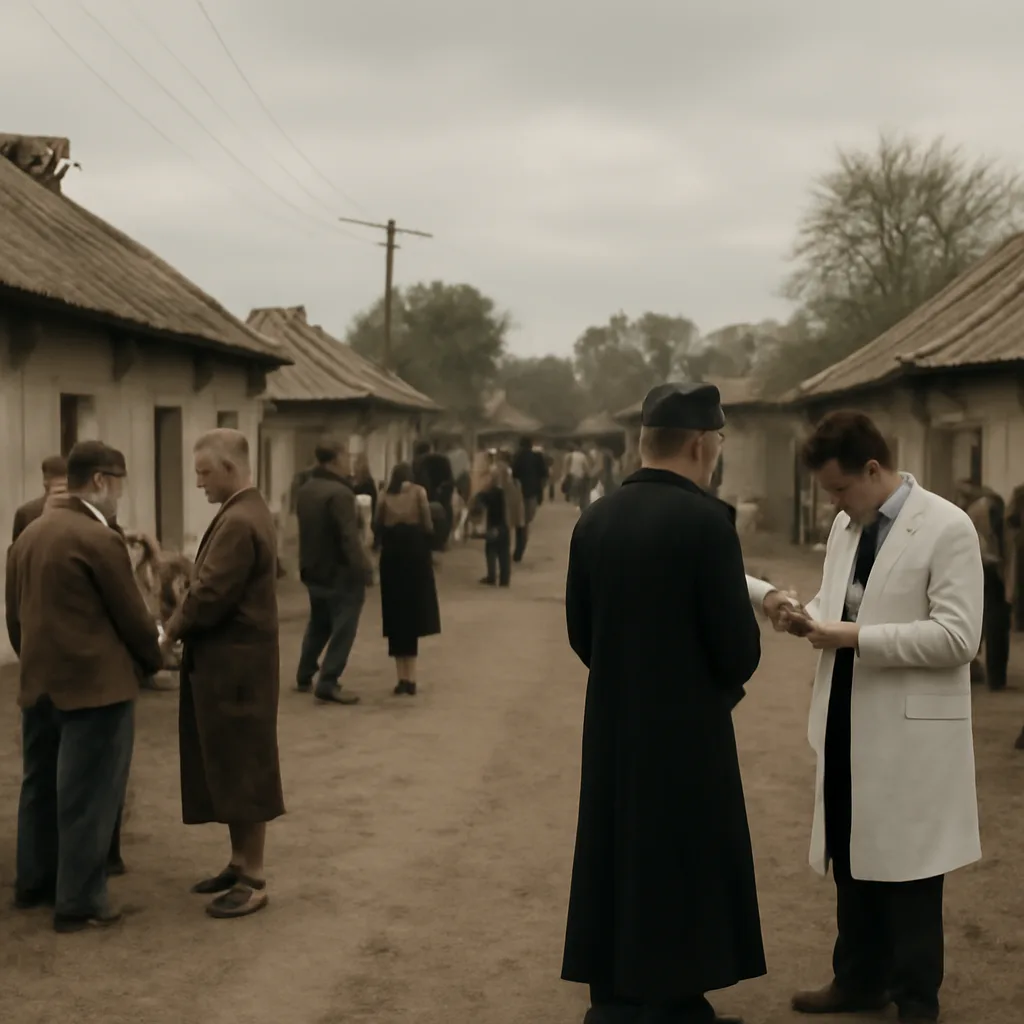
1977 Village Reports Alleged Mass Possessions Affecting Hundreds
On October 12, 1977, a rural community reported an outbreak described locally as mass possession, with authorities and medical personnel debating whether the cause was psychological, social contagion, or spiritual practice. Contemporary accounts differ on scale and explanation.
On October 12, 1977, villagers in a remote community reported what local leaders and some media described as a mass outbreak of “possession” affecting scores to hundreds of people. Reports from the period vary in detail and emphasis: some accounts emphasized religious or spiritual interpretations offered by local clergy and families, while others stressed medical and psychiatric explanations, including collective psychological phenomena. The incident drew attention from regional officials, health workers, and journalists, but contemporaneous documentation is uneven and often secondhand.
Scale and sources
Contemporary press reports and oral histories disagree on how many people were affected. Some local statements cited numbers in the low hundreds; other records and subsequent investigations suggest a smaller cluster concentrated among certain social groups, such as schoolchildren or households connected by family ties. Official health records, where available, rarely use the language of “possession” and instead note symptoms described by witnesses—sudden crying, fainting, unusual vocalizations, and trance-like behavior—terms commonly used in discussions of mass psychogenic illness (also called mass sociogenic illness).
Context and possible explanations
The late 1970s saw widespread public interest in spiritual and occult topics in many places, and religious revival movements were active in numerous rural areas. In communities with strong religious frameworks, unexplained or dramatic behaviors were sometimes interpreted as spiritual phenomena. At the same time, social scientists and medical professionals have long documented episodes of mass psychosomatic or sociogenic illness, in which stress, anxiety, social suggestion, and close social networks contribute to the rapid spread of physical symptoms without an identifiable organic cause.
Available medical commentary from the era often recommended psychiatric evaluation, community education, and careful public communication to avoid amplifying anxiety. Religious leaders tended to recommend spiritual remedies or communal prayer in line with local beliefs. These differing responses reflect the broader tension between medical and religious frameworks for interpreting unusual communal events.
Investigation and aftermath
Formal investigations, when they occurred, were sometimes limited by resource constraints and by the reluctance of community members to discuss sensitive spiritual matters with outside authorities. Where public health teams examined the situation, reports emphasized the absence of a contagious pathogen, pointing instead to psychosocial factors. In other cases, documentation is fragmentary or reliant on press coverage, making definitive historical reconstruction difficult.
Long-term impact
The event remained a contested episode in local memory. Some residents recount the episode as a genuine spiritual crisis that reshaped religious practice in the village. Others remember it as a period of fear and confusion that highlighted needs for better mental-health services and crisis communication. For historians and social scientists, such episodes are significant for what they reveal about how communities interpret distress, the roles of local authority figures, and the interactions between medical and religious institutions.
Notes on sources and uncertainty
Contemporary accounts from October 1977 are inconsistent in numbers and interpretation; many primary documents are local or unpublished. Where official health records exist, they typically avoid supernatural terminology and favor psychosocial explanations. This summary avoids asserting a single definitive cause because the historical record is contested and incomplete.