01/10/2016 • 3 views
The Day David Bowie Turned His Goodbye into Art
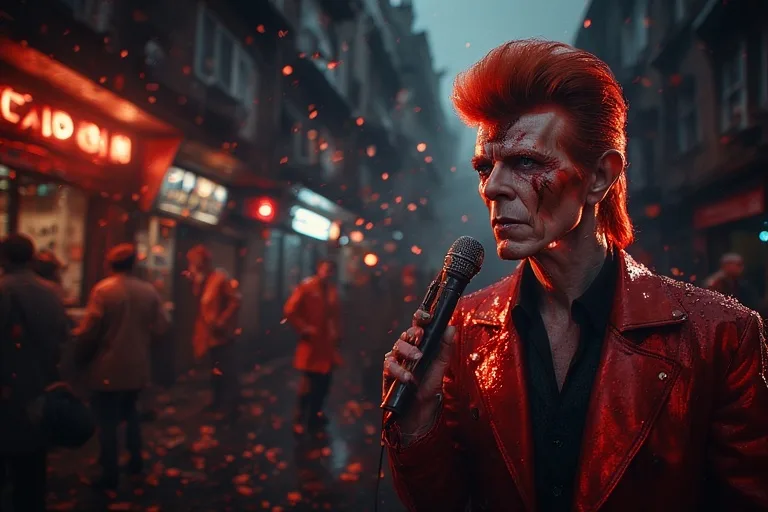
On January 10, 2016, the world woke up to the news that David Bowie was dead.

Bowie died after an 18-month battle with liver cancer, a struggle he kept almost entirely private. To the public, he appeared active, engaged, and creatively alive. There were no farewell interviews, no press tours, no public goodbyes. Instead, Bowie did what he had always done best—he communicated through art.
Released on January 8, 2016, Blackstar initially puzzled critics. The music was dark, experimental, and unsettling. Its lyrics hinted at death, transformation, and release. Two days later, those songs became something else entirely. Lines that once felt abstract suddenly read like confessions. The album revealed itself as Bowie’s final message, intentionally crafted with his death in mind.
The accompanying videos were even more explicit. In the video for “Lazarus,” Bowie appears frail, bandaged, and confined to a bed, singing the line: “Look up here, I’m in heaven.” At the time, few understood the weight of those words. After January 10, they became devastating. The imagery—blindfolds, ritual gestures, floating figures—now reads as Bowie staging his own passing with the same theatrical precision he applied to his personas.
Fans around the world gathered in shock and grief. Tributes poured in from musicians, artists, actors, and ordinary listeners who felt Bowie had helped them survive something—alienation, fear, identity, or simply growing up. Public memorials appeared in London, Berlin, New York, and beyond. Radio stations abandoned playlists to play Bowie nonstop. Social media filled with stories of how his music had changed lives.
What made Bowie’s death different was not just who he was—but how deliberately he faced it. He didn’t retreat into silence. He didn’t offer sentimentality. He transformed dying into one last creative act, refusing to let mortality have the final word. Blackstar wasn’t a plea for sympathy. It was a statement of control, curiosity, and acceptance.
David Bowie died on January 10, but his final days were not defined by absence—they were defined by intention. He exited the world the same way he entered culture: unexpectedly, defiantly, and entirely on his own terms.
For an artist who spent his life becoming someone new, death was not the end.
It was simply the last transformation.