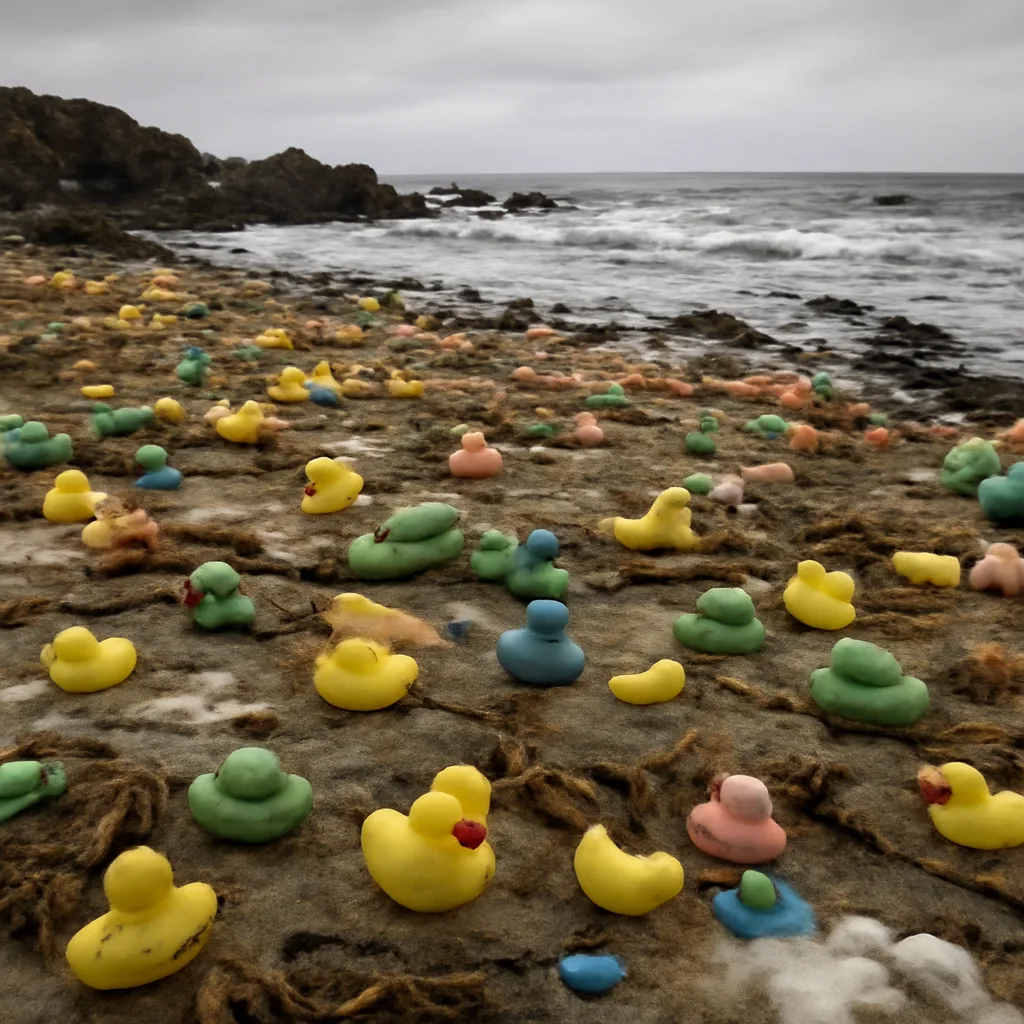
Rubber Ducks Lost at Sea: A 1992 Container Spill and Years of Beach Washups
On January 10, 1992, a shipping container carrying thousands of plastic bath toys — including rubber ducks — was lost at sea. Debris from the spill continued to wash ashore for years, providing real-world data on ocean currents and later inspiring research and public interest in marine debris.
On January 10, 1992, a container ship en route across the North Pacific encountered severe weather and lost a cargo container that held thousands of plastic bath toys and other molded flotation toys. The toys—often referred to in popular accounts as “rubber ducks” though the cargo included many shapes—floated and dispersed across large stretches of ocean. Over subsequent months and years, pieces of this cargo washed ashore on beaches around the Pacific Rim, from North America to East Asia.
The incident gained attention because the mass release of durable plastic objects became an unintended, large-scale tracer experiment for oceanographers. Researchers and amateur observers tracked where and when the toys appeared, using their movements to infer aspects of surface currents, wind-driven drift, and the time scales of transoceanic transport. The floating toys provided empirical evidence complementing models of ocean circulation and helped draw public attention to the persistence of plastic in the marine environment.
The exact number of toys in the lost container has been variably reported in news accounts and later summaries; many sources cite thousands of pieces. The cargo reportedly included not only ducks but frogs, turtles and other molded toys made of durable plastic or rubber-like materials. Because the objects were buoyant and resilient, they persisted for long periods, surviving months or years of exposure to sun, saltwater and wave action before disintegrating into smaller fragments.
Reports of toys washing ashore were documented at different times and places. Some items turned up on the western coast of North America months after the loss, and others continued to appear in subsequent years on islands and coastlines across the North Pacific. These findings were occasionally used in classroom projects and citizen-science initiatives: students and volunteers catalogued debris sightings, contributing to a wider public understanding of marine debris dispersal.
The spill also highlighted broader environmental concerns. While intact toys provided useful drift data, the long-term breakdown of such plastics contributes to microplastic pollution. Over time, sunlight and mechanical abrasion fragment these materials into smaller particles that are more difficult to collect and that can enter food webs. The 1992 incident is frequently cited in discussions of how durable consumer plastics behave in the environment when accidentally released at sea.
Though the 1992 container loss is a well-known case, it is important to note that details reported in popular retellings can vary. Contemporary news reports, later scientific citations and educational project documents form the basis of the historical account; no authoritative single source captures every facet of the cargo manifest or all beaching incidents. Nonetheless, the event remains a useful, documented example of how accidental releases of buoyant debris can persist and travel long distances, yielding both scientific insight and public concern about marine pollution.
In the decades since, increased attention to marine litter has led to more systematic monitoring, prevention efforts in shipping and expanded research into the fate of plastics at sea. The 1992 spill of bath toys is often invoked in outreach and education as an early, tangible instance of the long-term persistence of plastic debris in the world’s oceans.