
← Back
04/10/1936 • 7 views

The First Commercial Electric Guitar Hits the Market
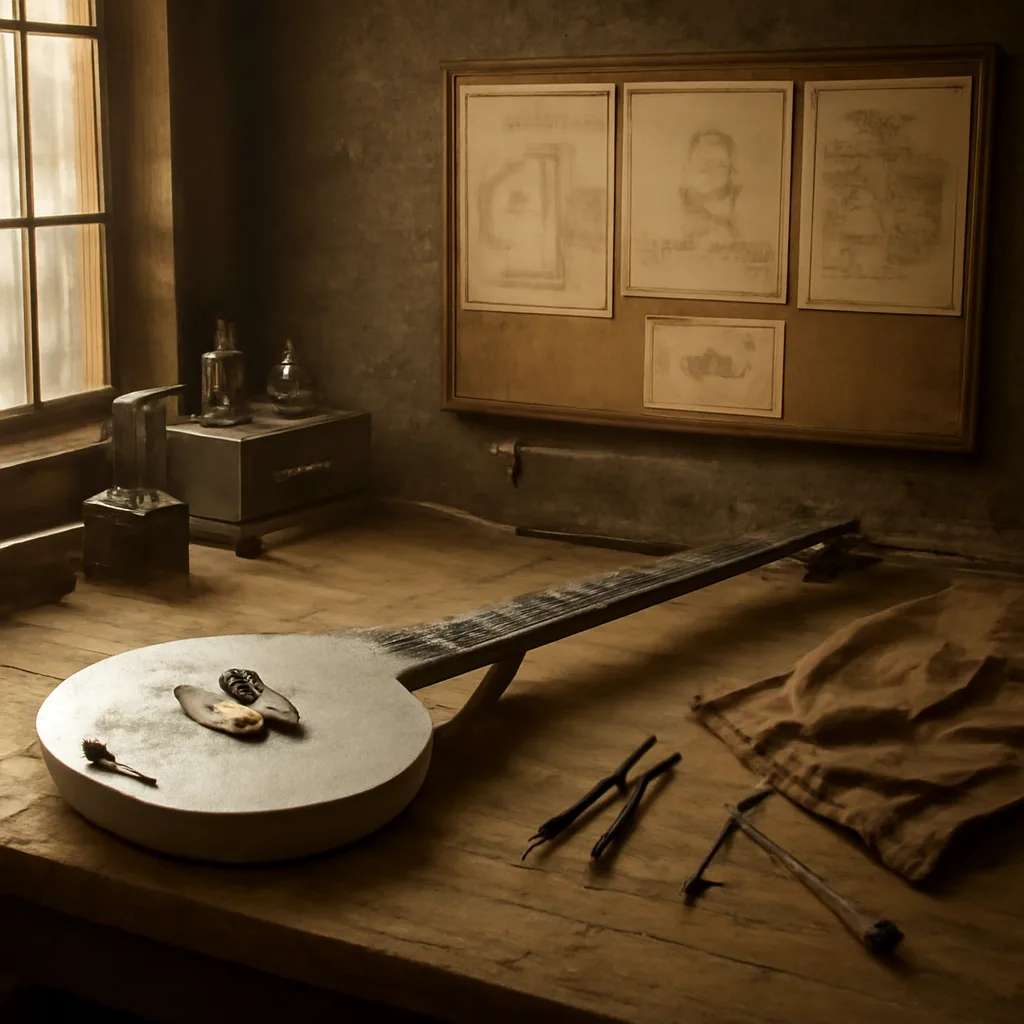
A 1930s-style workshop scene showing a circular aluminum-body lap steel guitar (the Rickenbacker 'Frying Pan') on a wooden workbench beside early amplifier components and tooling, circa 1936.

On April 10, 1936, the Rickenbacker company began commercial production of the Frying Pan lap steel—widely regarded as the first commercially produced electric guitar—marking a key moment in amplified instrument history.


By the mid-1930s, inventors and instrument makers were experimenting with ways to amplify stringed instruments for larger venues and emerging musical styles. On April 10, 1936, the Rickenbacker company (then known as the Ro-Pat-In Corporation) began commercial production of the A-22 “Frying Pan,” a lap steel guitar designed by George Beauchamp and manufactured in partnership with Adolph Rickenbacker. The instrument used an aluminum body and a pickup—one of the earliest electromagnetic pickups—intended specifically to convert string vibration into electrical signal for amplification.

The Frying Pan was not the first time someone had amplified a stringed instrument, but it is widely recognized as the first electric guitar produced and sold commercially. Earlier experiments included electrically amplified violins and other prototypes by inventors such as Les Paul and various tinkerers, as well as acoustic instruments fitted with primitive microphones. What set the Frying Pan apart was its purpose-built design for electrical amplification, its production run for sale to the public, and its association with a company that marketed and distributed the instrument.

The instrument’s lap-steel form reflected contemporary musical tastes: Hawaiian music and steel-guitar styles were popular in the United States in the 1920s and 1930s, and the Frying Pan was aimed at that market. Its aluminum neck and body, circular shape, and horseshoe-shaped pickup were distinctive. The pickup, often called a “horseshoe” pickup because of its U-shaped magnet that arced over the strings, was a visible and novel element that highlighted the instrument’s electrical nature.

Commercial production in 1936 meant customers could order and buy units rather than encounter a one-off prototype. Production numbers were modest by later mass-manufacturing standards, but enough instruments were built and sold to establish a recognizable product and to stimulate interest among musicians, instrument makers, and the nascent amplification industry. Rickenbacker’s marketing emphasized the ability to plug the instrument into an amplifier and project sound in ways impossible with purely acoustic instruments.

The broader significance of the Frying Pan lies in how it helped catalyze the development of electric stringed instruments and amplification technologies. Following its introduction, other manufacturers and inventors pursued different pickup designs, body types, and amplified instruments—leading within a decade or two to the solid-body electric guitars, archtop electrics, and a proliferation of pickups and amplifiers that would shape blues, jazz, country, and eventually rock and roll.

Historical sources generally credit the Rickenbacker Frying Pan and the 1936 commercial production as a key milestone, though historians note earlier experimental devices and parallel developments. Dates and exact production details are supported by company records, patent filings, contemporary trade publications, and surviving instruments in museum and private collections. When discussing “the first electric guitar,” scholars often clarify whether they mean the first prototype, the first commercially produced model, or the first instrument to use a particular pickup technology; the Frying Pan is most reliably described as the first commercially produced electric guitar.

Today, original Frying Pans are rare and prized by collectors and museums. Their legacy is visible in the continued centrality of electric guitars in popular music and in the technical lineage from horseshoe pickups to modern designs. While electric amplification continued to evolve rapidly after 1936, the commercial arrival of the Frying Pan remains a historically verifiable milestone in the story of amplified musical instruments.

Share this

Email Share on X Facebook Reddit

Did this surprise you?