
← Back
04/10/1896 • 7 views

First Modern Olympic Marathon Run in Athens, 1896
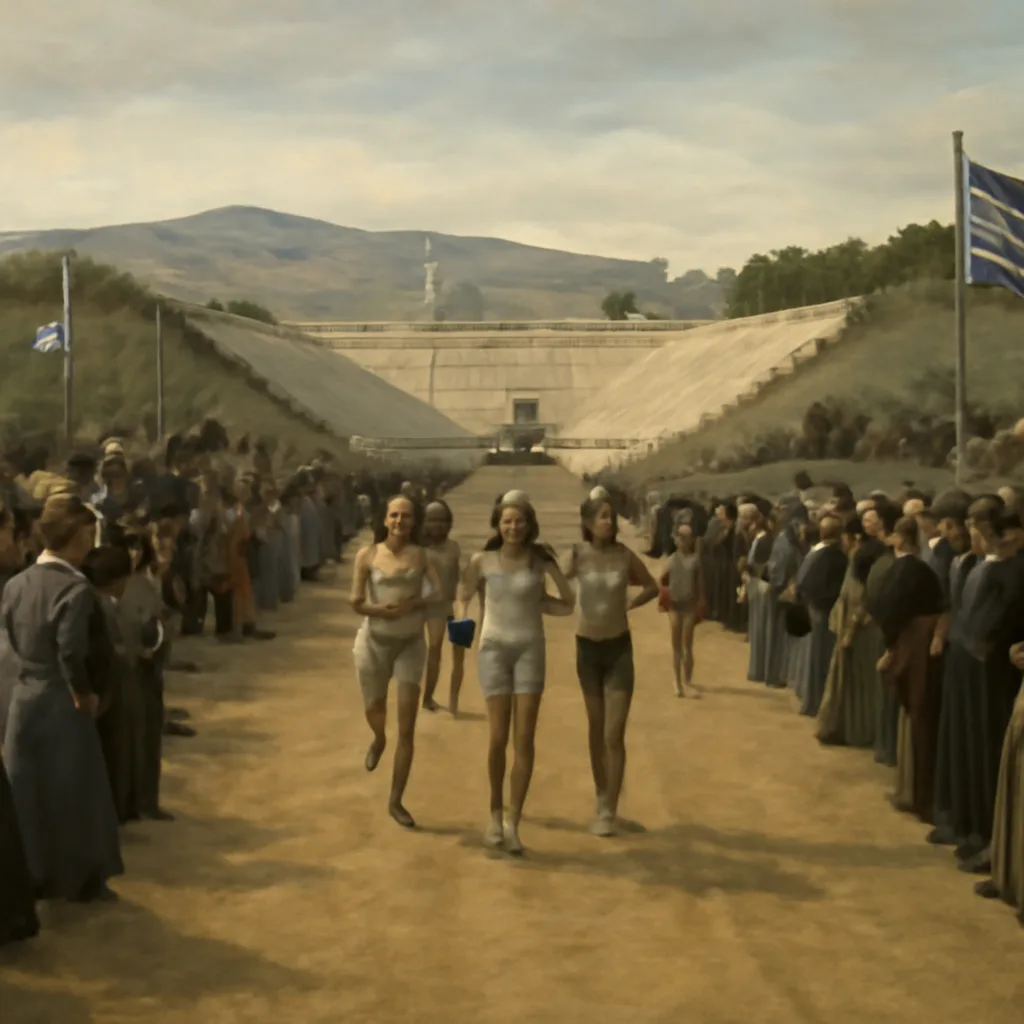
Crowd-lined country road from Marathon to Athens with runners approaching the Panathenaic Stadium; early 20th-century clothing and horse-drawn vehicles visible.

On April 10, 1896, the inaugural modern marathon—modeled on the legendary run from Marathon to Athens—was held during the first modern Olympic Games, won by Greek runner Spyridon Louis in front of an enthusiastic home crowd.


The marathon held on April 10, 1896, during the first modern Olympic Games in Athens is widely regarded as the first run of the modern marathon distance as an organized international event. The race was inspired by a popular 19th-century revival of interest in ancient Greek history and by the legend of a messenger running from the battlefield of Marathon to Athens to announce victory. Organizers of the Athens Games incorporated a long-distance footrace into the program to evoke that classical past.

Course and organization
The race began in the town of Marathon and finished in the Panathenaic Stadium in Athens. Contemporary accounts indicate a course of roughly 40 kilometers (about 25 miles); standardization to the later 42.195 km (26 miles 385 yards) distance did not occur until 1908 and was only widely adopted in the 1920s. The 1896 race was organized by the Hellenic Olympic Committee with support from French and British athletic enthusiasts who were helping to shape the early modern Olympic program.

Competitors and outcome
Seventeen athletes from several countries entered; 14 started the race and nine finished. Spyridon (Spyros) Louis, a Greek water-carrier and army reservist, won the race with a time reported at about 2 hours 58 minutes. Louis’s victory held special symbolic value for the host nation and made him an immediate national hero. The silver medal (then recognized as second place; the modern gold-silver-bronze convention was not yet standard) went to Austrian-Italian runner Charilaos Vasilakos is sometimes credited with the first official placing in a preceding national event; accounts vary on placings and nationalities in sources from the period. Robert Garrett of the United States finished third by contemporary reports.

Public reaction and legacy
The event drew a large and enthusiastic crowd in Athens and captured international attention as part of the revival of the Olympic Games. The marathon became one of the signature events of the modern Olympics, valued for its symbolic link to antiquity and for the dramatic physical demands it placed on competitors. The specific distance of the race remained variable in early years; the modern standardized distance—42.195 km—was set after a longer course at the 1908 London Olympics and later codified by athletics governing bodies. Nonetheless, the 1896 Marathon established the format of a long-distance road race from a notable start to a stadium finish and inspired the rapid adoption of similar events worldwide.

Historical notes and uncertainties
Contemporary reporting of the 1896 race contains variations in precise times, participant lists, and some finishing orders, stemming from the informal record-keeping practices of the period. While Spyridon Louis’s victory and the Marathon-to-Athens route are undisputed, details such as exact distance and some competitor nationalities or spellings appear inconsistently in primary sources and early histories. Where possible, later scholarly compilations of Olympic records reconcile these discrepancies, but small uncertainties remain typical for sporting events from the late 19th century.

Share this

Email Share on X Facebook Reddit

Did this surprise you?