
07/30/1969 • 5 views
British troops deployed to Northern Ireland as sectarian unrest escalates
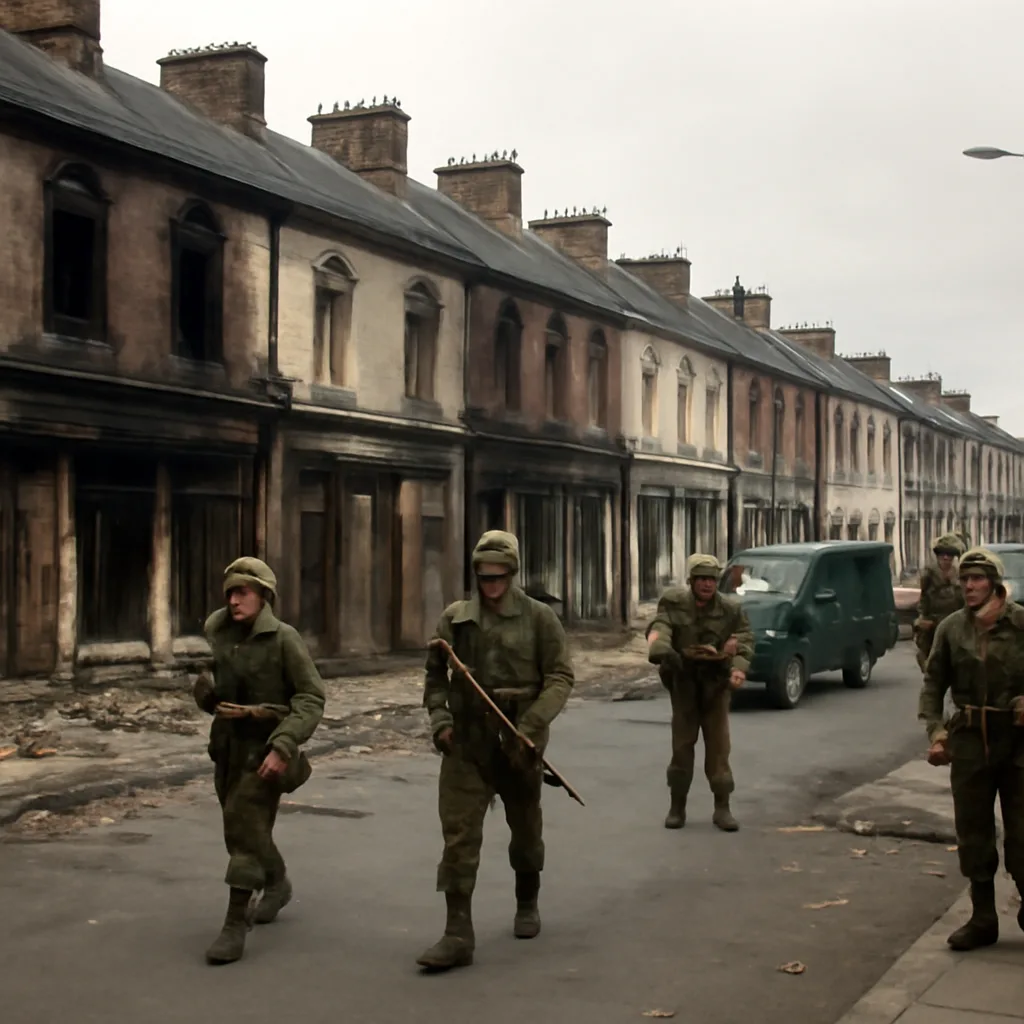
On 30 July 1969 British troops were sent to Northern Ireland amid escalating clashes between Catholic and Protestant communities and heavy rioting in Belfast and Derry. The deployment aimed to restore order after police struggled to contain violence during rising communal tensions.
The security situation in Northern Ireland had been deteriorating for months. Civil rights marches, modelled on contemporary movements in other countries, sought to challenge discrimination against the Catholic minority in housing, employment and voting. Opposition from some unionist politicians and counter-demonstrations helped polarise the situation. In August 1968 and into 1969, street disturbances, baton charges by the RUC and increasingly organised loyalist and republican responses contributed to a breakdown of public order in several urban areas.
By late July 1969 the Metropolitan Police and the RUC were struggling to control the level of violence. In Belfast, particularly in areas such as the Shankill (largely Protestant) and the Falls (largely Catholic), rioting produced fires, widespread property damage and sustained exchanges of petrol bombs and masonry. In Derry, the August 1969 Apprentice Boys parade and subsequent confrontations had already heightened tensions; the events of late July and early August left many Catholic families fearing for their safety.
The British government decided to deploy units of the British Army primarily on a peacekeeping footing, under strict orders intended to avoid political escalation. Soldiers were intended to protect civilians, assist overwhelmed police forces and secure key points such as transport hubs and public buildings. Initially, the deployment was presented as a temporary measure aimed at restoring order while civil authorities regained control.
The arrival of troops had immediate effects on the streets. In many areas the visible presence of soldiers reduced open rioting and provided a measure of security for some residents. However, the troops’ presence also introduced new political and social dynamics. Many in the Catholic/nationalist community distrusted the British Army, seeing it as an occupying force aligned with unionist interests; many unionists welcomed troops as protection against republican violence. Early interactions between soldiers and civilians were often fraught and shaped by existing suspicions.
The 1969 deployment is widely regarded as a significant turning point. What began as a temporary security operation became, over subsequent years, a long-term military presence as Northern Ireland entered the period commonly known as the Troubles. The initial mission—supporting police and protecting civilians—gradually expanded into counterinsurgency operations, with both the military and the RUC becoming central actors in a conflict that would last decades.
Historians note that decisions taken in 1969 were influenced by an imperfect understanding of local dynamics and by limited options available to governments confronting communal violence. Assessments vary on whether different political choices could have prevented the prolonged conflict that followed. Contemporary accounts and later research emphasise the complexity of causes: institutional discrimination, contested identities, political failures and cyclical violence all contributed.
The deployment of British troops on 30 July 1969 remains a pivotal, contested moment in Northern Irish history. It marked the start of sustained military involvement and shaped political debates about governance, security and civil rights for many years after.