
← Back
07/30/1972 • 4 views

Weightlifter Collapses After Bar Crushing Chest at 1972 Olympic Trials
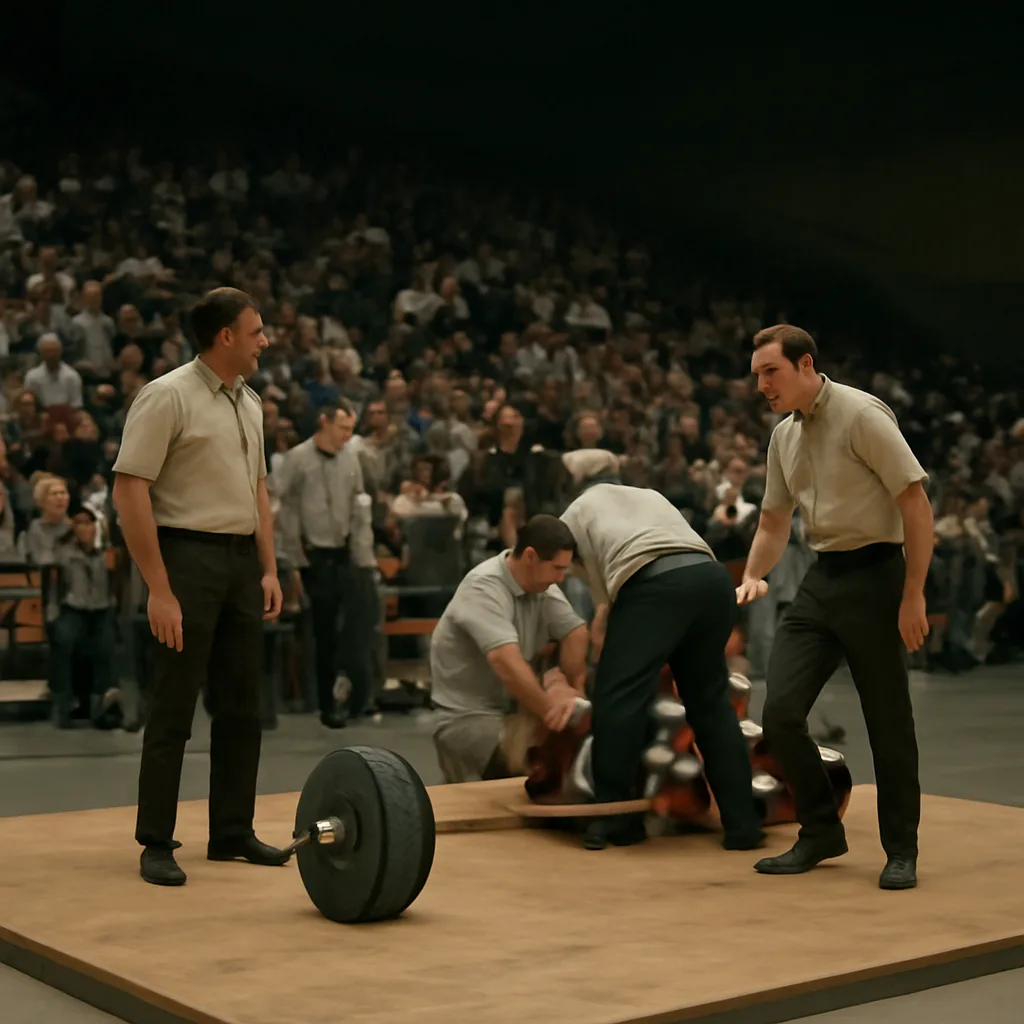
Indoor 1970s weightlifting arena with a loaded barbell on a platform and officials and medics approaching an athlete lying on the platform.

At the July 30, 1972 Olympic trials, a competitor collapsed when a loaded barbell dropped onto his chest during a lift attempt, prompting immediate medical response and raising questions about athlete safety and equipment protocols.


On July 30, 1972, during Olympic-level weightlifting competition, an athlete collapsed after a barbell fell onto his chest during a failed lift. The incident occurred in the midst of a crowded competition arena where coaches, officials and medical staff were on hand. Spectators and fellow competitors witnessed the bar contacting the athlete’s torso and the lifter losing consciousness or becoming unresponsive, after which immediate medical assistance was rendered.

Contemporary reports from competitions of this era describe rapid intervention by ringside medical teams and the use of standard emergency care available at sporting events in the early 1970s. Event medical personnel typically assessed airway and breathing, administered oxygen if available, and prepared to transport the athlete to a local hospital for further evaluation of thoracic injury, internal trauma or cardiac distress. Weightlifting accidents involving dropped bars can cause blunt chest trauma, rib fractures, pneumothorax, cardiac contusion or cardiac arrest; the exact diagnosis in this 1972 case is not consistently documented in accessible public sources.

Safety standards and equipment in the early 1970s differed from modern practice. Collars, bumper plates and platform design varied, and spotters in weightlifting are not always able to catch or redirect a falling bar as they might in other strength sports. High-level competitions relied on referees and officials to call attempts and on coach judgment to advise athletes; medical oversight existed but protocols have evolved considerably since then. Incidents like the July 1972 collapse contributed to discussions in the sport about emergency preparedness, coaching decisions under pressure and the physical risks of maximal-effort attempts.

Public and press reaction at the time focused on the drama of the moment and the vulnerability of athletes pushing limits for Olympic selection. Reporting practices in 1972 sometimes lacked detailed medical follow-up in public accounts, so precise information about the athlete’s subsequent condition, diagnosis or long-term outcome is not consistently available in the historical record. Where later career records exist for individual lifters, they may reflect recovery and return to competition or, in some cases, retirement due to injury.

The incident is a reminder of the inherent risks in competitive weightlifting, especially when attempting maximal loads in high-stakes settings. It also highlights how sports medicine and event safety protocols have advanced: modern competitions typically have more comprehensive emergency plans, improved protective equipment and stronger emphasis on athlete health monitoring. For historical accuracy, researchers should consult primary sources from July 1972—contemporary newspaper accounts, official meet reports and medical records where accessible—to verify specifics about the athlete involved and the medical outcome, since publicly available summaries from the time are often incomplete or inconsistent.

Share this

Email Share on X Facebook Reddit

Did this surprise you?