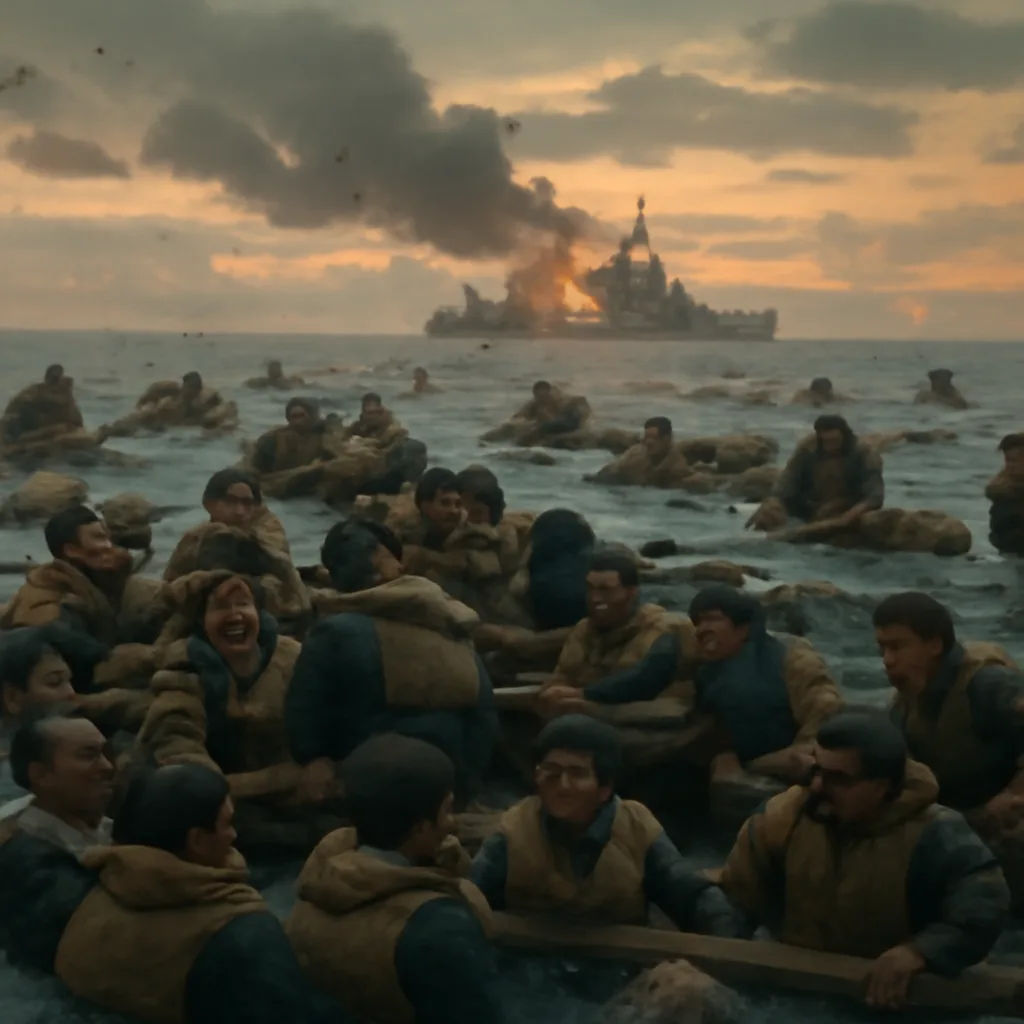
Survivors of USS Indianapolis endured days adrift and shark attacks
After the cruiser USS Indianapolis sank on July 30, 1945, hundreds of sailors spent up to five days in the open sea; those who remained alive faced dehydration, exposure, and documented shark attacks before rescue reduced the toll.
On the night of July 30–31, 1945, USS Indianapolis (CA-35) was torpedoed and sunk in the Philippine Sea after delivering components of the first atomic bomb to Tinian. The ship sank in about 12 minutes; of the roughly 1,196 crew aboard, about 300 went down with the ship. The remaining approximately 900 men entered the water, many without life jackets, beginning a prolonged ordeal.
Survivors faced a sequence of lethal hazards. Immediate injuries and shock from the sinking claimed lives. Those who remained afloat then contended with exposure, dehydration, saltwater ingestion, and predation. The Navy’s official investigations and survivor accounts report repeated shark encounters and attacks during the ensuing days. Sharks were drawn by the noise, splashing, blood from wounds, and the presence of so many men in the water. Some survivors described sharks bumping and biting at people, and multiple deaths were attributed to shark attacks in after-action reports and testimonies.
Rescue did not come quickly. The ship’s sinking went unnoticed by the Navy for days because Indianapolis had completed her mission and rendezvous procedures had not been immediately checked; the ship had not sent a distress signal before sinking. The first rescue aircraft sighted survivors on August 2, about four days after the sinking; surface ships and escort vessels recovered men over the following day or two. By the time rescue operations concluded, only 317 men were found alive. Official Navy records list 879 dead, a figure that includes those lost to the initial sinking, exposure, and shark attacks.
Contemporary and later investigations, including a 1945 Naval Court of Inquiry and subsequent historical research, document both the delay in rescue and the presence of shark attacks among the causes of death. Survivor testimonies vary in detail — some recount repeated, aggressive shark attacks; others report sharks that circled or made occasional contact. Because many deaths occurred while men were unobserved in the dark or amid chaos, precise counts of deaths specifically due to shark predation are not possible; historical accounts emphasize that shark attacks were a significant and traumatic element of the broader catastrophe.
The sinking of USS Indianapolis had profound consequences beyond the immediate loss of life. It prompted scrutiny of Navy procedures for tracking ship movements and for aircraft patrols. The disaster remained a subject of public attention and veterans’ testimony for decades, and it shaped the reputations and careers of officers involved. The event also entered public consciousness through survivor memoirs, official reports, and later media portrayals that highlighted both the human endurance and the grim conditions the sailors faced.
When discussing the Indianapolis today, historians caution against simplifying the tragedy to a single cause. The deaths resulted from an interplay of the rapid sinking, lack of an immediate distress report, exposure and dehydration over several days, and shark attacks among other factors. Survivor accounts and official documents together provide the basis for our understanding, while specific details — such as exact numbers killed by sharks versus other causes — remain partly indeterminate due to the nature of the catastrophe.