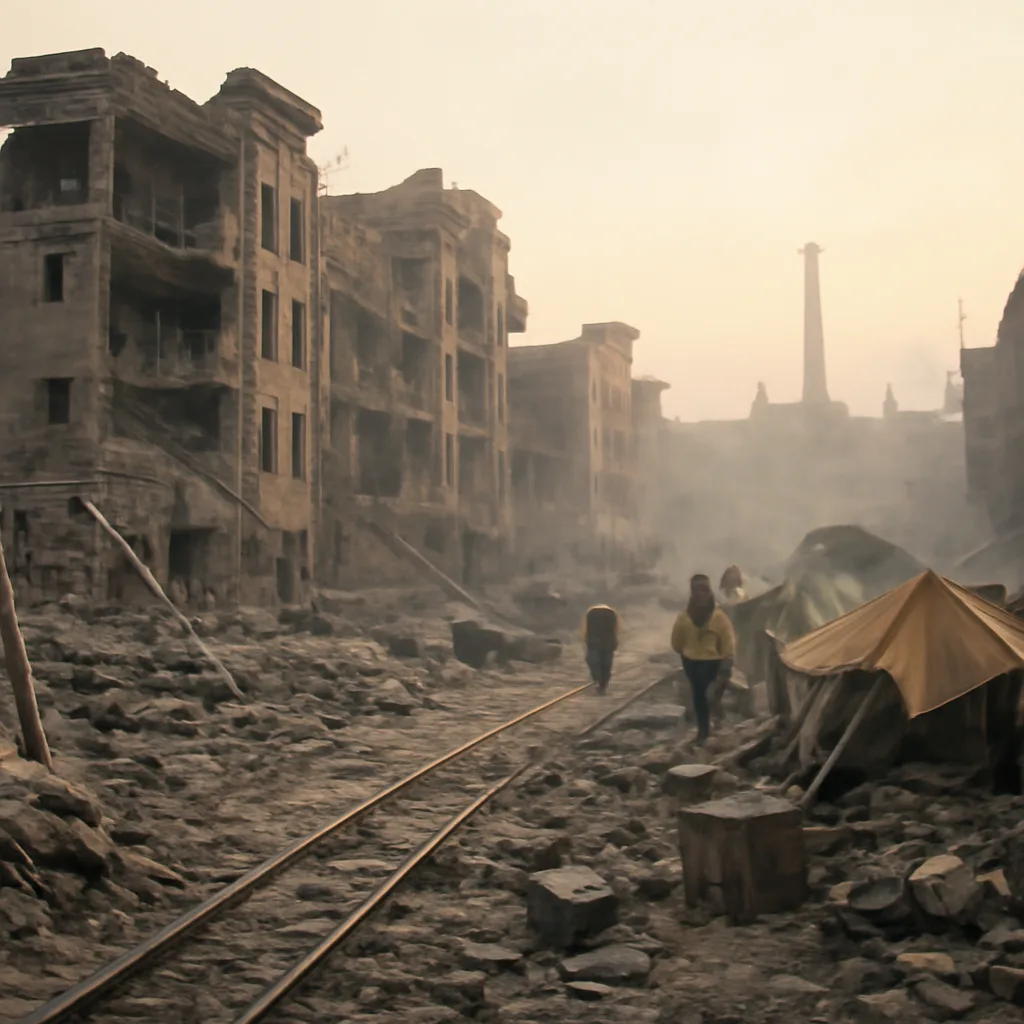
1976 Tangshan Earthquake Levels City in Deadly July Quake
On July 28, 1976, a powerful earthquake struck Tangshan in Hebei province, China, causing widespread destruction and a catastrophic loss of life. The disaster collapsed much of the city and triggered a national emergency whose full human toll remains disputed.
On the morning of July 28, 1976, at approximately 3:42 a.m. local time, a major earthquake struck Tangshan, an industrial city in Hebei province, northeastern China. The quake devastated much of the built environment: residential buildings, factories, rail infrastructure, and public utilities were destroyed or rendered unusable within the city and surrounding counties. The event occurred during a period of dense urban housing and heavy industry, exacerbating the scale of structural collapse.
Magnitude and physical effects
Seismological estimates place the main shock at a magnitude of about 7.6 (surface-wave magnitude, Ms), with strong aftershocks that continued for days. The ground shaking was sudden and intense, producing near-total collapse in many parts of central Tangshan. Fires, ruptured gas lines, and interrupted water supplies complicated rescue efforts. Rail lines and roads were damaged, impeding the rapid movement of emergency personnel and supplies.
Human toll and immediate response
The human cost was enormous. Official Chinese government figures released later gave a death toll of around 242,000 (including those presumed dead), with many more injured and hundreds of thousands left homeless. Independent and retrospective estimates have varied, and the exact number of fatalities has been the subject of debate and uncertainty outside official tallies. Hospitals and morgues were overwhelmed; survivors—many trapped in rubble—faced limited medical resources in the hours and days after the quake.
Within China, the disaster prompted a major mobilization of rescue, medical, and military resources. Search-and-rescue operations, including digging survivors out of collapsed buildings, were carried out under very difficult conditions. Emergency shelters were set up for the displaced, and efforts to restore basic services proceeded amid continuing aftershocks and logistical challenges.
National and international context
The Tangshan earthquake occurred during a politically sensitive period in China’s modern history. Information control and the political environment affected the flow of news and the organization of relief, contributing to limited contemporaneous international reporting compared with other large disasters. International assistance was offered by some countries and organizations, though the scale and timing of foreign involvement were constrained by political and practical factors.
Aftermath and reconstruction
In the years after the earthquake, Tangshan was rebuilt and redeveloped. Reconstruction prioritized industrial recovery and housing, and the city eventually regained much of its economic role in the region. Memorials and commemorations have been established to honor those who died and to mark the scale of the disaster.
Historical significance
The 1976 Tangshan earthquake stands as one of the deadliest earthquakes of the 20th century. Its high mortality, the rapid collapse of urban structures, and the difficulties of rescue and recovery highlight the vulnerability of densely built industrial cities to strong seismic events. The disaster also influenced later policies on earthquake preparedness, building standards, and emergency management in China.
Uncertainties and sources
Some details—particularly the exact death toll—remain uncertain or disputed in secondary accounts. Official Chinese figures, contemporaneous state reports, seismological data, and later historical studies provide the basis for most reconstructions of the event. Where figures differ, this summary notes the range of reported estimates rather than asserting a single uncontested number.