12/29/1916 • 12 views
The Death of Rasputin
The death of Grigori Rasputin, which occurred in the early morning of December 30, 1916 (December 17 in the old Russian calendar), is the ultimate historical "tall tale."
The Legendary Version
Most of what we "know" about Rasputin’s death comes from the memoirs of his killer, Prince Felix Yusupov. According to Yusupov, the night played out like a horror movie:
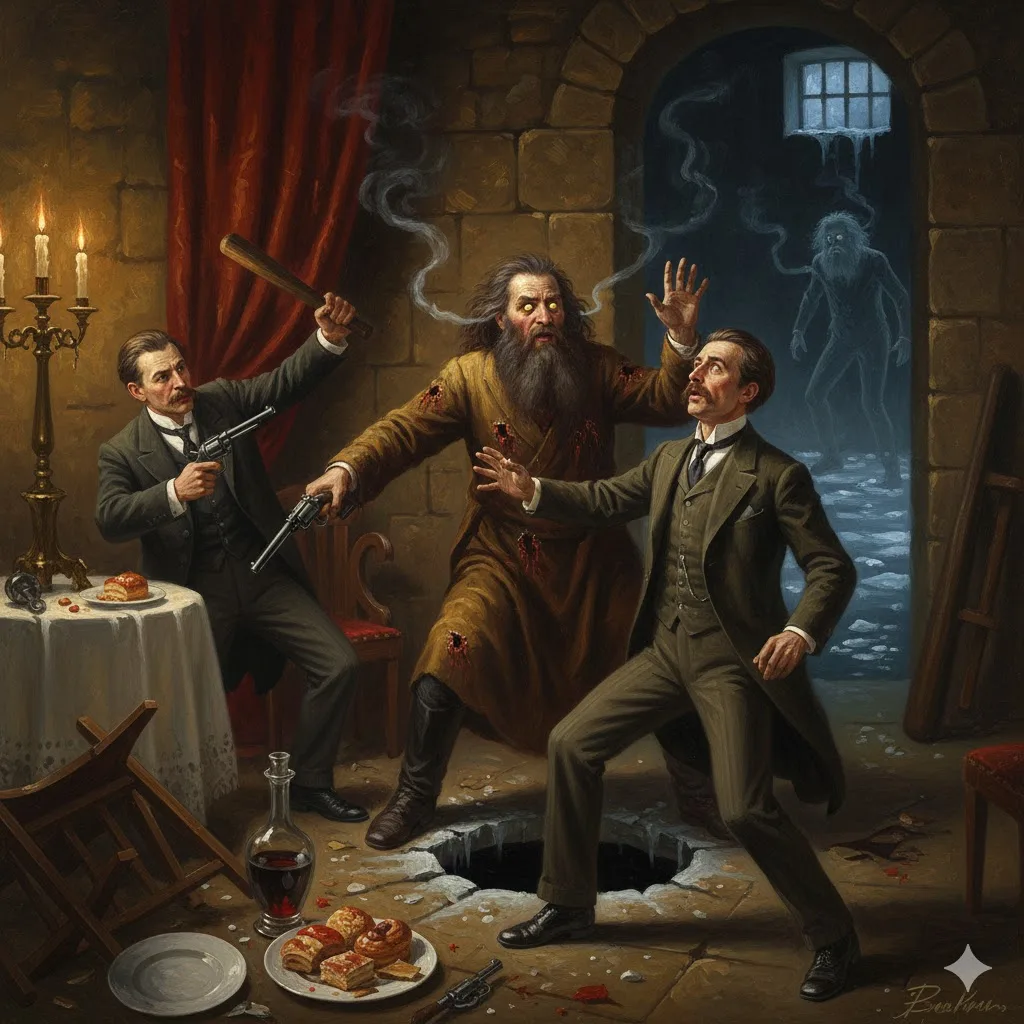
The Poison: Lured to the Moika Palace, Rasputin was fed tea cakes and Madeira wine laced with enough cyanide to kill several men. To Yusupov's horror, Rasputin ate them and asked for more wine, appearing totally unaffected.
The Shooting: In a panic, Yusupov shot Rasputin in the chest. A doctor declared him dead. However, when Yusupov returned to the cellar later, Rasputin suddenly opened his eyes, gripped Yusupov’s shoulders, and attempted to strangle him.
The Chase: Rasputin crawled out of the basement and into the snowy courtyard. The conspirators shot him twice more. Even then, he was reportedly still moving, so they beat him with a rubber club.
The Drowning: They bound him in a curtain and threw him into the frozen Malaya Nevka River. Legend says that when his body was found, his arm was raised as if he had tried to claw his way out of the ice, suggesting he was still alive when he hit the water.
The Forensic Reality
Modern historians and forensic pathologists have debunked much of Yusupov's "supernatural" account.
No Poison Found: The original autopsy report (and modern reviews of it) found no trace of poison in his stomach. Rasputin's daughter also noted that her father avoided sweets due to a recurring stomach ailment, so he likely never ate the poisoned cakes.
The "Third Hole": Photos of the corpse show three distinct bullet wounds from different calibers. Most importantly, there was a contact gunshot wound to the center of his forehead. This was an execution-style "coup de grâce" that would have killed him instantly.
No Drowning: There was no water found in his lungs. He was already dead when he was thrown into the river.
Why the Legend Exists
Yusupov had a strong motive to exaggerate. By portraying Rasputin as a "diabolical force" who refused to die, Yusupov transformed a messy, amateurish murder into an epic struggle between good and evil. He spent the rest of his life in exile, essentially "living off" the fame of being the man who killed the unkillable monk.
There is even a theory that a British Secret Service agent fired the final fatal shot to prevent Rasputin from talking the Tsar into a separate peace with Germany.