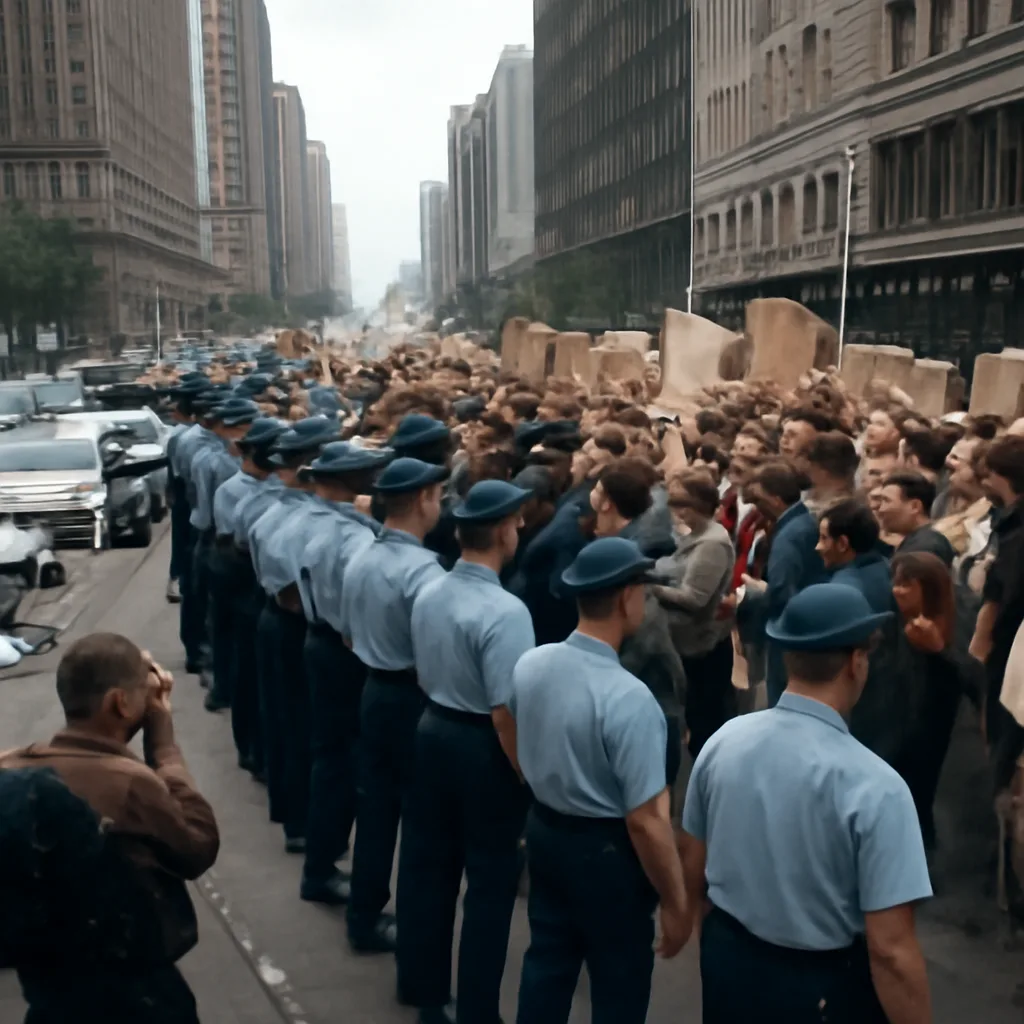
Violent Clashes Between Chicago Police and Antiwar Demonstrators at 1968 DNC
At the Democratic National Convention in Chicago on July 26, 1968, large antiwar demonstrations confronting the Vietnam War met forceful police action, resulting in mass arrests, dozens injured, and national outrage over the handling of protesters and journalists.
On July 26, 1968, the third day of the Democratic National Convention in Chicago, confrontations between anti–Vietnam War demonstrators and Chicago police escalated into widespread violence on city streets. The unrest followed days of organized protests by groups including the National Mobilization Committee to End the War in Vietnam and attracted thousands of demonstrators who sought to pressure the Democratic Party and the nation to change course on the war.
Chicago Mayor Richard J. Daley and local authorities had prepared a heavy police and National Guard presence, citing concerns about public order. Protesters attempted marches and demonstrations in areas near the convention hotels and public squares. Police responses included baton charges and mass arrests; reporters and bystanders were also caught in the clashes. Scenes of police beating protesters and some passersby were widely reported, fueling public debate over police tactics and civil liberties.
Official tallies and contemporary news coverage documented hundreds of arrests and dozens of documented injuries among demonstrators, police, and journalists. The violence disrupted convention-related traffic and media coverage, contributing to a fractious national mood during an already turbulent year marked by the assassinations of Martin Luther King Jr. and Robert F. Kennedy earlier that spring.
The events in Chicago intensified divisions within the Democratic Party and the wider public. Antiwar activists argued that the heavy-handed police response exemplified a suppression of dissent and a failure of political institutions to address the Vietnam War. Meanwhile, many supporters of the police and city officials argued the force used was necessary to maintain order amid large, sometimes disorderly crowds.
The clashes prompted congressional inquiries, legal challenges, and prolonged debate about policing, protest rights, and political dissent. Subsequent investigations and reporting questioned coordination between city officials and law enforcement and examined whether civil liberties had been violated. The confrontations in Chicago became a defining moment of 1968, widely remembered as an instance in which domestic unrest over the Vietnam War and civil rights collided with institutional responses to public protest.
Historical accounts note that assessments of responsibility and justification remain contested: some sources emphasize demonstrators’ planned disruptions and incidents of property damage, while others highlight eyewitness and media reports of excessive force by police. The immediate aftermath included legal proceedings for some arrested demonstrators and internal reviews of police conduct, while the broader political consequences shaped perceptions of the Democratic Party and the direction of U.S. policy discussions in the months that followed.
Because reporting and interpretations vary across contemporary and later sources, historians stress the importance of consulting multiple primary accounts—news reports, legal records, eyewitness testimony, and archival materials—to form a detailed understanding of what happened during the Chicago confrontations at the 1968 Democratic National Convention.