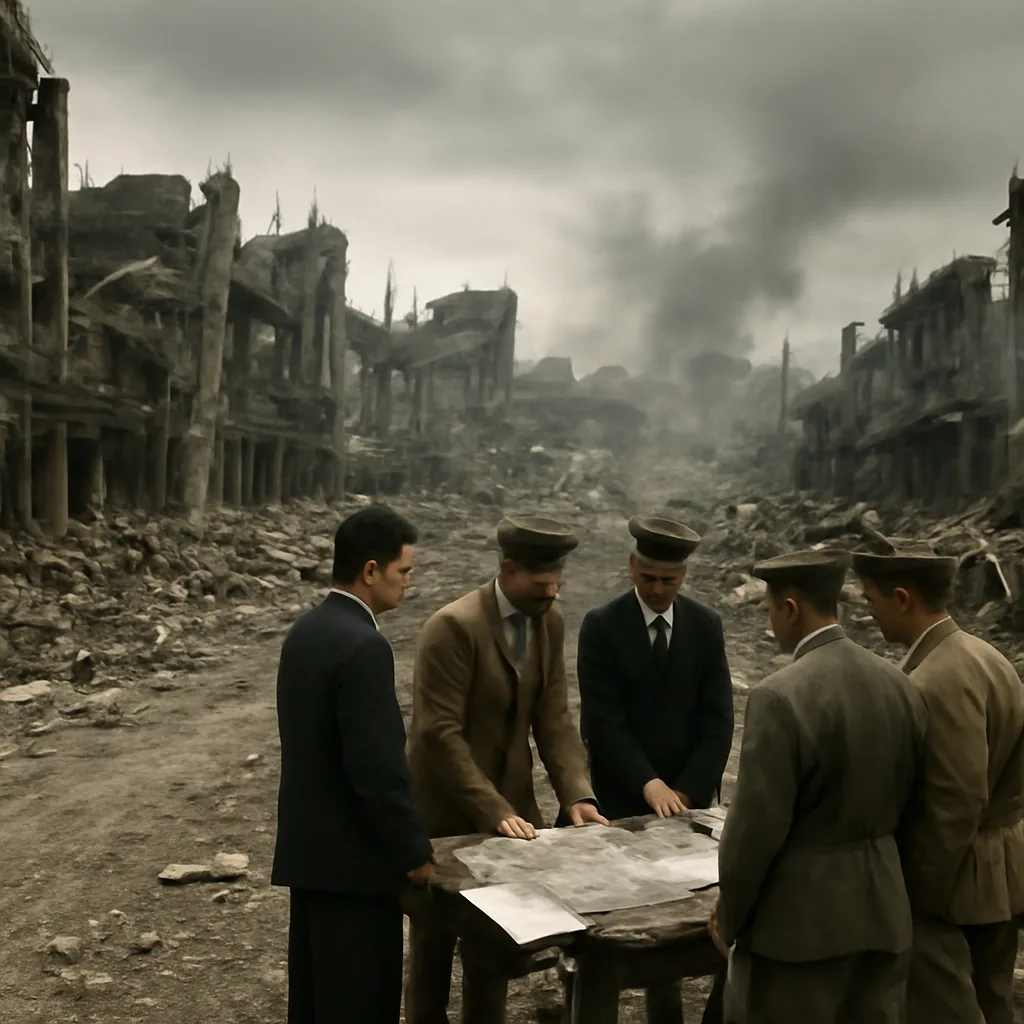
Japan Signals Willingness to Discuss Surrender After Atomic Attacks
In late July 1945, as Japan reeled from unprecedented destruction and continued Allied advances, Tokyo signaled it was prepared to explore surrender terms—an overture shaped by the atomic bombings, Soviet entry into the war, and internal debates among Japanese leaders.
By July 26, 1945, Japan was facing an altered strategic and moral landscape. Two atomic bombs—dropped on Hiroshima (August 6) and Nagasaki (August 9)—would soon follow, but even before the second blast the government had begun to signal a readiness to discuss the terms for ending the war. The July 26 date marks a key moment in which Japan’s leadership, military setbacks, and international pressures combined to open a channel toward surrender negotiations.
Context and pressures
Through mid-1945 Japan had suffered heavy losses: sustained strategic bombing devastated many cities, the U.S. Navy’s blockade and island-hopping campaign cut supply lines, and Allied air power crippled industry and transport. On August 8 the Soviet Union declared war on Japan and launched large-scale operations in Manchuria, but Soviet preparations and diplomatic pressure were building in late July. Internally, Japan’s political leadership was divided between those insisting on continued resistance and those urging acceptance of an end to hostilities to preserve the nation.
The July 26 declaration
On July 26, 1945, the Potsdam Declaration—a statement by the United States, United Kingdom, and China calling for Japan’s unconditional surrender and outlining terms for occupation—was publicly issued. Japanese officials and some members of the government began privately and cautiously exploring the possibility of responding to Allied terms. “Surrender talks” at this stage generally meant signals and entreaties to seek clarification or to propose conditions, rather than an unconditional capitulation. Japanese leaders debated whether to accept the Allies’ terms as stated, to seek modifications (notably regarding the status of the emperor), or to attempt to negotiate a mediated settlement.
Internal divisions and diplomatic nuance
There was no unified Japanese position on July 26. The Supreme Council for the Direction of the War (the Supreme War Council) and civilian government officials were split. Some officials initiated contacts through neutral channels and intermediaries—such as Soviet diplomats, who until their declaration of war had maintained relations with Tokyo—to gauge flexibility in Allied demands. Other factions within the military and government opposed any approach that could be construed as unconditional surrender, fearing loss of national sovereignty and retribution.
Role of the Emperor and constitutional concerns
A central sticking point in discussions was the fate of Emperor Hirohito and the imperial institution. Many Japanese leaders believed that any acceptable end to fighting had to preserve the emperor’s status as head of state. This concern shaped much of the cautious, conditional language in Japanese exploratory signals and complicated the prospect of immediate acceptance of the Potsdam terms.
Consequences and immediate aftermath
Although July 26 is associated with the moment when Japan began to assess and feel compelled toward surrender negotiations, the process remained fraught and protracted. The Potsdam Declaration itself warned of “prompt and utter destruction” if Japan did not surrender, language that, combined with later events—the atomic bombings and Soviet entry into the war—intensified urgency and eventually pushed Japan’s leadership toward capitulation. The formal surrender would occur on August 15, 1945 (announced by Emperor Hirohito), with the official signing on September 2 aboard the USS Missouri.
Historiographical notes
Historians continue to debate the relative weight of factors that led Japan to seek an end to the war: the psychological and physical shock of atomic bombing, the Soviet declaration of war and land offensives, the cumulative destruction by conventional bombing and blockade, and internal political dynamics. It is important to distinguish between exploratory diplomatic approaches and a formal offer of unconditional surrender; on July 26, Japan’s signals were tentative and aimed at probing terms and possible guarantees, especially concerning the imperial institution.
Sources and verification
This summary is based on contemporaneous diplomatic records, government minutes, and later historical scholarship that examine the July–August 1945 period. Where specific interpretations differ among historians—such as the precise causal weight of the atomic bombs versus Soviet intervention—those differences are noted in the historiography rather than asserted here as settled fact.