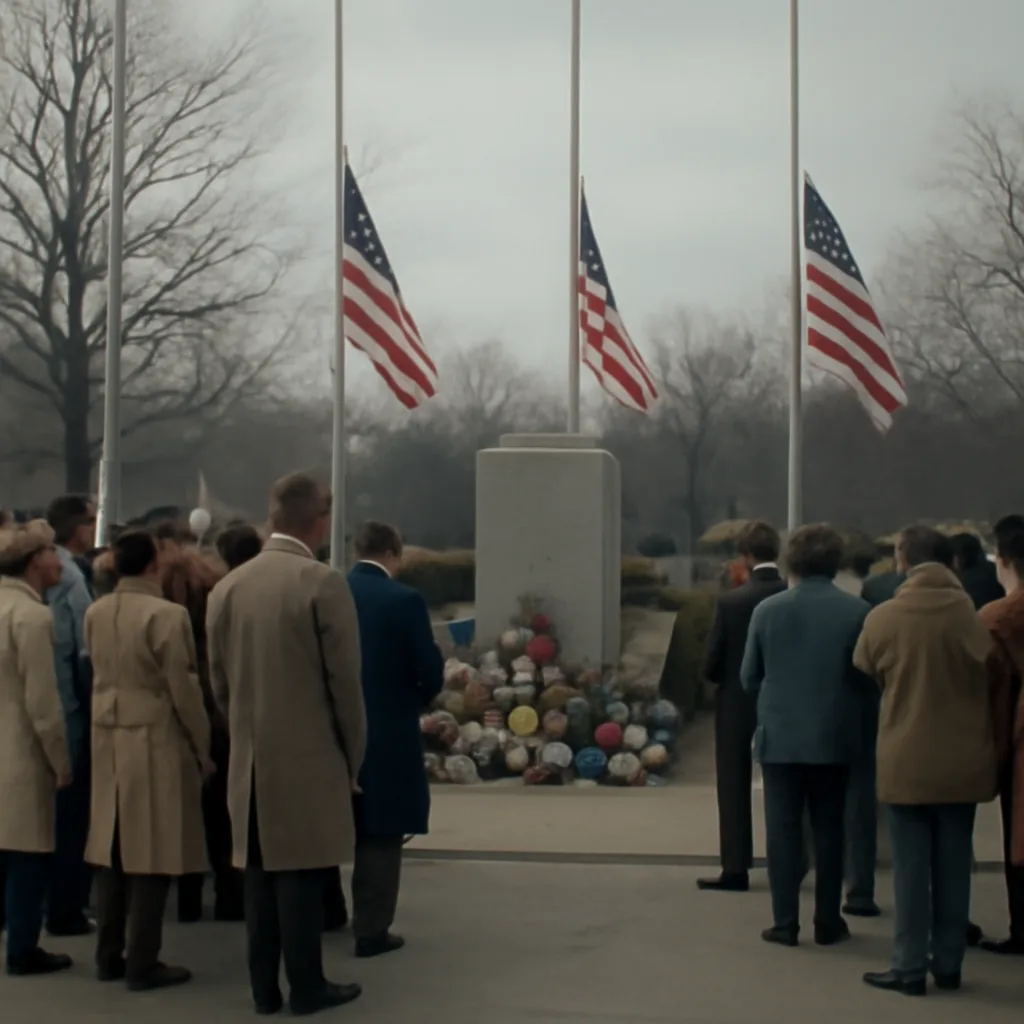
On April 29, 1986, national memorials and remembrances marked the loss of the seven-member Space Shuttle Challenger crew, remembered for their service and the impact of the disaster on U.S. space policy and public life.
On January 28, 1986, the Space Shuttle Challenger broke apart 73 seconds after liftoff, killing all seven astronauts aboard. In the months that followed, the nation mounted a series of public memorials and commemorations; April 29, 1986, became one of the dates when officials, communities and institutions paid formal tribute to the crew’s memory.
Federal and local responses
Federal leaders acknowledged the accident’s national significance. President Ronald Reagan, who had addressed the nation the night of the disaster, participated in subsequent moments of remembrance. Congress held hearings that examined technical causes and oversight failures, and many members took part in memorial events. State and local governments across the country observed moments of silence, lowered flags to half-staff on designated days, and organized civic services.
Educational and institutional remembrances
Schools and universities incorporated classroom discussions and commemorative assemblies to honor the crew and to consider the risks and rewards of scientific exploration. NASA facilities held ceremonies that combined mourning with technical reviews to identify lessons learned. Museums and planetariums scheduled programs focusing on spaceflight history and safety, aiming both to honor the fallen astronauts and to sustain public interest in human spaceflight.
Religious and community services
Religious institutions held memorial services that drew families, colleagues, students and members of the public. Local community centers and veterans’ organizations hosted events reflecting on the astronauts’ public service and on the communal nature of grief in the wake of a prominent tragedy.
Media coverage and public memory
The media continued to cover both the human stories of the crew members and the emerging technical and managerial questions about the shuttle program. Photographs of floral tributes, flags, and makeshift memorials appeared widely, helping shape the national memory. The disaster prompted broader public conversations about the risks of spaceflight, the role of government oversight, and how the nation honors those who die in service to scientific and exploratory missions.
Long-term commemorations and legacy
In the years after 1986, the Challenger crew were memorialized through named scholarships, foundations, plaques, and exhibits that emphasized education and outreach—particularly in science and engineering. Physical memorials, including plaques at NASA centers and community monuments, were established to preserve the memory of the crew and to inspire future generations. The accident also led to changes in NASA procedures and organizational oversight intended to improve safety.
Uncertainties and record
Contemporary reporting and archival records document many of these memorial activities, though the scope and format of local events varied widely and are recorded primarily in local newspapers, institutional archives and personal recollections. Precise lists of every memorial held nationally on specific dates like April 29, 1986, are incomplete in centralized federal records, but major commemorations and the broader national response are well attested in primary sources from the period.
The Challenger disaster remains a defining moment in U.S. space history—remembered both for the lives lost and for the policy and cultural shifts that followed. Memorials and remembrances conducted in the months after the accident reflected a nation grappling with grief while seeking to learn from a catastrophic failure.