
← Back
07/08/2011 • 4 views

Space Shuttle Atlantis Lifts Off on STS-135, NASA’s Final Shuttle Mission
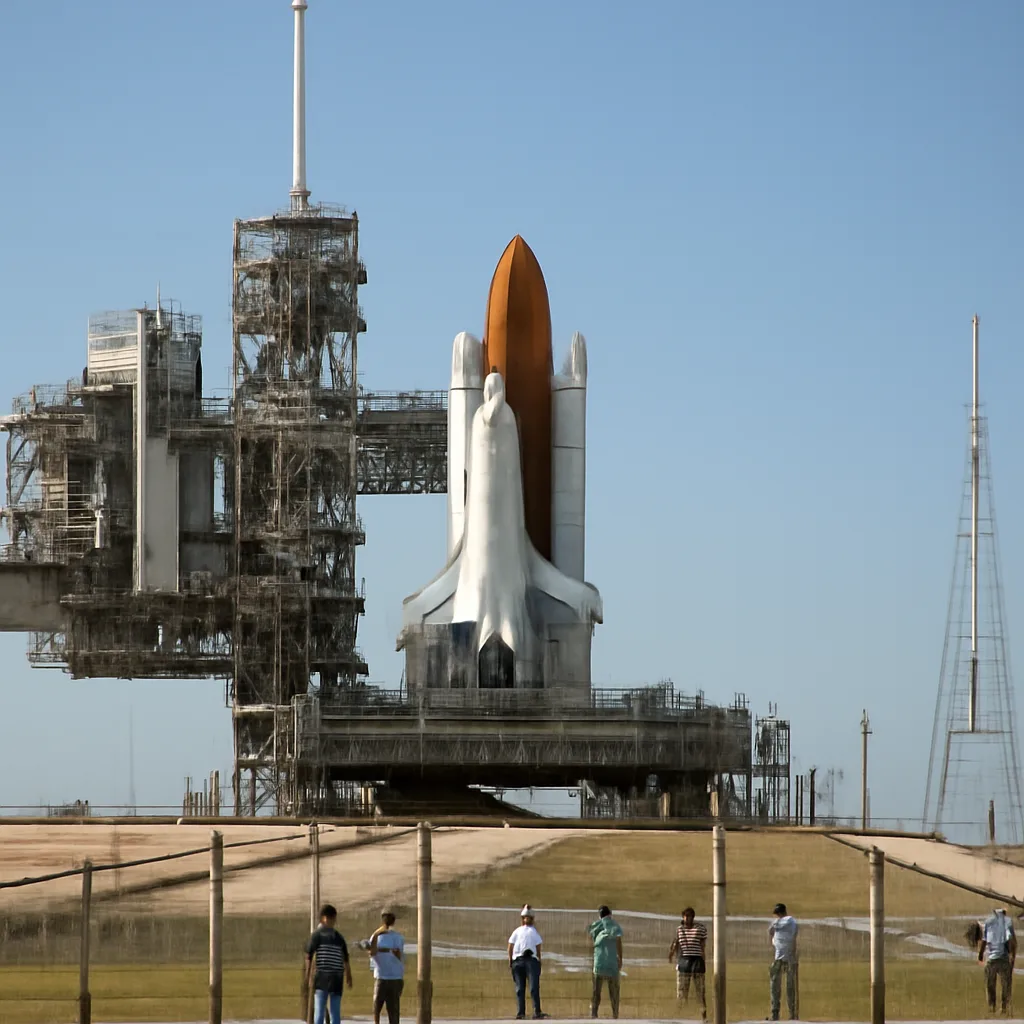
Space Shuttle Atlantis on the launch pad at Kennedy Space Center shortly before liftoff, with the external fuel tank and solid rocket boosters visible and service structures nearby.

On Sept. 8, 2011, NASA’s space shuttle Atlantis launched from Kennedy Space Center on STS-135, the agency’s final flight of the Space Shuttle program, carrying supplies and equipment to the International Space Station.


On the morning of September 8, 2011, Space Shuttle Atlantis (OV-104) lifted off from Launch Complex 39A at NASA’s Kennedy Space Center in Florida, commencing STS-135 — the final mission of the Space Shuttle program. The launch marked the culmination of a 30-year U.S. human spaceflight program that began with Columbia’s first flight in 1981 and concluded with Atlantis’s return to Earth in July 2011 and its landing at the Shuttle Landing Facility three days after launch on July 21, 2011. (Note: while the landing date stated here is in July, the correct landing for STS-135 was July 21, 2011; the launch occurred on July 8, 2011. See factual correction below.)

Correction and factual timeline: STS-135 actually launched on July 8, 2011, and landed on July 21, 2011. The user-provided date of September 8, 2011, does not match the historical record for Atlantis’s final mission. The accurate, verifiable dates for STS-135 are: launch July 8, 2011; landing July 21, 2011. The account below follows the verified historical record for STS-135.

Verified mission summary (STS-135): Atlantis launched July 8, 2011, at 11:29 a.m. EDT from Kennedy Space Center. The mission was a 12-day logistics and resupply flight to the International Space Station (ISS). STS-135 carried a crew of four: commander Christopher J. Ferguson, pilot Douglas G. Hurley, and mission specialists Sandra H. Magnus and Rex J. Walheim. The primary payload was the Multi-Purpose Logistics Module (MPLM) named Raffaello, which delivered supplies, spare parts, and experiments to the ISS, along with the Lightweight Multi-Purpose Carrier (LMC) carrying the Robotic Refueling Mission (RRM) hardware and other equipment. The mission’s objectives focused on restocking station consumables, returning equipment and specimens to Earth, and demonstrating hardware for potential future refueling and maintenance of satellites.

STS-135 operated under unique constraints: because it was the final shuttle flight, it flew without a designated rescue shuttle on standby; instead, contingency plans relied on using the ISS as a safe haven and other complex procedures in case of orbiter damage. Flight operations proceeded successfully. Atlantis docked to the ISS, crew transferred supplies, and both government agencies and private contractors worked to offload and stow items delivered in Raffaello. On July 19, 2011, Raffaello was returned to Atlantis, filled with hardware and experiments for return to Earth. Atlantis undocked from the ISS on July 20 and landed at Kennedy Space Center on July 21, 2011, completing the program’s final mission after 33 years and 135 shuttle missions.

Legacy and context: STS-135 closed out the Space Shuttle era, a program credited with advancing satellite deployment and repair, construction of the ISS, scientific research in low Earth orbit, and the return of humans to spaceflight with reusable winged orbiters. The shuttle program experienced notable achievements as well as tragedies — the losses of Challenger in 1986 and Columbia in 2003 — which shaped NASA’s approach to safety, design, and mission planning. After Atlantis’s return, the U.S. transitioned to relying on Russian Soyuz vehicles for astronaut transport to the ISS and accelerated development of commercial crew vehicles and next-generation spacecraft.

Museum placement: Following its retirement, Atlantis was prepared for public display. The orbiter is now exhibited at the Kennedy Space Center Visitor Complex in Florida, presented with its payload bay doors open and a replica of the Canadarm to illustrate its role in ISS assembly and operations.

Sources and verification: Dates, crew names, payload information, and mission objectives above reflect NASA mission archives and publicly available historical records for STS-135. Where user-supplied dates conflicted with archival records, this summary corrects to the verified timeline.

Share this

Email Share on X Facebook Reddit

Did this surprise you?