Roswell Army Air Field Issues and Retracts Statement on 'Flying Disc' Recovery
On July 8, 1947, Roswell Army Air Field announced it had recovered a "flying disc" from a nearby ranch, then issued a retraction attributing the debris to a weather balloon—an episode that launched enduring debate over what was found and how the military handled the announcement.
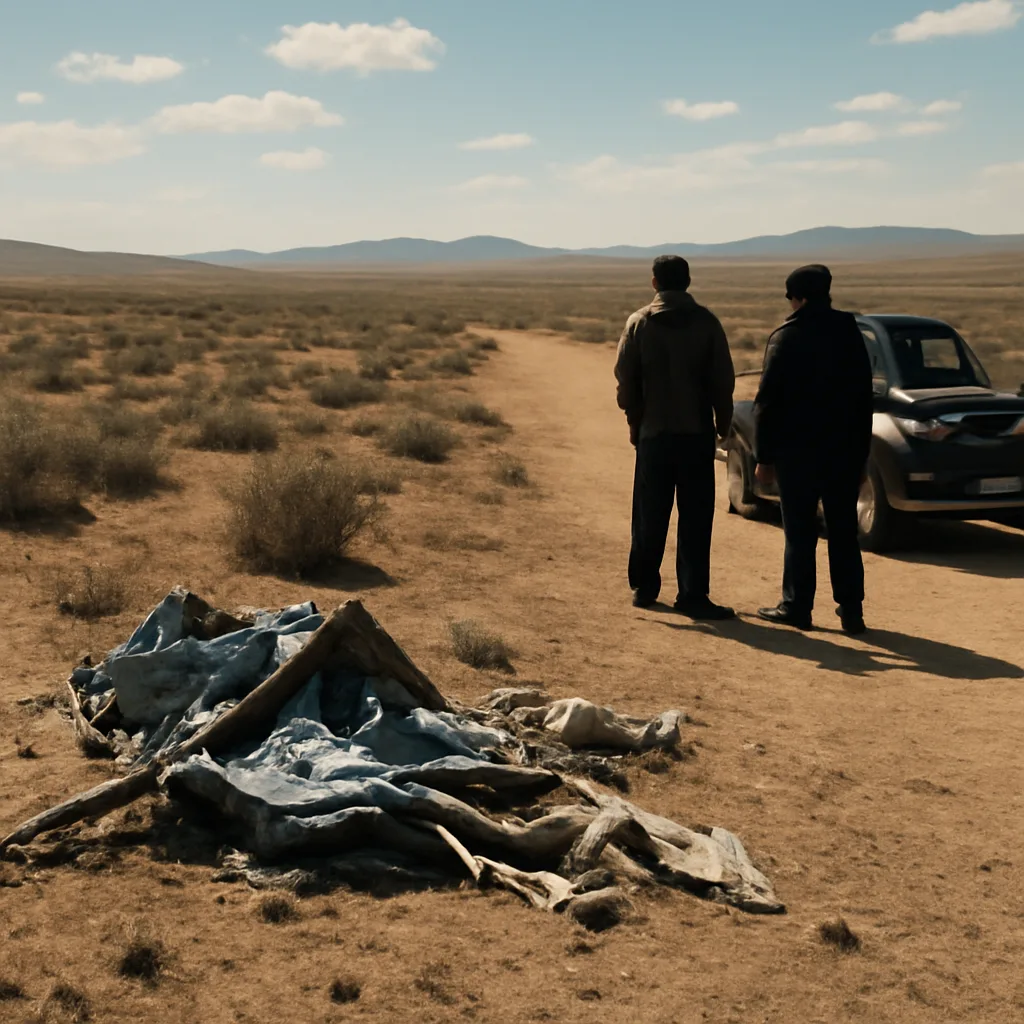
On July 8, 1947, officials at Roswell Army Air Field (RAAF) in New Mexico released a brief press statement saying that personnel had recovered a "flying disc" from a ranch near Roswell. The initial announcement was picked up by local and national wire services and quickly drew public and media attention. Within hours, the Army changed its explanation, saying the recovered material was debris from a weather balloon rather than a disc.
The incident began in early July 1947, when a rancher near Corona, New Mexico, reported finding unusual wreckage on his property. Local authorities notified military officials at the nearby RAAF. On July 8, RAAF officers issued a press release—framed as a public information statement—stating that the 509th Bomb Group had recovered a "flying disc." That release was distributed to newspapers and wire services and generated immediate interest.
Later the same day, higher-ranking Army Air Force officials directed a correction. The retraction stated that the material was actually debris from a weather balloon and associated instruments and that initial descriptions had been inaccurate. The Army provided photographs of large amounts of lightweight metallic debris and issued witness statements from personnel describing the recovered pieces as consistent with a balloon and radar target or instrumentation. Newspapers published the revised account, and the weather balloon explanation became the official military position.
Documentation from the period includes contemporaneous press releases, newspaper articles, and later recollections by military personnel. Decades later, the Roswell episode became central to a wider cultural phenomenon involving unidentified flying objects (UFOs) and alleged government cover-ups. Investigations and scholarly assessments have identified several factors that contributed to the confusion: the rapid initial press release, limited information among officers, the classified nature of some postwar military projects, and the media environment of the time.
In the 1990s the U.S. Air Force conducted historical reviews and published reports addressing the Roswell case. Those reports concluded that the debris recovered in 1947 most likely came from a top-secret program called Project Mogul, which used high-altitude balloons carrying acoustic sensors intended to detect Soviet nuclear tests. Because Project Mogul was classified, officials handling the debris may have been limited in what they could publicly disclose, contributing to inconsistent statements. The Air Force reports drew on archival records, personnel interviews, and technical analysis to support their conclusions.
Despite the official explanations and subsequent Air Force reports, Roswell remains a focal point of debate and speculation. Skeptics and researchers who question the official accounts cite inconsistencies in witness statements recorded years after the event, the speed of the initial press release, and differences between early newspaper descriptions and later government accounts. Supporters of alternative interpretations point to alleged witness testimonies and claimed physical evidence presented over the decades. Historians note that memory can be unreliable over long periods, that classified programs can complicate public explanation, and that sensational media coverage can amplify uncertainty.
The July 8 press release and its retraction illustrate how a brief, ambiguous official statement can have lasting repercussions, especially when set against the Cold War context and secrecy surrounding military research. While official archival material and later Air Force reviews provide a credible explanation centered on Project Mogul and weather balloon debris, public fascination and contested narratives around Roswell persist, making the event a lasting subject of inquiry about transparency, historical memory, and the interaction between the military and the media.