
← Back
09/18/1987 • 4 views

Fire at King’s Cross Underground station kills 31
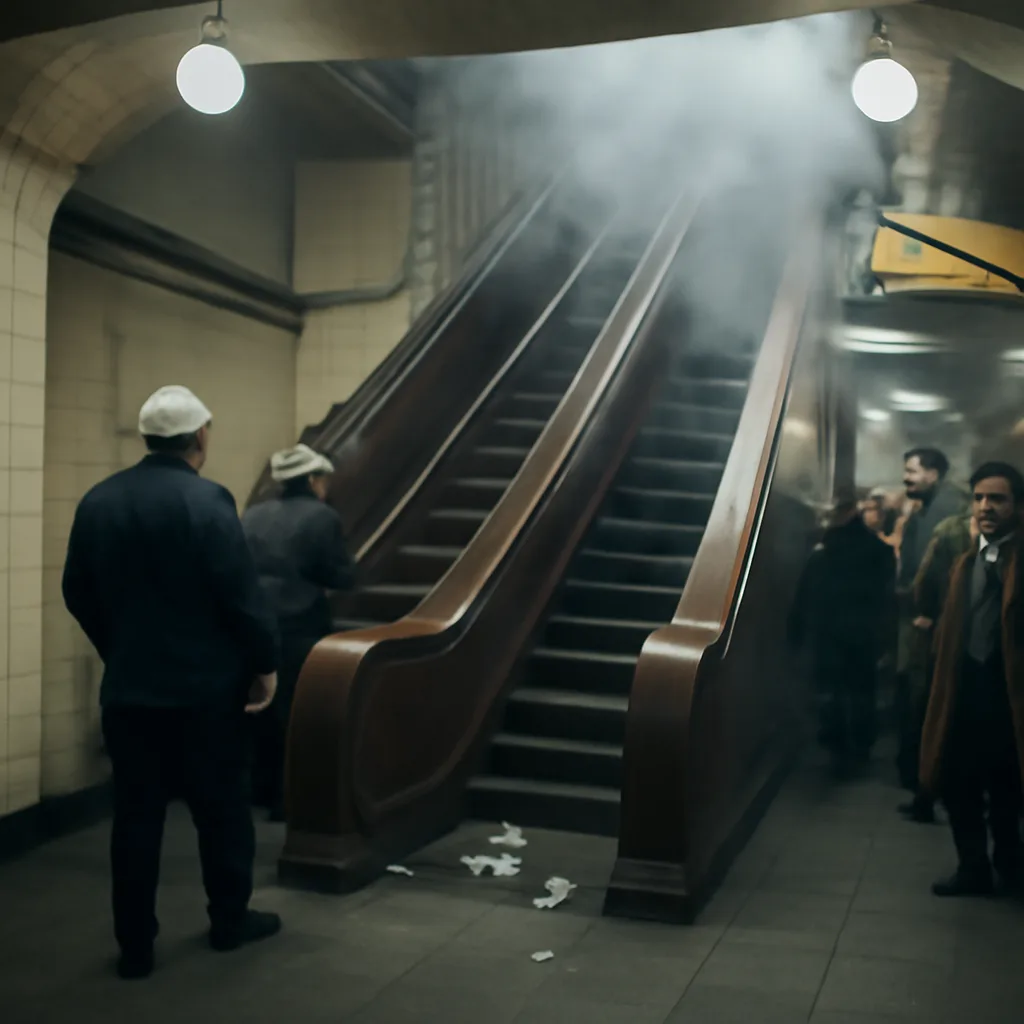
Historic view of King’s Cross Underground ticket hall area and an adjacent wooden escalator in the 1980s, showing period signage and station architecture; crowding and emergency activity are implied but no identifiable faces.

On 18 September 1987 a fire at King’s Cross St. Pancras Underground station in London spread along a wooden escalator and into the ticket hall, killing 31 people and injuring many others; the disaster led to major changes in London Underground safety and station design.


On 18 September 1987 a catastrophic fire broke out at King’s Cross St. Pancras Underground station in central London. The blaze began beneath an escalator serving the Piccadilly Line and spread rapidly up the wooden steps and into the ticket hall above. Thirty-one people died and numerous others were injured; a number of victims succumbed to smoke inhalation rather than burns. The event remains one of the deadliest incidents in the London Underground’s history.

Initial response and firefighting
Emergency services arrived quickly and battled pockets of flame and heavy smoke in cramped underground areas. Firefighters faced difficult conditions: intense heat, thick toxic smoke, limited visibility and complex station geometry. After the incident the London Fire Brigade and other agencies reviewed their procedures for underground fires and rescue operations.

Investigation and causes
A public inquiry, led by Sir Desmond Fennell, examined the origins and spread of the fire. Investigators found that the fire started beneath the wooden escalator servicing the Piccadilly Line and spread by a mechanism described as the “trench effect” or “chimney effect,” where hot gases and flames move along the recess beside the escalator and then erupt into an open area. The inquiry identified several contributing factors: the presence of combustible material in and around the escalator, inadequate detection and suppression systems for that part of the station, and poor management of accumulated debris and litter beneath the escalator.

Accountability and operational failings
The Fennell Report criticized aspects of London Regional Transport’s management, maintenance practices and the station’s fire safety arrangements. It concluded that complacency and failings in housekeeping and inspection allowed flammable materials and conditions to persist. The report also examined the emergency procedures and communications during the incident, recommending improvements in staff training and coordination.

Consequences and changes
The King’s Cross fire prompted sweeping reforms across the London Underground. Wooden escalators were progressively replaced by metal ones, and greater attention was given to regular cleaning of debris and to removing combustible materials from station environments. Fire detection and suppression systems were upgraded in many locations, and staff received enhanced fire safety training and clear evacuation protocols. The incident also accelerated safety-focused changes in station design, signage, and passenger information systems.

Legacy and commemoration
Beyond technical reforms, the disaster had lasting effects on public perception and transport policy. The scale of the tragedy led to sustained scrutiny of underground safety standards and of responsible organisations’ accountability. Annual remembrances and references in safety literature keep the memory of the victims present in discussions about rail safety. The King’s Cross fire remains a key case study in fire dynamics in enclosed transport environments and in how institutional reforms can follow a major safety failure.

Uncertainties and caution
Some details about individual actions and precise timelines in the immediate minutes of the fire remain complex and were debated during inquiries and in contemporary reporting. The main findings—that a fire beneath a wooden escalator spread into the ticket hall, causing 31 deaths and prompting major safety reforms—are well documented in official reports and contemporary records.

Share this

Email Share on X Facebook Reddit

Did this surprise you?