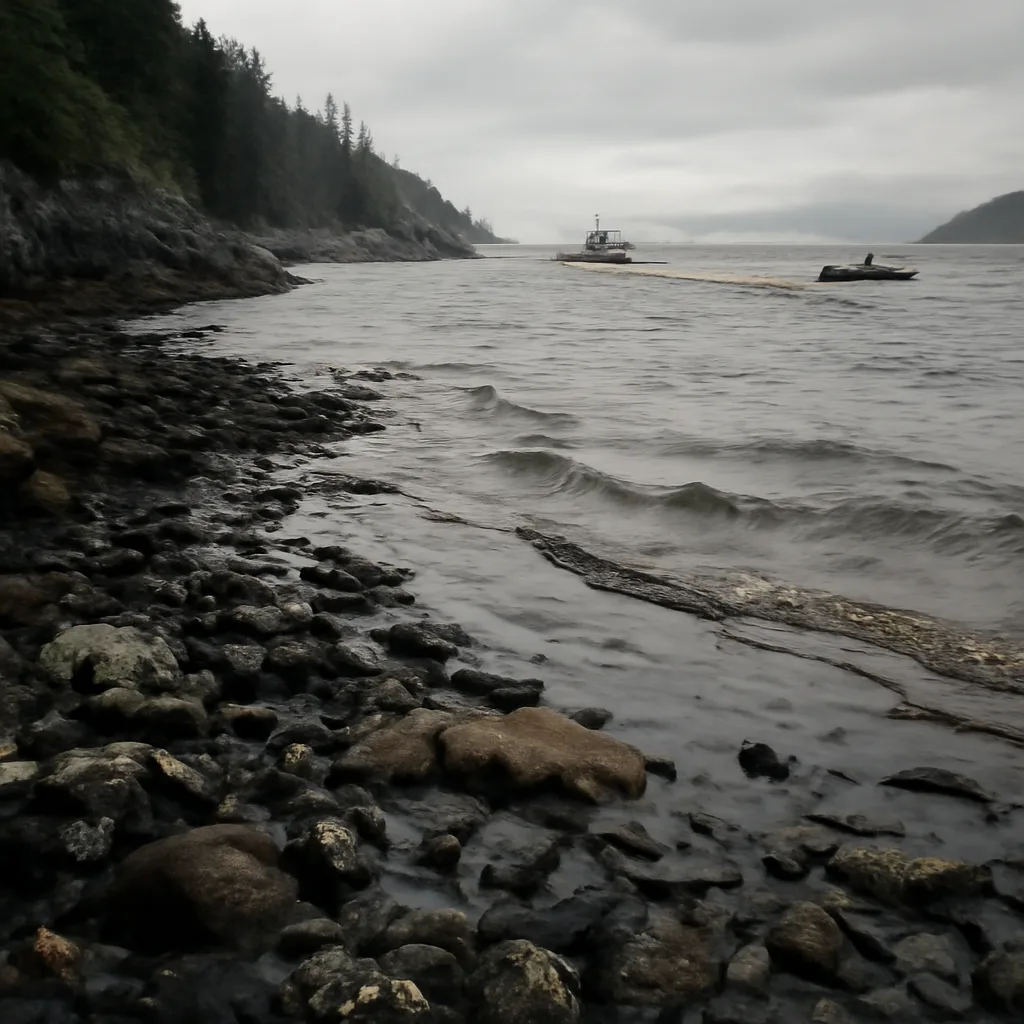
On March 24, 1989, the oil tanker Exxon Valdez grounded on Bligh Reef in Prince William Sound, Alaska, rupturing its hull and releasing roughly 11 million gallons of crude oil that contaminated hundreds of miles of coastline and triggered one of the worst environmental disasters in U.S. history.
On March 24, 1989, the tanker Exxon Valdez struck Bligh Reef in Prince William Sound, Alaska, shortly after departing the Valdez Marine Terminal. The grounding ruptured the vessel’s hull and released an estimated 10.8 to 11 million gallons (approximately 260,000 to 290,000 barrels) of Alaska North Slope crude into the marine environment. Weather and tidal conditions spread the oil across a large area, affecting a wide variety of shoreline habitats and marine life.
Immediate response and scale
Initial cleanup efforts involved Exxon, federal and state agencies, and volunteers. Mechanical recovery (booms and skimmers), in-situ burning, and limited use of chemical dispersants were employed, but cold water, rough seas and the sheer volume of oil reduced effectiveness. Oil reached more than 1,000 miles of Alaskan shoreline, with some estimates of heavily oiled shoreline concentrated on hundreds of miles. Remote beaches, rocky intertidal zones, marshes and fjords were among the most severely impacted areas.
Environmental and ecological impacts
The spill caused extensive short- and long-term ecological damage. Tens of thousands of seabirds died—estimates often cite numbers in the hundreds of thousands—along with thousands of marine mammals, including sea otters and harbor seals, and many fish, notably Pacific herring and salmon at various life stages. Habitats such as intertidal zones and subtidal areas experienced persistent contamination: oil trapped in sediments and sheltered coves persisted for years, hampering recovery. Scientific assessments after the spill documented population declines for several affected species and ongoing controversy about the duration and completeness of ecosystem recovery.
Human and economic consequences
Local communities, particularly Alaska Native villages that relied on subsistence fishing and harvesting, experienced immediate and long-lasting social and economic harms. Commercial fisheries were closed or restricted in affected areas, disrupting livelihoods and regional economies. Exxon faced major cleanup costs, fines and lengthy litigation. In 1991, a jury awarded punitive damages, though amounts and enforcement were subjects of prolonged appeals and legal adjustment over subsequent decades.
Regulatory and industry responses
The Exxon Valdez spill prompted significant changes in U.S. oil transport regulation and industry practice. The Oil Pollution Act of 1990 strengthened federal authority, improved oil spill prevention and response planning, mandated better navigational practices and required contingency planning and liability provisions for oil companies. The spill accelerated efforts to phase out single-hull tankers in favor of double-hull designs, and increased emphasis on vessel escort tugs, pilotage and monitoring in sensitive waters.
Scientific and monitoring legacy
The disaster spurred extensive scientific research into oil spill ecology, long-term monitoring of impacted sites, and improved understanding of oil weathering and remediation in cold-water environments. Studies continued for decades to assess lingering oil in sediments and to document species recovery trajectories. Disputes persisted in the scientific literature and public debate about the extent of recovery for particular species and habitats, reflecting the complexity of ecological responses in Prince William Sound.
Legacy and remembrance
The Exxon Valdez oil spill remains a benchmark event in environmental history and U.S. maritime policy. It reshaped how authorities and industry plan for and respond to large spills, highlighted vulnerabilities of coastal and subsistence-dependent communities, and left visible and scientific reminders of how catastrophic releases of oil can affect cold-water ecosystems for many years.
Sources: Contemporary governmental and scientific reports on the Exxon Valdez spill, peer-reviewed studies assessing ecological impacts and subsequent regulatory texts (e.g., Oil Pollution Act of 1990).