
← Back
06/01/1918 • 4 views

Man Survives Seven Lightning Strikes in 1918
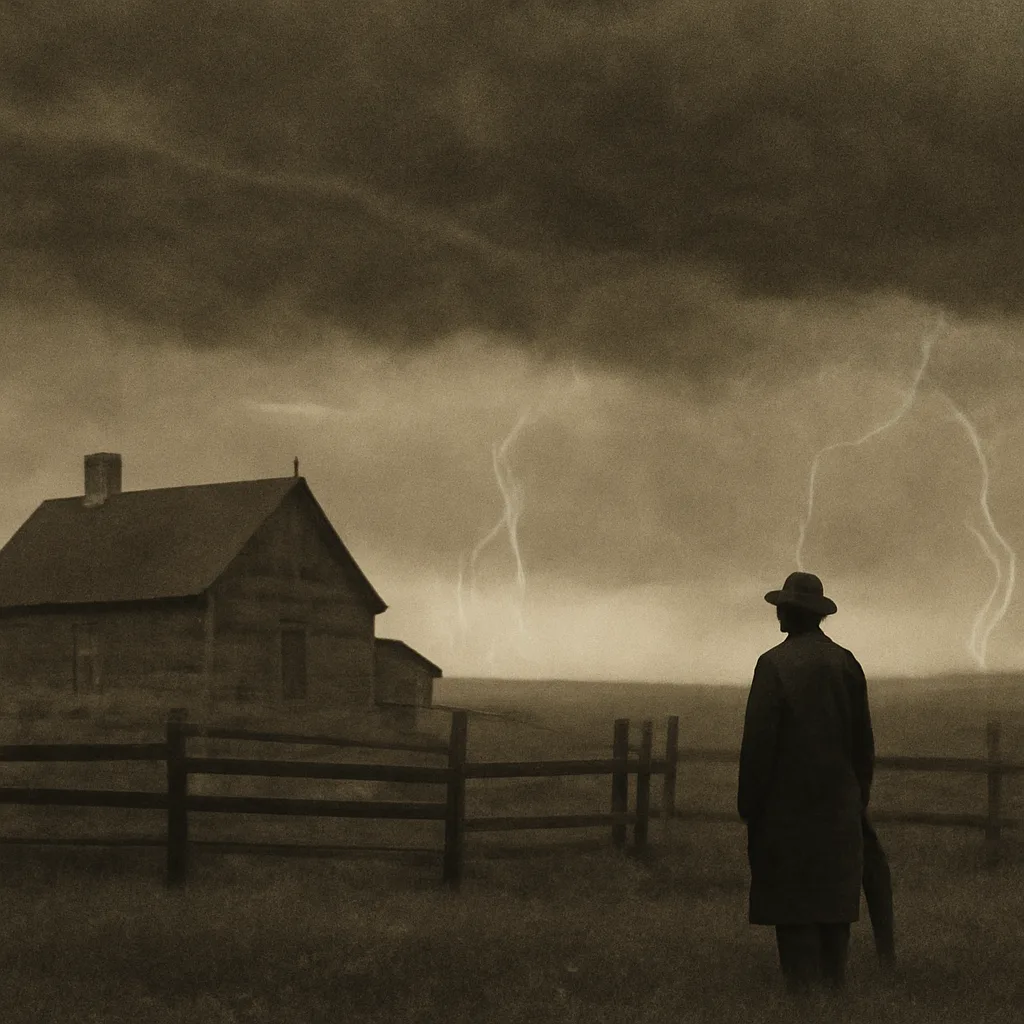
Early 20th-century rural scene with storm clouds gathering over a field and a small wooden farmhouse; a lone figure (unidentified) stands at a distance under an umbrella while lightning forks in the sky.

On June 1, 1918, reports circulated that a man had been struck by lightning seven times and survived. Contemporary accounts are sparse and sometimes contradictory; the core claim has persisted as an extraordinary survival story from the early 20th century.


On June 1, 1918, newspapers and periodicals carried accounts of a man who had reportedly been struck by lightning seven times and survived. The story circulated in an era when sensational human-interest items were commonly syndicated across regional papers, and it joined a small set of widely repeated anecdotes about extreme lightning survival.

Contemporary reporting

Coverage of the incident in 1918 appears primarily in local and regional newspapers, often reprinting wire copy or brief dispatches. Such pieces typically emphasized the astonishing number of strikes and the subject’s continued life, but provided few verifiable details about the individual’s name, occupation, exact locations, medical treatment, or later life. Variations among accounts—different locales, slight changes in the chronology, or contradictory physical descriptions—suggest that the story was amplified as it spread.

Medical and scientific context

By 1918, medical understanding of lightning injuries recognized that survivors could experience a wide range of outcomes: superficial burns, temporary paralysis, cardiac or respiratory arrest, neurological damage, and in some cases apparently minor sequelae. Surviving multiple lightning strikes, while extremely rare, is physiologically possible: lightning delivers a very brief, high-voltage current that can pass over or through the body, and survival can hinge on strike path, immediate resuscitation, and luck. However, repeated strikes tend to increase the risk of cumulative injury, particularly neurological and cardiac effects.

Reliability and later retellings

Historians and researchers examining extreme survival claims advise caution. The 1918 story lacks robust primary documentation—such as hospital records, corroborating legal documents, or long-form contemporaneous profiles—that would allow confirmation of many specifics. Later retellings, compiled in collections of curiosities or lightning anecdote lists, sometimes conflate separate incidents or omit source citations. As a result, while the central claim (that a man in 1918 was struck seven times and lived) appears in multiple period accounts, the absence of detailed, verifiable data means aspects of the narrative remain uncertain.

Why the story persisted

A combination of factors helps explain the story’s longevity: the intrinsic shock value of multiple lightning strikes, the early 20th-century press culture that favored striking human-interest items, and the public’s fascination with rare medical survivals. Such tales were easily syndicated and reprinted without rigorous fact-checking by modern standards, allowing them to enter lists of remarkable occurrences compiled by later writers and researchers.

What can be stated with confidence

- Reports about a man surviving multiple lightning strikes appeared in newspapers dated around June 1, 1918.
- Medical knowledge allows that survival after multiple lightning strikes is possible, though highly unusual and often accompanied by lasting injury.
- The detailed facts—identity of the individual, full medical history, and subsequent life course—are not well-documented in readily available primary sources, so specific claims beyond the central assertion should be treated as uncertain or anecdotal.

Conclusion

The 1918 account of a man struck by lightning seven times and surviving stands as an enduring, dramatic anecdote from the period. It illustrates both the era’s appetite for sensational human-interest stories and the limits of verification when primary records are sparse. Researchers seeking more definitive confirmation would need to locate original hospital, legal, or first-hand archival sources from the relevant locality and time.

Share this

Email Share on X Facebook Reddit

Did this surprise you?