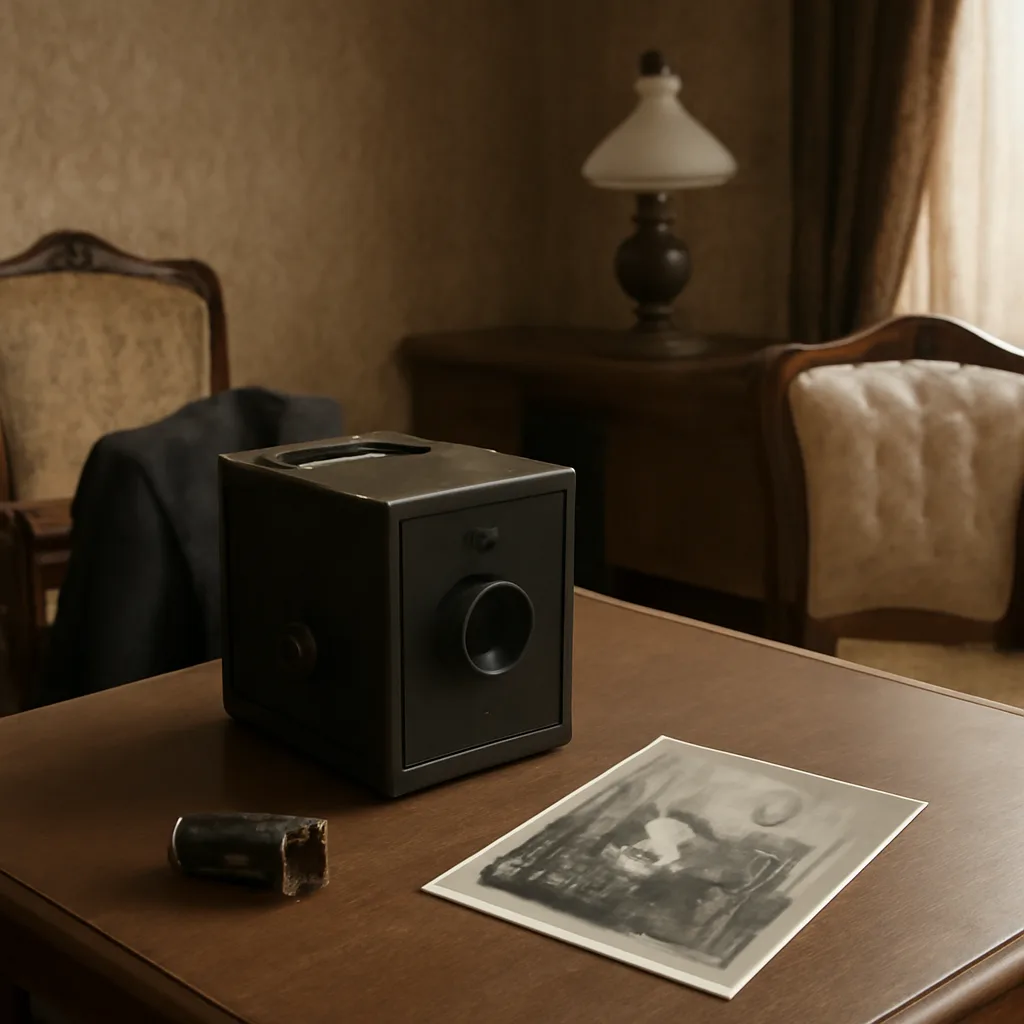
Kodak No. 1: The first mass-produced camera goes on sale
On June 1, 1900, Eastman Kodak’s affordable, mass-produced Kodak No. 1 and related roll-film cameras were widely available, marking a turning point that made snapshot photography accessible to broad audiences.
On June 1, 1900, the era of mass-market amateur photography was already well under way, but the availability and popularity of Eastman Kodak’s roll-film cameras—most notably models descended from the original Kodak introduced in 1888—had by this date firmly established snapshot photography as a routine pastime for many middle-class consumers. The Kodak No. 1 and other roll-film cameras produced by the Eastman Kodak Company were neither the very first cameras nor the first portable models, but they represent the first camera designs produced and marketed at scale with an integrated supply of user-friendly film, simplified exposure process, and a business model oriented toward everyday buyers rather than specialists.
George Eastman’s 1888 Kodak camera had introduced the slogan “You press the button, we do the rest,” bundling a simple box camera with preloaded roll film and a processing service. That innovation, and subsequent improvements through the 1890s, culminated in a family of cameras that in 1900 were manufactured and sold in large quantities, accompanied by easily obtainable roll film and laboratory processing. These products lowered the technical and financial barriers to photography: cameras were cheaper, portable, and required less technical knowledge than plate cameras and darkroom chemistry. The Kodak system redirected photographic practice from one dominated by professionals and devoted amateurs to one practiced widely by families, tourists, and casual observers.
Technically, Kodak’s roll-film cameras used flexible celluloid or paper-backed film wound on spools, replacing glass plates that were heavier and required on-site preparation and development. Camera designs emphasized simplicity—fixed-focus lenses or limited controls and modest shutter speeds—intended to deliver acceptable images under ordinary daylight conditions. Kodak’s vertical integration—producing cameras, film, and offering development services—meant customers had a complete, user-friendly workflow. Marketing emphasized ease of use, portability, and the camera’s role in preserving everyday memories.
The social impact of these mass-produced cameras was substantial. The availability of economical cameras contributed to the rise of snapshot culture: family albums, travel photographs, and casual portraiture proliferated. Photography became a tool for social documentation, personal memory, and even amateur journalism. The growth of photographic societies, magazines, and local camera clubs during this period indicates widening public engagement. At the same time, professional photographers adapted by focusing on specialized services, studio portraiture, and commercial work less affected by amateur snapshots.
Historians note that while Kodak’s efforts in the 1890s and into 1900 were pivotal, mass production and market saturation were processes rather than single-day events. Production volumes increased over several years, and competing firms in Europe and the United States also produced roll-film cameras aimed at general consumers. Therefore, describing June 1, 1900, as the precise date when “the first mass-produced camera goes on sale” simplifies a gradual transformation. Nevertheless, by 1900 Kodak’s roll-film cameras were widely available and emblematic of the shift toward mass-market photographic equipment.
The legacy of these developments is evident: the template of an affordable, easy-to-use camera plus consumable film and centralized processing dominated photography for most of the 20th century. It shaped visual culture, democratized image-making, and laid groundwork later upended by miniature 35mm cameras and, much later, digital imaging. The commercial model and design priorities established around 1900—simplicity, affordability, and integrated services—remain central to how many companies have introduced new imaging technologies to broad audiences.
Sources and further reading include contemporary Kodak catalogs and advertisements from the late 19th and early 20th centuries; George Eastman’s patent and company histories; and scholarship on the social history of photography, which treats the transition to roll film and mass-market cameras as a key phase rather than a single instantaneous event. Where exact claims about a single ‘‘first’’ mass-produced camera are made, historians generally caution that the shift was incremental and involved multiple firms and models over the 1890s into the early 1900s.