
06/01/1948 • 5 views
June 1, 1948: First Recorded Commercial Airline Hijacking in Cuba
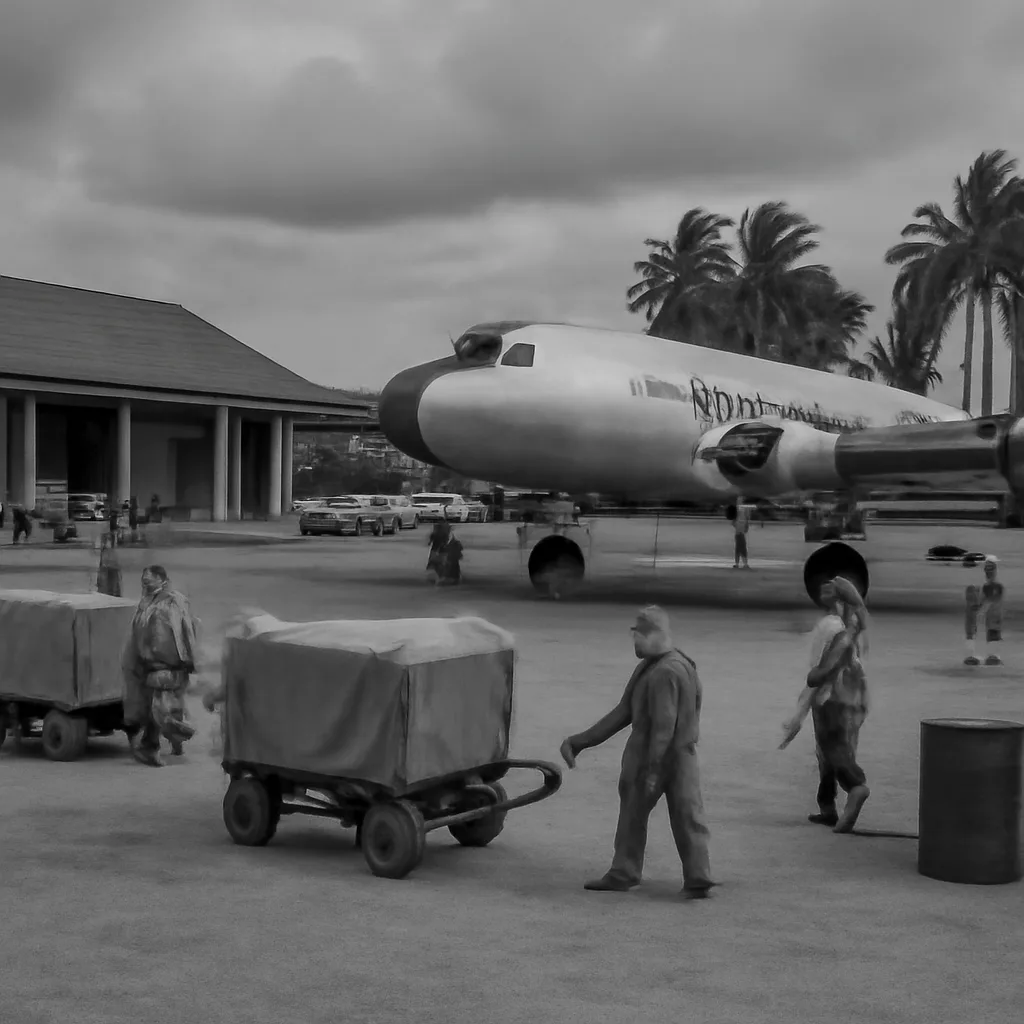
On June 1, 1948, a Cubana de Aviación DC-4 was seized by armed men after takeoff from Havana, marking the first widely documented hijacking of a commercial airliner. The incident reflected postwar political tensions and set a precedent for aircraft seizures in later decades.
The aircraft involved was a four-engine Douglas DC-4 operated by Cuba’s national carrier, Cubana de Aviación. After leaving José Martí Airport (then known as Rancho Boyeros) the plane was intercepted by individuals who produced weapons and compelled the crew to divert the flight. Reports at the time and subsequent summaries indicate the hijackers demanded transport to a different destination; some accounts place the aircraft’s landing in Key West, Florida, while others indicate the incident concluded with authorities intervening and the passengers and crew released. Precise details—such as the exact number of hijackers, their identities, and their ultimate motives—vary between sources, and some elements remain disputed in secondary accounts.
The 1948 seizure is notable because it occurred before the large wave of politically motivated hijackings that began in the 1960s and 1970s. Early postwar years saw growing use of civil aviation and uneven international law governing crimes aboard aircraft; this incident highlighted vulnerabilities in the burgeoning commercial airline system. At the time, few standardized security measures existed at airports, and international agreements to address crimes in flight would develop slowly in response to such events.
Contemporary newspapers reported the story with limited consistent detail, and later aviation historians have treated the event as the first documented hijacking of a passenger airliner, while noting ambiguities in some reports. That ambiguity has led scholars to be cautious: while the June 1, 1948, Cubana flight is commonly cited as the first commercial hijacking, researchers acknowledge gaps in the record and point out that lesser-known or poorly documented seizures might have occurred earlier.
The incident’s immediate consequences were modest: it did not precipitate an immediate overhaul of airline security, but it contributed to a growing awareness among carriers and governments of the risks posed by armed interference with aircraft. Over ensuing decades, a succession of high-profile hijackings prompted more systematic international responses, including agreements such as the Tokyo Convention (1963) addressing offenses on aircraft and later protocols expanding legal frameworks for aircraft security.
In historical perspective, the June 1, 1948, hijacking is important for what it reveals about the transition from wartime to peacetime aviation and the lag between technological expansion and legal or security adaptation. Though details remain partially contested in secondary sources, the event is widely referenced in aviation histories as the first documented instance of a commercial passenger aircraft being forcibly redirected by armed assailants.
For researchers, primary sources include contemporary Cuban and U.S. newspaper reports from June 1948 and archival records from Cubana de Aviación where available. Secondary treatments appear in surveys of aviation security history and scholarly accounts of mid-20th-century Caribbean political unrest. Because some primary documentation is incomplete or inconsistent, careful cross-referencing of contemporaneous reports and later scholarly work is necessary for precise reconstruction of the incident’s timeline and motives.