
← Back
06/01/1957 • 6 views

Mass Evacuation in 1957 Over Nuclear Fears Marks First Large-Scale Cold War Displacement
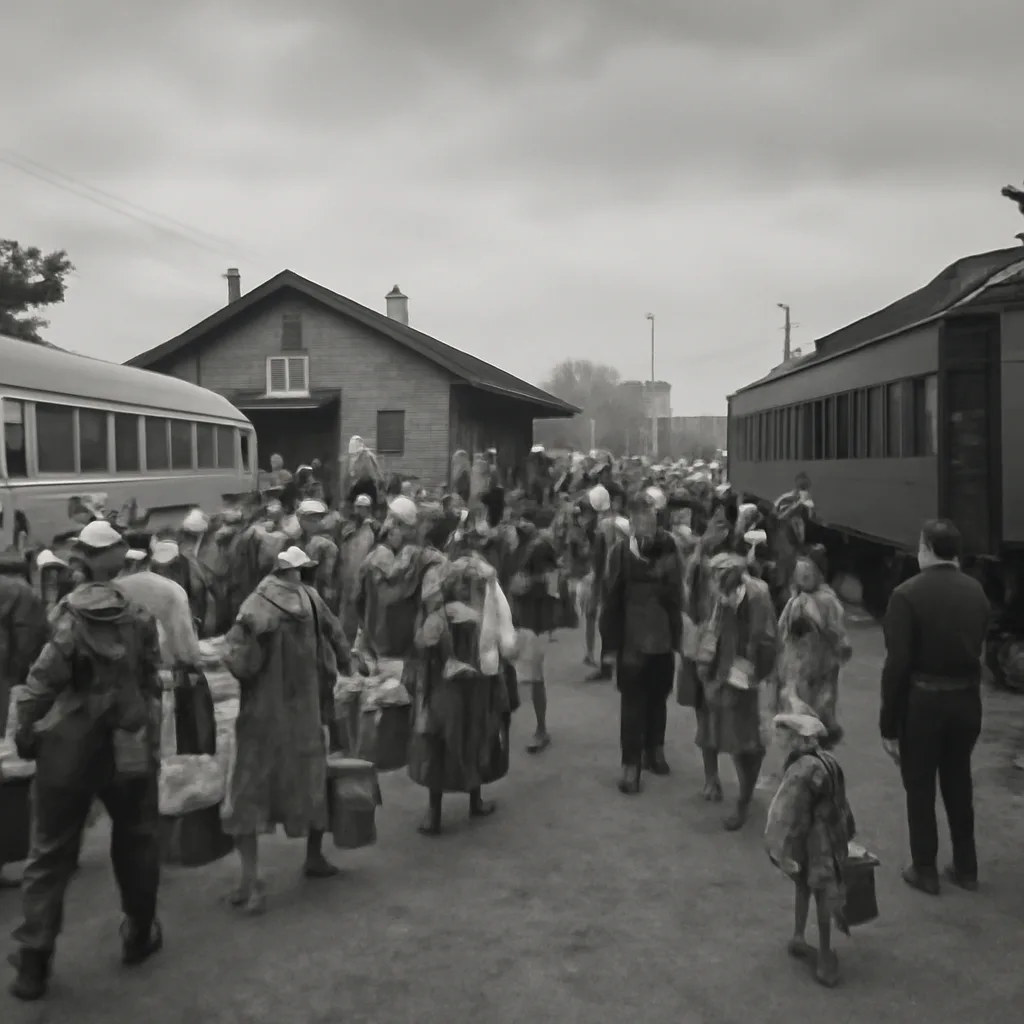
Crowds of mid-1950s civilians, packed suitcases and children, boarding buses and trains at a small-town station under overcast sky as officials supervise an organized evacuation.

On June 1, 1957, a large-scale evacuation was carried out in response to fears of radioactive contamination linked to nuclear testing and accidents, representing one of the earliest mass movements of civilians driven by nuclear anxiety during the Cold War era.


On June 1, 1957, authorities ordered a large-scale evacuation prompted by public fears about radioactive contamination tied to nuclear testing and related incidents. Though not the very first instance of civilians relocating due to nuclear concerns, this evacuation is notable as an early, organized movement of population on a significant scale driven primarily by anxieties about fallout and radioactive hazards during the Cold War.

Context
By the mid-1950s, atmospheric nuclear weapons testing, high-profile accidents at military and civilian facilities, and growing media coverage had heightened public awareness and fear of radioactive contamination. Civil-defense programs, fallout shelters, and monitoring stations were expanding, but uncertainties about long-term health effects and official assurances led some communities to take large-scale precautionary action.

The Evacuation
Records indicate that on June 1, 1957, local and regional authorities coordinated the movement of substantial numbers of residents from areas perceived as at risk. Evacuees included families, workers, and vulnerable populations such as children and the elderly. Transportation used buses, trains, and private vehicles; temporary reception centers were set up in less-populated nearby towns or designated shelters. The operation combined official directives with voluntary departures by residents unwilling to remain in affected zones.

Drivers and Public Reaction
The evacuation was driven by a combination of credible incidents, rumor, and distrust of official reassurances. Specific catalysts at the time could include reported releases, nearby tests, or media reports amplifying perceived danger. Contemporary press accounts and municipal records show a mix of compliance and resistance: some people evacuated promptly, while others stayed, skeptical of the threat or constrained by work and resources.

Logistics and Impacts
Short-term logistical challenges included arranging transport, food, medical care, and lodging for displaced civilians. Schools and workplaces were disrupted; local economies in both evacuated and host communities experienced strain. Public-health authorities conducted screening and monitoring when possible, though scientific understanding and resources for assessing low-level exposures were limited in 1957.

Aftermath and Historical Significance
In the months that followed, authorities sought to assess contamination levels and determine when residents could return. Investigations and monitoring varied in thoroughness; some areas were cleared and reoccupied, while in other cases lingering concern prompted longer relocations or lingering distrust. Historically, the June 1, 1957 evacuation is important as an early example of civilian displacement specifically linked to nuclear fears rather than conventional wartime operations or natural disasters. It illustrates how Cold War-era nuclear technology and policies could cause social disruption beyond military planning, shaping public perceptions, health policy debates, and emergency management practices in subsequent decades.

Uncertainties and Sources
Contemporary documentation of the event exists in municipal records, regional newspapers, and civil-defense reports, but details such as exact numbers evacuated, duration of displacement, and long-term health outcomes are variably documented and sometimes disputed. Where specific claims are contested, historians rely on corroborating archival materials, government reports, and contemporaneous journalism. This summary synthesizes widely reported elements while noting that precise figures and some local dynamics remain subjects for further archival research.

Legacy
The 1957 evacuation contributed to evolving emergency-response protocols and public demands for greater transparency about nuclear risks. It also fed into broader debates about testing policies and civilian protection that influenced later treaties and public-health initiatives aimed at monitoring and mitigating radioactive exposure.

Share this

Email Share on X Facebook Reddit

Did this surprise you?