
← Back
06/06/1944 • 5 views

D-Day: Allied Invasion of Normandy Begins
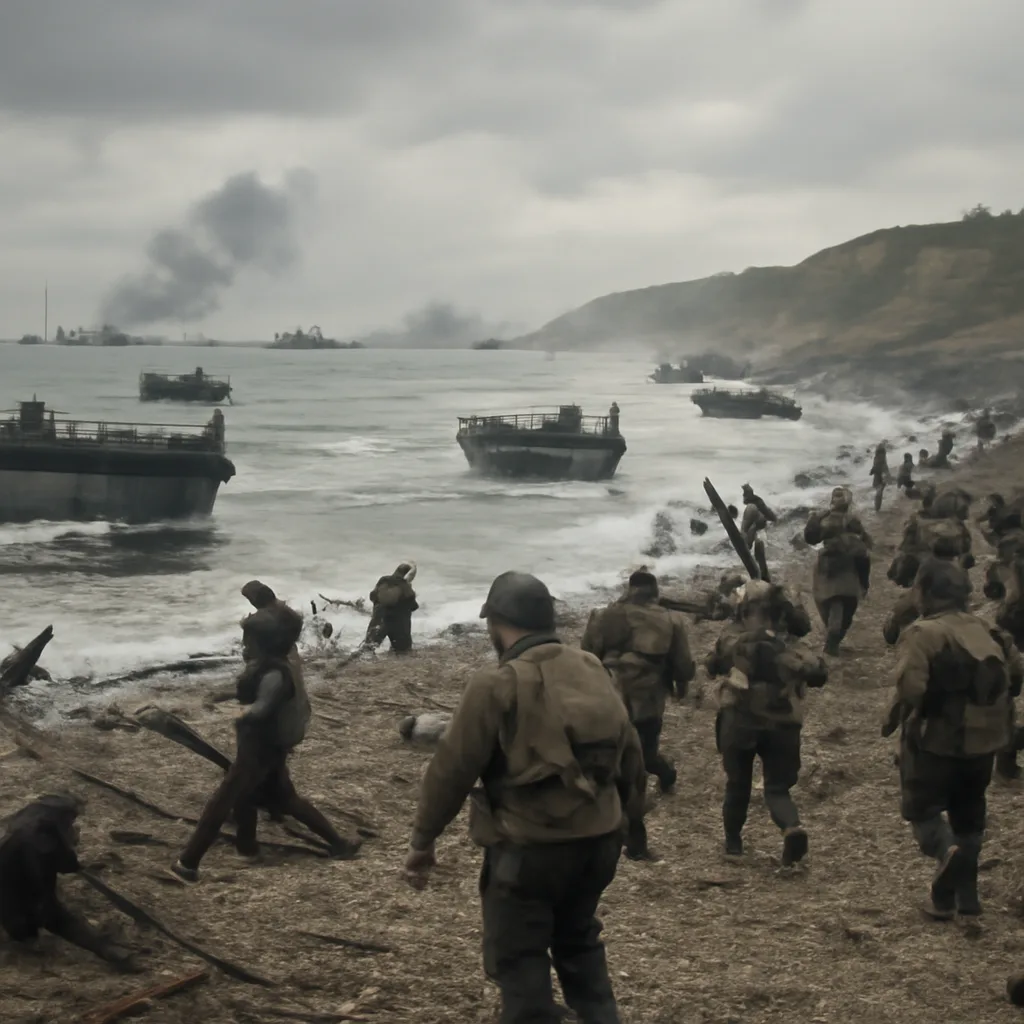
Allied landing craft approaching a fortified Normandy beach under overcast skies with warships offshore; troops disembarking toward obstacles and bunkers on the shoreline.

On June 6, 1944, Allied forces launched Operation Overlord, landing on the beaches of Normandy in the largest seaborne invasion in history to begin liberating German-occupied Western Europe.


On June 6, 1944, Allied forces commenced Operation Overlord with amphibious and airborne assaults along the Normandy coast of German-occupied France. The assault—commonly known as D-Day—was the culmination of extensive planning and deception operations designed to establish a secure lodgment in Western Europe and open a new front against Nazi Germany.

Preceding the landings, airborne divisions from the United States, Britain and Canada were dropped inland during the night and early morning to seize key bridges, disrupt enemy communications, and protect the flanks of the invasion beaches. At dawn, naval bombardments began along the coastline to soften German defenses. Five main landing sectors were attacked: codenamed Utah and Omaha (American), Gold and Sword (British), and Juno (Canadian).

Conditions varied markedly across the beaches. At Utah, relatively light resistance and effective navigation allowed American forces to secure objectives with fewer casualties. At Omaha, strong German fortifications, difficult terrain and concentrated defensive fire produced heavy losses and chaotic fighting; American troops forced footholds only after difficult close-quarters combat. British and Canadian units at Gold, Juno and Sword met mixed resistance—progress ranged from rapid advances to hard fighting against fortified positions and counterattacks.

The invasion involved massive seaborne and airborne logistics. Thousands of ships, landing craft and vessels of various sizes transported infantry, armor, engineers and supplies across the English Channel. Naval gunfire, air support from Allied fighters and bombers, and pre-assault bombardments were intended to reduce the effectiveness of German coastal batteries and obstacles, though many defenses remained intact and costly assaults ensued.

German forces defending Normandy were a mix of static coastal units, mobile armored formations, and locally garrisoned troops. Command, doctrine, and the uneven distribution of forces—along with Allied air superiority and naval firepower—affected German response. Weather, tides and intelligence also shaped the operation; the Allies had used deception (including fictitious armies and false radio traffic) to mislead German planners about the invasion’s timing and location.

By the end of D-Day, Allied troops had established multiple beachheads and taken thousands of prisoners, though casualties were substantial: estimates place Allied killed, wounded and missing in the thousands, and German casualties and prisoners likewise significant. The lodgments made on June 6 provided the necessary foothold for build-up of men and materiel that would sustain the subsequent Battle of Normandy.

In the weeks that followed, Allied forces expanded their perimeter, linked the beachheads, and engaged in a prolonged campaign to break out of Normandy against determined German resistance. The success of D-Day marked a turning point in the European war, initiating a sustained ground campaign that, combined with the Soviet advance from the east, would ultimately lead to the collapse of Nazi Germany in 1945.

Historical assessments emphasize both the strategic significance of the landings and the high human cost. Exact casualty figures and specific tactical outcomes for individual units remain subjects of detailed historical study and revision as scholars continue to consult wartime records and personal accounts.

Share this

Email Share on X Facebook Reddit

Did this surprise you?