
← Back
02/14/1929 • 6 views

St. Valentine’s Day Massacre in Chicago leaves seven dead
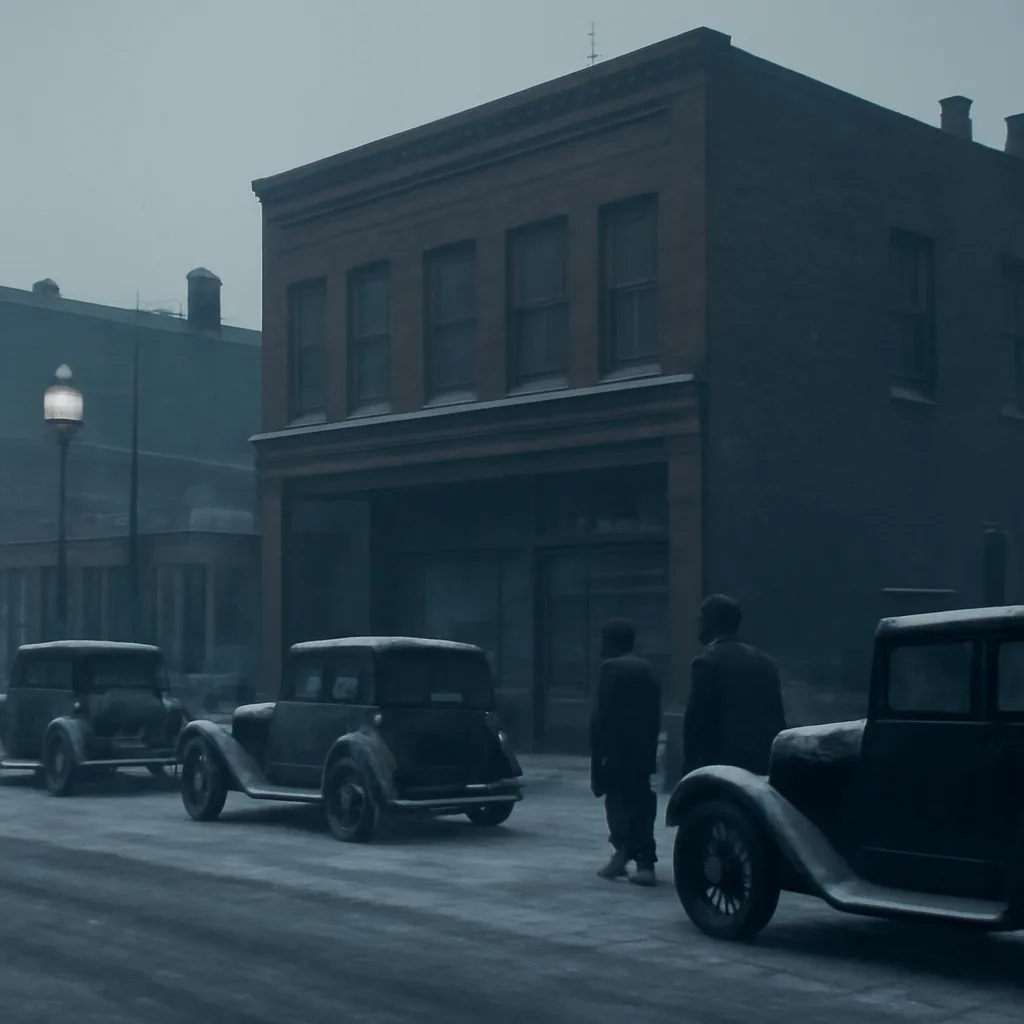
Exterior of a 1920s brick garage on a Chicago street with closed doors and early automobiles parked nearby, winter light casting long shadows; no identifiable faces.

On February 14, 1929, seven men were found murdered in a North Side Chicago garage in what became known as the St. Valentine’s Day Massacre, a pivotal event in the city’s Prohibition-era gang conflicts.


On the morning of February 14, 1929, police in Chicago discovered the bodies of seven men lined up against a wall inside a brick-lined garage at 2122 North Clark Street. The victims—four of whom were associated with the North Side gang led by George “Bugs” Moran—had been shot at close range, many after being forced to kneel or lie on the floor. The killings took place during Prohibition, when organized crime in Chicago was dominated by rival gangs that fought over bootlegging, distribution, and territory.

Eyewitness accounts and subsequent police investigation established a pattern: two men dressed as police officers had reportedly entered the garage, ordered the occupants to line up, and then left; shortly after, four more men in civilian clothing returned and executed the captives with automatic weapons and shotguns. The brutality, the apparent impersonation of law enforcement, and the use of machine guns marked the event as unusually violent even for the era.

The massacre was widely attributed to the Chicago Outfit led by Al Capone or operatives affiliated with it, who were locked in a violent rivalry with Moran’s North Side Gang. Moran himself narrowly escaped the ambush—he had reportedly been delayed and was not present when the killings occurred. Though public suspicion focused on Capone, no one was convicted for the massacre. Investigators cited a lack of cooperative witnesses, contradictory testimony, and the sophistication of the perpetrators as obstacles. Several suspects were arrested over the years, and theories have persisted about who planned and carried out the attack, but definitive legal resolution never followed.

The killings had immediate and lasting effects. Public outrage intensified scrutiny of gang violence and the reach of organized crime. Politicians and law enforcement officials faced increased pressure to address corruption and the illegal liquor trade fueling gang wealth. The massacre also shifted public perception of the gangs: while some earlier figures in organized crime had cultivated public images that mixed notoriety with a degree of folk-hero status, the St. Valentine’s Day Massacre underscored the ruthless, civilian-endangering reality of gang warfare.

Historians place the massacre in the broader context of Prohibition (1920–1933), when illegal alcohol markets created incentives for violent territorial control and for the development of more organized criminal enterprises. The event is frequently cited as a turning point that helped galvanize federal and local efforts to crack down on organized crime, though historians note that enforcement was inconsistent and that many gang leaders remained influential for years afterward.

Because no one was ever convicted specifically for the massacre, some details remain disputed or uncertain: the precise chain of command behind the operation, the identities of every participant, and the full extent to which municipal officials were complicit or negligent continue to be debated in historical accounts. Contemporary newspaper coverage and later scholarly works remain the primary sources for understanding the event; they reflect both the sensational reporting of the time and subsequent attempts by historians to corroborate facts from police files, court records, and personal papers.

The St. Valentine’s Day Massacre endures in public memory as an emblem of Prohibition-era violence and the dangers created by illicit markets and corrupt systems. It is remembered not only for the loss of life that morning in a Chicago garage but also for its role in shaping policy and public attitudes toward organized crime in the United States.

Share this

Email Share on X Facebook Reddit

Did this surprise you?