
06/06/1967 • 5 views
Egypt Closes the Suez Canal as 1967 Arab–Israeli War Erupts
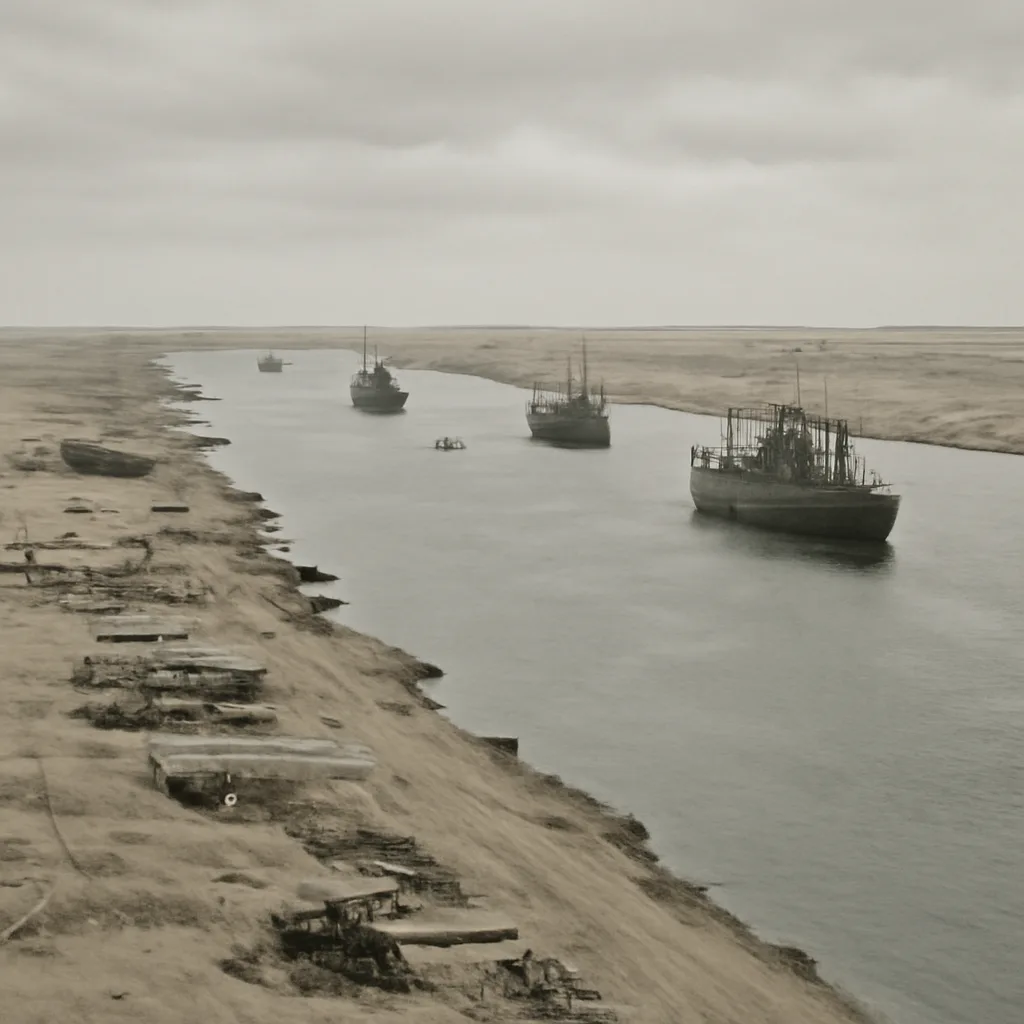
On June 6, 1967, amid the opening days of the Six-Day War, Egyptian authorities announced the closure of the Suez Canal, halting one of the world’s busiest maritime routes and trapping ships in the canal and its approaches.
Background: The Six-Day War began in early June 1967 after weeks of rising regional tension, military mobilizations and mutual threats among Israel, Egypt, Jordan and Syria. Egypt’s prior actions—most notably the expulsion of the United Nations Emergency Force from the Sinai and the massing of Egyptian forces near the Israeli border—contributed to the crisis. Closure of the Suez Canal was both a military measure and a political signal: preventing Israeli access to the Red Sea and hindering potential naval operations, while demonstrating Egypt’s control over the strategic waterway.
Immediate effects: The canal was a vital artery for international trade, particularly for oil shipments from the Persian Gulf to Europe. Its sudden closure forced ships to reroute around the Cape of Good Hope or to remain at anchor, increasing voyage length, costs and insurance rates. Several dozen vessels became trapped in the canal itself and in the nearby Bitter Lakes and Great Bitter Lake; many of those ships remained immobilized for months or even years until navigation and safety conditions were restored.
Military and diplomatic implications: Control of the canal corridor shaped military calculations during the war. While naval combat in the canal was limited, the presence of mines, sunken ships and shore batteries rendered transit hazardous. After the ceasefire, diplomatic negotiations and mine-clearance operations were required before full reopening could be considered. The canal’s closure also influenced international responses: several Western and nonaligned nations expressed concern about disruptions to commerce and sought to mediate or provide technical assistance for postwar clearance and restoration.
Longer-term consequences: The Suez Canal remained effectively closed to international shipping for an extended period after the 1967 hostilities because of wrecks, mines and the political situation in and around the canal. Clearance and salvage work proceeded in phases, but normal commercial traffic did not resume immediately. The closure underscored the canal’s strategic vulnerability: control of the waterway had direct global economic implications, prompting future diplomatic and military efforts to secure freedom of navigation in the region.
Historical significance: The 1967 closure of the Suez Canal is remembered as a major secondary consequence of the Six-Day War, emphasizing how regional conflicts can disrupt global trade routes. The incident reinforced the canal’s geopolitical importance and contributed to later international attention on ensuring maritime security and rapid postconflict restoration of key sea lanes.
Note on sources: The sequence of events—the outbreak of the Six-Day War in early June 1967 and Egypt’s subsequent closure of the Suez Canal—is well documented in contemporary news reports, government statements and later historical studies. Specific timelines for individual ships trapped or exact dates for phased reopenings varied by source and are not detailed here to avoid inaccuracies.