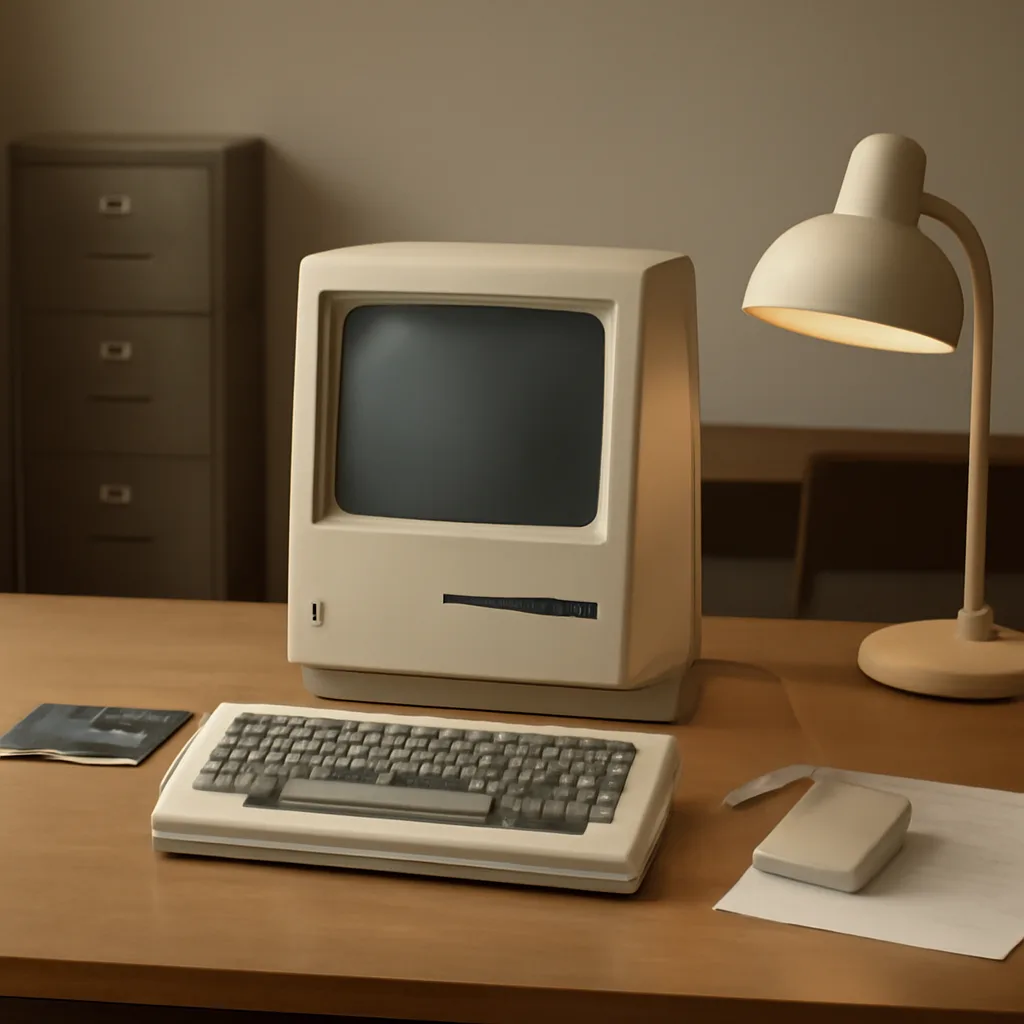
On January 24, 1984, Apple Computer introduced the Macintosh, a compact personal computer with a graphical user interface and mouse, marking a pivotal moment in personal computing history.
On January 24, 1984, Apple Computer announced the Macintosh, a small desktop personal computer that brought a graphical user interface (GUI) and mouse-driven interaction to a broader consumer market. The Macintosh was the culmination of work initiated at Xerox PARC and refined within Apple, where engineers and designers—most prominently a development team led by the company’s former Lisa project members and guided by a focus on ease of use—packaged the technology into a single, integrated unit.
The original Macintosh 128K, so named for its 128 kilobytes of RAM, featured a 9-inch black-and-white bitmap display, a Motorola 68000 microprocessor, and a built-in floppy disk drive. Its software included a simple graphical operating environment and applications such as MacPaint and MacWrite that demonstrated direct manipulation of on-screen objects with a mouse rather than relying on text-based command lines. Apple’s approach emphasized a consistent user interface, icons, menus, and windows—elements that would become standard across personal computing platforms.
Apple’s launch strategy combined technological demonstration with theatrical marketing. The Macintosh was introduced to the public during an Apple shareholders meeting, where Steve Jobs himself presented the machine and emphasized its user-friendly design and potential to empower ordinary people. Earlier in January 1984, Apple had aired the now-famous Super Bowl commercial directed by Ridley Scott, which cast the Macintosh as a liberating force against conformity; the ad increased public awareness and set the tone for the product’s debut.
Critical and public reaction was mixed. Reviewers praised the Macintosh’s innovative interface and industrial design but noted limitations: limited memory, a relatively high price, and a small software library compared with established business-oriented systems. The machine’s 400 KB floppy disk format and the lack of expandability were often cited as constraints for business users. Nevertheless, the Macintosh found early adopters in graphic design, desktop publishing, and education—areas that benefited from its graphical capabilities and the ease with which users could create and manipulate visual content.
The Macintosh’s introduction accelerated broader industry interest in GUIs and influenced the development of competing systems. Microsoft, among others, responded by investing in its own graphical environments. Over the following years, Apple revised the Macintosh line with improvements in memory, storage, display, and software, and the GUI paradigm that the Macintosh helped popularize became a foundation for modern personal computing.
Historically, the January 24, 1984 announcement is seen as a landmark event: it did not immediately transform the market into Apple’s favor, but it established design and usability as central considerations for personal computers. The Macintosh’s legacy is evident in the widespread adoption of graphical interfaces and in the emphasis on integrated hardware-software design that Apple continued to pursue. Contemporary assessments recognize both the Macintosh’s technical and cultural impact and its early commercial challenges, situating the device as a pivotal, if imperfect, step in the evolution of consumer computing.