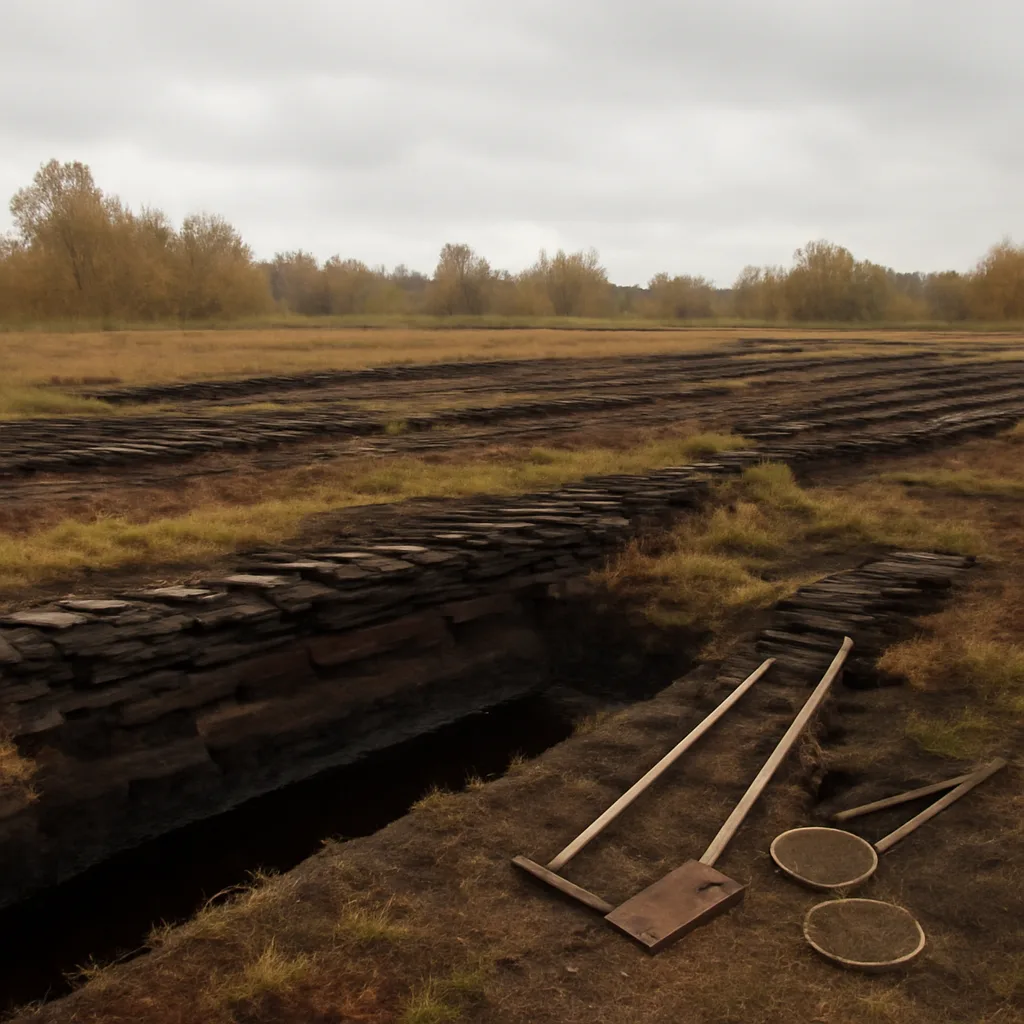
Perfectly Preserved Body Recovered from Peat Bog, 1950
On October 10, 1950, workers uncovered human remains in a peat bog that showed remarkable soft-tissue preservation characteristic of bog bodies; subsequent analysis highlighted the role of acidic, anoxic peat in slowing decomposition and preserving skin and hair.
On October 10, 1950, peat-cutting workers discovered human remains in a bog. The remains displayed unusually well-preserved skin, hair and some soft tissues—features commonly associated with so-called "bog bodies," human remains preserved by the unique chemical and environmental conditions of peat bogs. Documentation from contemporaneous reports and later forensic studies indicates that acidic water, low oxygen levels and cold temperatures in peat bogs inhibit bacterial activity and can tan and conserve soft tissues, producing the distinctive preservation observed in cases like this one.
Discovery and immediate context
Workers operating in a peat extraction area encountered the remains while cutting turf. The body lay within the peat matrix, which had displaced oxygen and limited microbial decay. Initial observers noted intact skin and hair and reported an absence of the extent of skeletal exposure expected for remains of comparable age recovered from non-bog contexts. Burial depth and exact stratigraphy were documented at the time where records survive; details vary between contemporary accounts and later summaries, consistent with routine differences in field recording practices in the mid-20th century.
Preservation processes
Peat bog preservation results from a combination of environmental factors rather than a single cause. Peatlands produce humic and fulvic acids through the breakdown of plant matter; these acids, together with anaerobic (oxygen-poor) conditions and cool temperatures, inhibit the microbes that normally decompose soft tissues. The chemistry can also produce a tanning effect on skin, leading to darkened, leathery soft tissues that retain anatomical detail. Hair and bone may be variably affected: hair is often well preserved due to keratin's resistance to acidic degradation, while bone can become demineralized and fragile over time.
Forensic and archaeological assessment
Midcentury investigations of bog bodies typically combined visual description with limited laboratory analysis by the standards of later decades. For this 1950 find, surviving records indicate attempts to document the position of the body and preserved features; however, isotope, radiocarbon dating and detailed forensic pathology either were not performed at that time or produced results that were not fully reported in public sources. As with many bog-body discoveries, later researchers have noted the need to reassess such cases with modern methods—radiocarbon dating, stable isotope analysis, and advanced imaging—to refine estimates of age at death, dating of the burial and potential causes of death.
Interpretation and provenance
Bog bodies recovered across northern and northwestern Europe range from prehistoric to recent historic periods. Some represent ritual or judicial killings, others accidental deaths or atypical natural burials; interpretations depend on contextual evidence such as accompanying artifacts, stratigraphic relationships, and signs of trauma. For the 1950 find, the absence of reliably reported grave goods and limited published forensic detail have left the remains’ cultural and chronological context uncertain in the public record. Scholarly caution is warranted: without robust dating and context, assigning a definitive period or social interpretation would be speculative.
Legacy and research considerations
Finds like this 1950 case stimulated both public fascination and scientific interest in bog preservation. They have contributed to methodological developments in archaeology and forensic science, including conservation techniques for delicate organic remains and noninvasive imaging approaches. Where possible, revisiting archived specimens and field notes with contemporary laboratory methods can yield clearer chronological placement and life-history information. Ethical considerations—respect for human remains and engagement with local communities—remain central to any further study or display.
In sum, the October 10, 1950 peat-bog recovery exemplifies the distinctive preservation produced by peat environments and underscores the limitations of mid-20th-century documentation. Definitive statements about age, identity or cause of death require reassessment with modern analytical techniques and careful attention to ethical stewardship.