
← Back
10/10/1986 • 5 views

Deadly Earthquake Devastates El Salvador, Thousands Killed
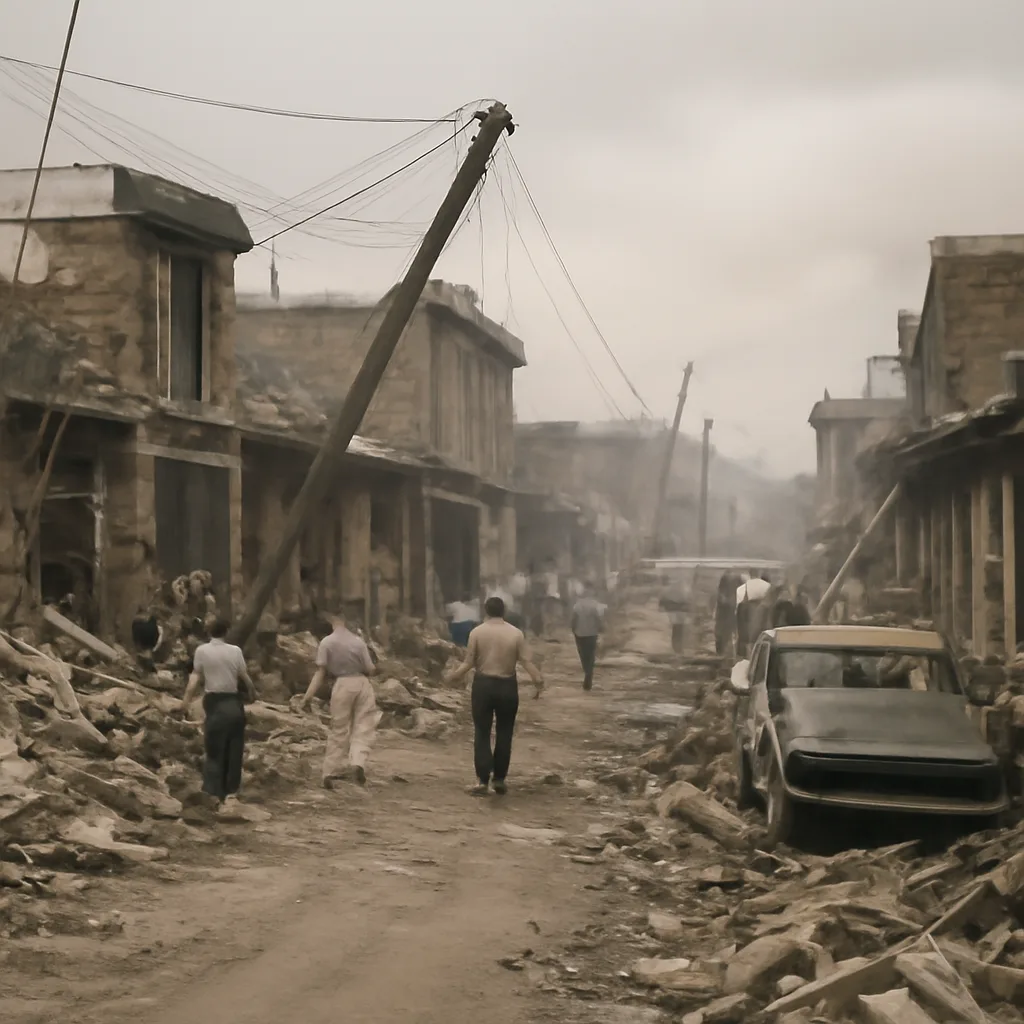
Collapsed and damaged buildings in an urban neighborhood in El Salvador after the October 1986 earthquake; rubble, damaged roads, and people assessing destruction.

On October 10, 1986, a powerful earthquake struck El Salvador, causing widespread destruction and killing thousands. The disaster compounded the nation's ongoing political and humanitarian crises and prompted international relief efforts.


On October 10, 1986, a strong earthquake struck El Salvador, producing extensive damage across populated areas and resulting in a death toll reported in the thousands. The quake worsened already difficult conditions in a country then enduring civil conflict and humanitarian strain, complicating rescue and relief operations.

Magnitude and impact
Seismological agencies recorded the event as a significant earthquake (contemporary magnitude estimates vary among sources). It caused structural collapses in urban and rural communities, destroyed homes and infrastructure, and disrupted services such as water, electricity and transportation. Landslides and soil liquefaction damaged roads and agricultural land, isolating some communities and hindering relief deliveries.

Human toll and displacement
Initial and subsequent reports indicated large numbers of fatalities and injuries, with many survivors rendered homeless. Exact casualty figures differ between accounts and later assessments; contemporary news coverage used estimates reflective of the chaos in the quake's aftermath. In addition to deaths and injuries, thousands of people were displaced and sought shelter in makeshift camps, schools and churches.

Response and challenges
The earthquake occurred during El Salvador’s civil war (1979–1992), a context that complicated both domestic and international response efforts. Security concerns, damaged infrastructure and limited communications slowed search-and-rescue teams and humanitarian agencies. International assistance — from governments, nongovernmental organizations and regional bodies — was mobilized to provide medical aid, food, shelter materials and engineering support, though relief delivery encountered logistical and political obstacles.

Reconstruction and long-term effects
In the years following, reconstruction of housing, roads and public buildings proceeded unevenly, constrained by limited resources and the ongoing conflict. The disaster highlighted vulnerabilities in building practices and land-use planning; subsequent recovery efforts included some strengthening of construction standards and disaster preparedness measures, though progress varied by locality.

Historical context
The 1986 earthquake added to a series of natural disasters and economic pressures that affected Central America in the 1980s. For El Salvador, the quake’s human and material costs were compounded by a broader context of political violence and displacement, shaping both immediate relief priorities and longer-term recovery needs.

Sources and uncertainty
Contemporary news reports and later summaries document the earthquake’s severity and high casualty counts but differ on precise figures and some details of timing and magnitude. Where exact numbers vary among sources, accounts in this summary reflect reported ranges and the broader consensus that the event caused widespread devastation and significant loss of life.

This entry aims to summarize verified, widely reported aspects of the October 10, 1986 earthquake in El Salvador while noting areas where contemporary estimates differ. No fictional elements or unverified quotations are included.

Share this

Email Share on X Facebook Reddit

Did this surprise you?