
← Back
06/16/1976 • 4 views

Police Open Fire on Students in Soweto Uprising
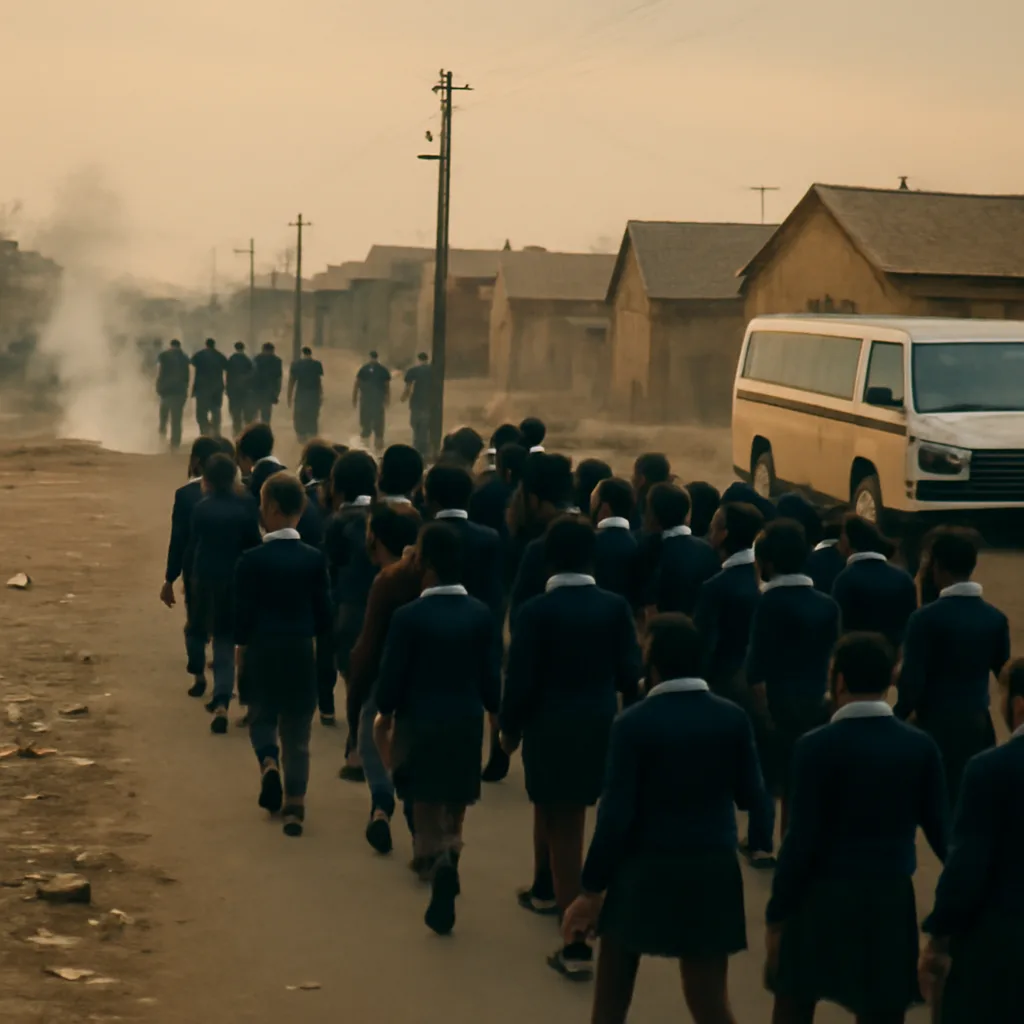
Crowd of marching Soweto schoolchildren on a township street in 1976, with police presence and a tense atmosphere; buildings and minibus taxis in the background.

On 16 June 1976, South African police fired on unarmed black schoolchildren protesting a government order to use Afrikaans as a medium of instruction in Soweto, sparking widespread unrest and becoming a turning point in resistance to apartheid.


On 16 June 1976, thousands of black students in the Soweto township near Johannesburg marched to protest a 1974 education policy requiring Afrikaans be used alongside English in certain subjects. The demonstration, organized by student leaders and township youth, began as a series of largely peaceful gatherings at several schools and converged into a mass procession along major streets.

Tensions rose when police attempted to disperse the demonstrators. Eyewitness accounts, contemporaneous reporting, and later investigations indicate that police used tear gas and stun grenades and then fired live ammunition into the crowds. Estimates of the number killed on that day vary; initial hospital and activist counts put the death toll in the dozens, while subsequent research and official tallies have produced higher figures—scholars and human-rights organizations generally agree that deaths numbered in the dozens to low hundreds when counting the wider period of unrest that followed.

The most widely reported and symbolically powerful image from the day showed a mortally wounded 13-year-old boy, Hector Pieterson, being carried by a fellow pupil as a young girl ran beside them; the photograph published internationally galvanized global attention and outrage. Pieterson’s death became emblematic of the brutality faced by black South Africans under apartheid and helped to internationalize opposition to the regime.

The shootings triggered widespread protests, strikes, and clashes across Soweto and other parts of South Africa. The unrest broadened into a sustained wave of resistance involving students, workers, and community organizations; the state responded with further police and military deployments, arrests, detentions without trial, and bans on anti-apartheid groups. The Soweto uprising marked a dramatic escalation in internal opposition to apartheid and contributed to increased international condemnation and pressure on the South African government.

Historians note that the uprising was not a single, centrally led event but a complex of localized actions driven by students’ grievances about language policy and broader systemic injustices, including overcrowded schools, poor facilities, and limited economic prospects. While the immediate trigger was the imposition of Afrikaans for instruction in key subjects, the protest tapped into long-standing anger over apartheid’s racial segregation and repression.

The legacy of 16 June 1976 is contested in some details—such as the precise number of fatalities and the full chain of command for the orders to fire—but its significance is widely acknowledged. In post-apartheid South Africa, 16 June is commemorated as Youth Day, honoring those who protested and acknowledging the role of young people in the struggle against apartheid. Memorials, museums, and continued scholarship seek to preserve the memory of the events and to document their causes and consequences based on surviving testimony, archival records, and research.

Share this

Email Share on X Facebook Reddit

Did this surprise you?