
06/16/1960 • 4 views
Alfred Hitchcock’s Psycho premieres and shocks 1960 audiences
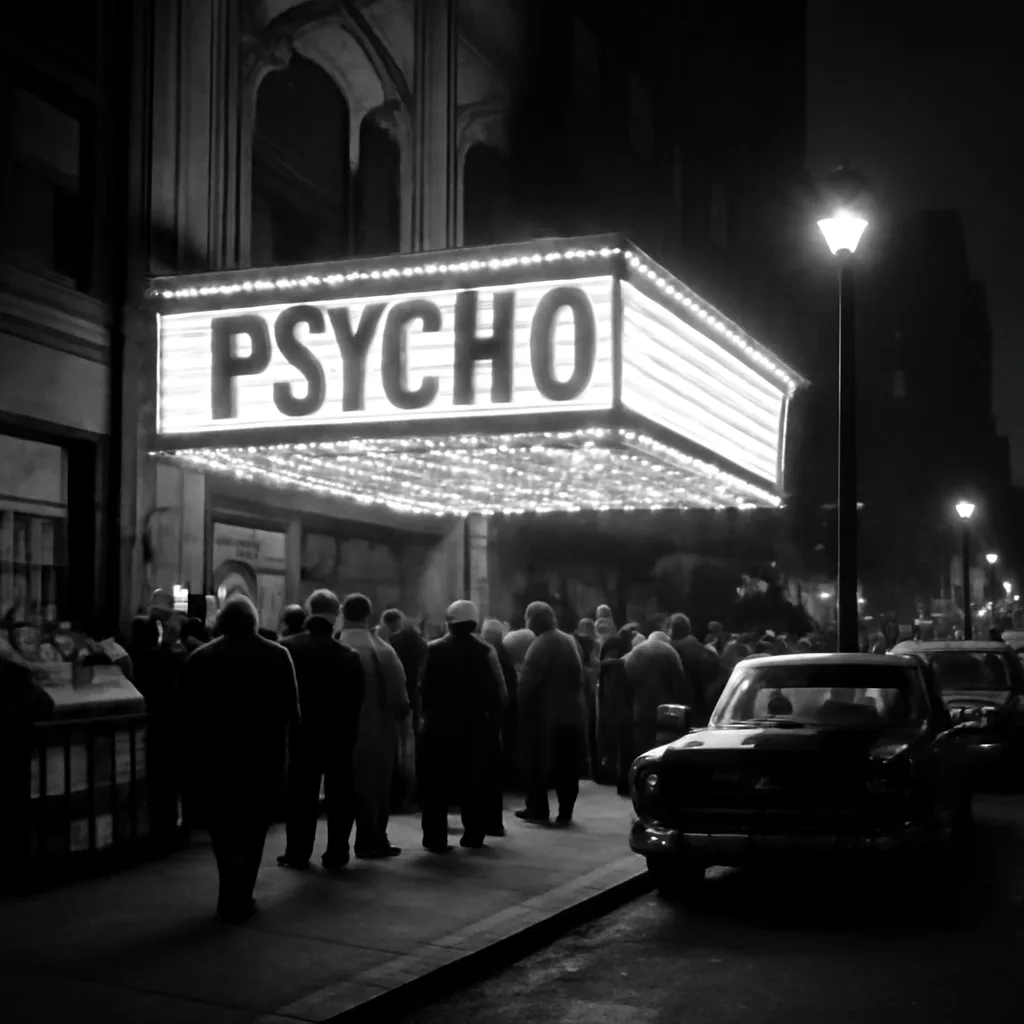
On June 16, 1960, Alfred Hitchcock’s Psycho premiered in New York, delivering an unprecedented blend of psychological suspense, striking editing and a controversial marketing campaign that polarized critics and terrified viewers.
Hitchcock, already an internationally known director through films such as Rear Window (1954) and Vertigo (1958), positioned Psycho as an experiment in audience engagement. He worked with screenwriter Joseph Stefano to condense Bloch’s novel and focused on psychological tension rather than overt gore. Veteran cinematographer John L. Russell shot the film in monochrome, a deliberate choice partly motivated by budget and partly to enhance contrast and shadow, which contributed to the film’s anxious atmosphere.
The production and release strategy further heightened public interest and controversy. Hitchcock insisted on tight control of the film’s distribution and viewing conditions: he requested theater owners to enforce a no-late-admission policy and encouraged audiences not to be told plot details in advance. Paramount Pictures supported an aggressive publicity campaign that framed Psycho as a shocking, must-see event. Some exhibitors and members of the press objected to the restrictions, but the tactics nonetheless created a sense of urgency and curiosity that drove box-office attendance.
Psycho’s most famous sequence—the shower murder of Marion Crane—demonstrated Hitchcock’s mastery of editing and sound design. Editor George Tomasini assembled dozens of rapid cuts and used Bernard Herrmann’s screeching string score to imply violence without depicting explicit wounds. That sequence, alongside the film’s revelations about Norman Bates and his relationship with his mother, shifted audience expectations about character, motivation and cinematic surprise.
Critical reaction at premiere and in the weeks after was mixed but intense. Some reviewers praised Hitchcock’s technique and Herrmann’s score; others criticized the film’s perceived sensationalism and moral tone. Censors and local boards in some areas debated the film’s suitability for general audiences. Despite—or because of—these debates, Psycho proved commercially successful and has been credited with influencing the emerging popularity of more transgressive, psychologically driven horror and thriller films in the 1960s and beyond.
Historically, Psycho is significant for several reasons. It demonstrated how editing, sound and suggestion could evoke terror as effectively as explicit images, helping to redefine cinematic horror language. It also challenged narrative norms by undercutting audience expectations about protagonists and plot stability. Bernard Herrmann’s score became iconic for its jagged string motifs, and Anthony Perkins’s portrayal of Norman Bates introduced one of the era’s most unsettling screen characters. Over time, Psycho’s reputation evolved from controversial mainstream release to canonical work studied for its formal innovations and cultural impact.
Some aspects of Psycho’s production and legacy remain topics of scholarly debate, including the extent to which the film’s violence and subject matter reflected or influenced broader social anxieties of the period. What is clear is that the June 16, 1960 premiere set in motion a profound rethinking of how suspense and horror could be constructed in American film, and Psycho’s techniques continue to be referenced and analyzed by filmmakers and scholars alike.