
← Back
09/16/1940 • 5 views

U.S. Congress enacts peacetime draft as global war erupts
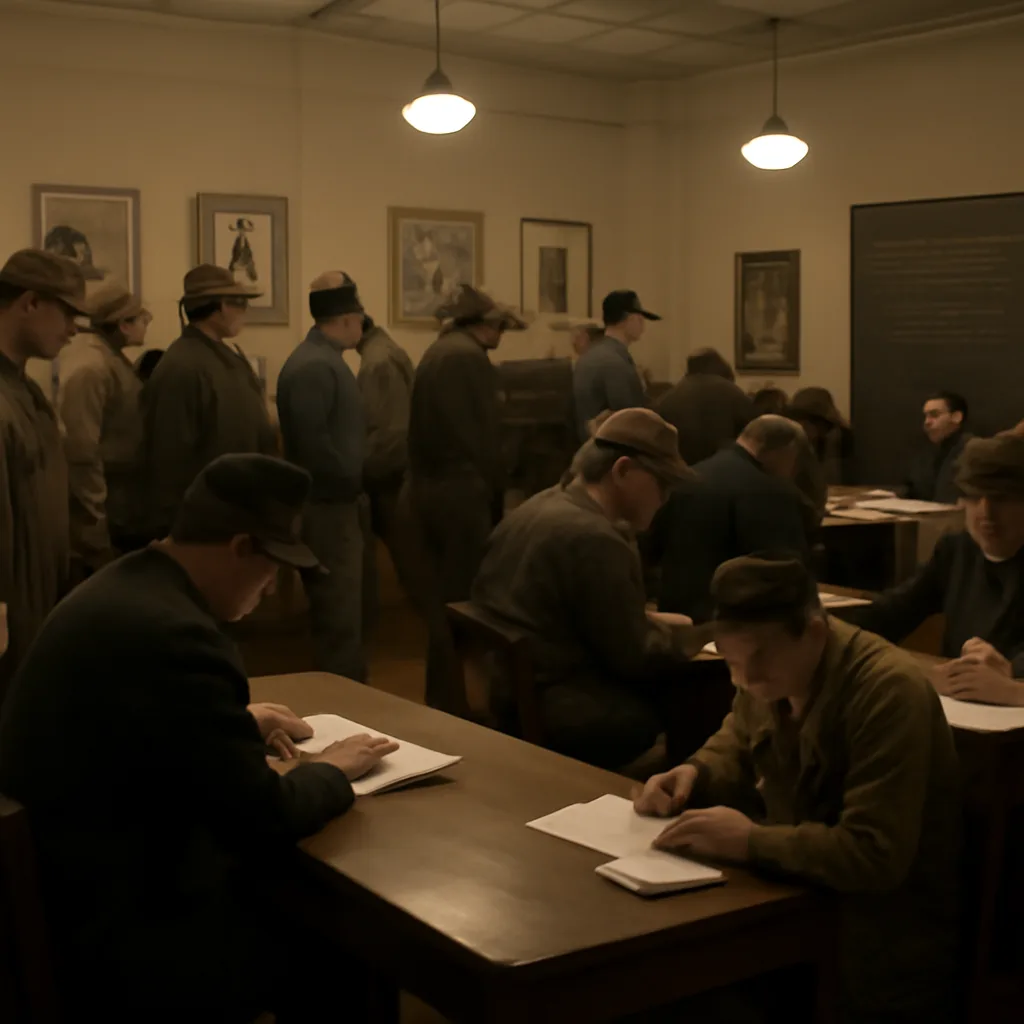
1940s draft registration scene: a government office with men filing paperwork before a local draft board, period clothing and signage indicating Selective Service procedures.

On Sept. 16, 1940, the United States reinstated compulsory military service with the Selective Training and Service Act, the first peacetime draft in American history, expanding the Army amid growing global conflict.


On September 16, 1940, President Franklin D. Roosevelt signed the Selective Training and Service Act of 1940, marking the first peacetime conscription in United States history. The law required that men aged 21 to 35 register for the draft and established an initial 12-month period of training for draftees. Congress debated the measure against the backdrop of accelerating conflict in Europe and Asia, aiming to bolster U.S. military preparedness without a formal declaration of war.

The act emerged from mounting concern among policymakers about the rapid German conquests in Europe and Japan's expansion in East Asia. Proponents argued that a larger, better-trained army was necessary to deter aggression and to be prepared for any eventual U.S. involvement. Opponents feared the erosion of civil liberties and the risks of entanglement in foreign wars. The final legislation reflected a political compromise: it instituted mandatory registration and limited initial service obligations while asserting Congressional and presidential oversight of mobilization.

Implementation began quickly. Local draft boards were established across the country to oversee registration, classification, and induction. Exemptions and deferments were provided for certain occupations, dependents, and health conditions, and the law permitted conscientious objector status for those who opposed combat on religious or moral grounds; such individuals were generally assigned to noncombatant duties or civilian public service.

The Selective Training and Service Act significantly expanded the size and readiness of the U.S. Army in the months before the attack on Pearl Harbor on December 7, 1941, after which the country formally entered World War II. Over the course of the conflict, the draft would be expanded and extended several times to meet wartime manpower demands; millions of American men served during the war, many of whom had first been drawn into service under the 1940 act.

Historically, the 1940 draft altered American military policy and societal expectations. It normalized federal mobilization of manpower in peacetime and created administrative systems—local draft boards, classification procedures, and conscientious objector processes—that would recur in later mobilizations. The act also provoked legal and political debates about the balance between national security and individual rights, some of which resurfaced in subsequent drafts and registries.

While the 1940 law is widely cited as the nation’s first peacetime conscription, it is part of a longer tradition of U.S. mobilization measures; earlier drafts had been instituted during the Civil War and World War I, but those occurred during declared wars. The historical record for the 1940 act is extensive and documented in Congressional records, contemporary newspaper reports, and presidential papers; this summary avoids inventing statements or attributing specific quotations not found in primary sources.

Share this

Email Share on X Facebook Reddit

Did this surprise you?