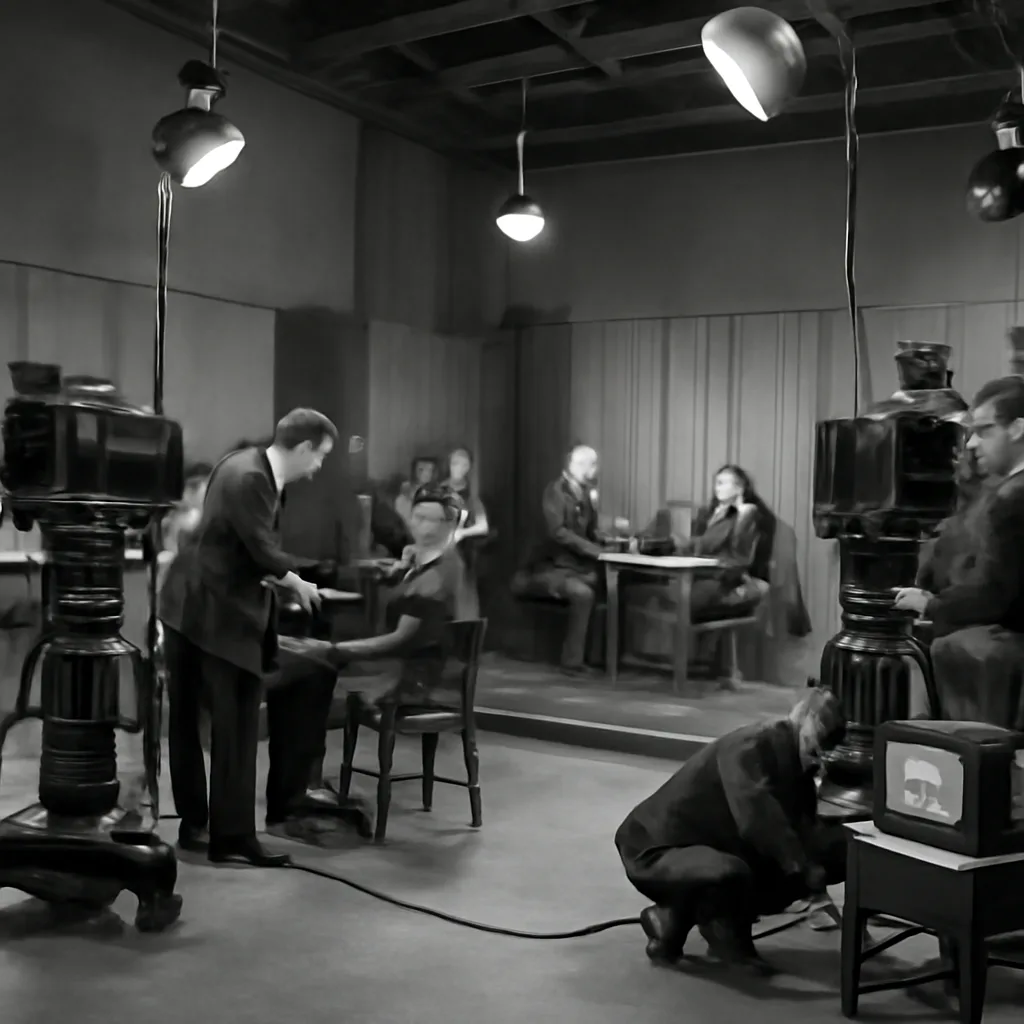
April 30, 1940: The First Commercial Television Network Begins Regular Service
On April 30, 1940, the first commercial television network in the United States began regular broadcasts, marking a transition from experimental transmissions to scheduled, advertiser-supported programming that would shape mass media in the decades ahead.
On April 30, 1940, the National Broadcasting Company (NBC) began regular commercial television broadcasts from its station W2XBS in New York, an event often cited as the start of scheduled, advertiser-oriented television service in the United States. This launch followed years of experimental broadcasts in the 1920s and 1930s by multiple inventors, engineers and radio companies exploring electronic television systems after the development of cathode-ray-tube technology and improved camera and transmission equipment.
By 1940, NBC and other firms had moved beyond intermittent test transmissions to offer regular programming intended for a public audience and commercial sponsors. The broadcasts were limited in scope by the technical and regulatory environment of the time: early television sets were scarce and expensive, transmission range was limited, studio production techniques were rudimentary, and the Federal Communications Commission (FCC) was still refining television channel allocations and standards. Nonetheless, scheduled programming — including news bulletins, variety segments, short filmed pieces and demonstrations — established patterns of production, scheduling and advertising that would prove durable.
The 1940 broadcasts were concentrated in a few urban markets where experimental stations operated and where there was some consumer access to television receivers. Programming often reused radio talent and formats adapted for the visual medium, and live studio production dominated because film and videotape were not yet practical for routine television use. Commercial messages at this early stage were typically read or performed live and were integrated into broadcasts in ways that reflected radio practice.
World War II soon constrained television’s rapid expansion. Many technical workers and manufacturers shifted to wartime production, and television receiver production slowed or halted in some countries. After the war, however, the infrastructure, experience and concept of commercial television were in place. The late 1940s and early 1950s saw rapid growth in stations, networks and audience penetration, transforming television into a central medium for news, entertainment and advertising.
Historians note that pinpointing a single ‘‘first’’ commercial television network depends on definitions. Some earlier experimental services and small-market commercial broadcasts existed, and other countries had parallel developments. Still, the April 30, 1940 broadcasts in New York are frequently referenced in U.S. media history as a key early milestone in the shift from experimental television to regular, advertiser-supported service.
Sources for this account include contemporary trade publications, FCC historical summaries and media history scholarship documenting the technical and regulatory transitions that enabled commercial television. Where exact details vary among sources, this summary indicates the broadly accepted timeline and the limits of the early service rather than asserting disputed specifics.