
← Back
04/30/1993 • 6 views

Monica Seles Stabbed During Hamburg Match, April 1993
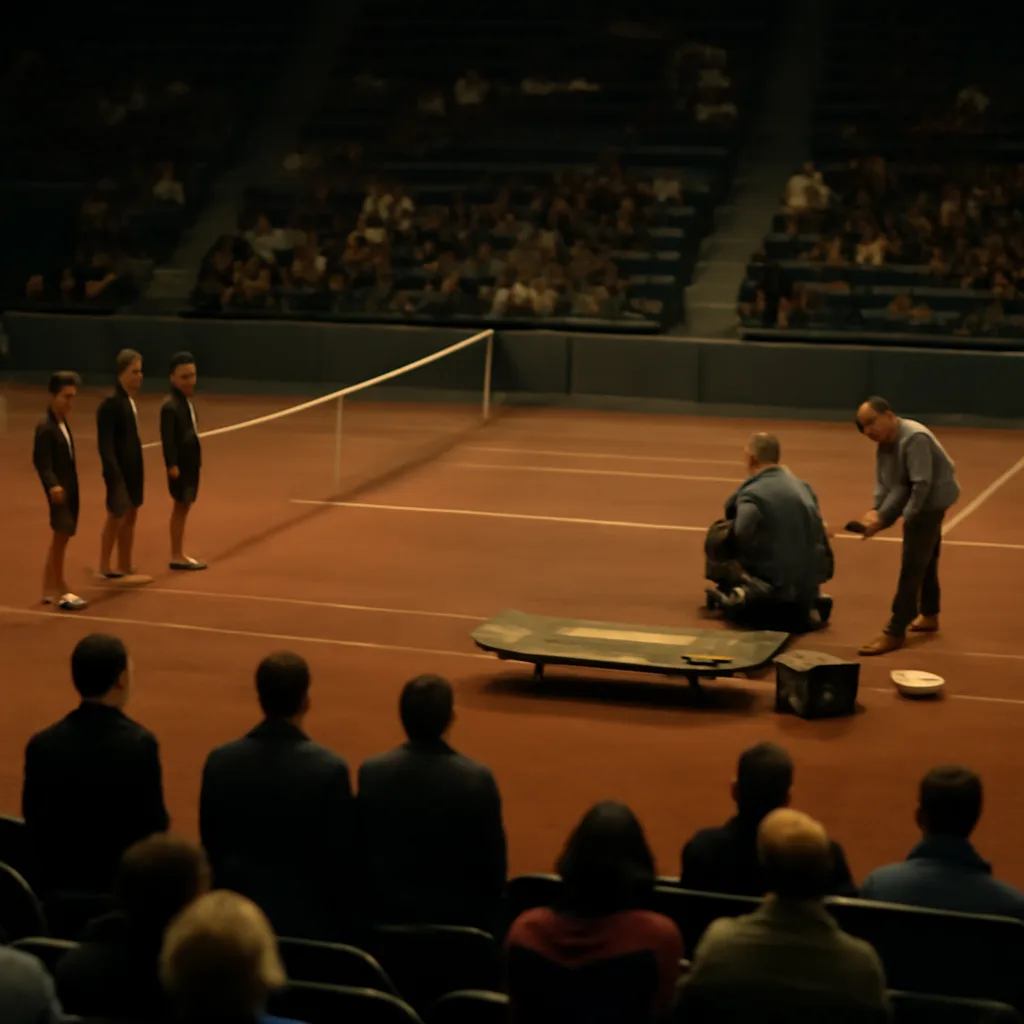
Tennis court in an indoor arena with empty sidelines and a medics' stretcher; court cloth and nets visible, capturing the tense aftermath setting of the 1993 Hamburg incident.

On April 30, 1993, reigning world No. 1 Monica Seles was stabbed on court by a spectator during a changeover at a tournament in Hamburg, Germany, an attack that sidelined her for over two years and deeply affected professional tennis.


On April 30, 1993, Monica Seles, then the world No. 1 and a dominant figure in women's tennis, was attacked during a WTA tournament in Hamburg, West Germany. The incident occurred during a changeover in the second set of her quarterfinal match. A spectator, later identified as a man who said he was a fan of rival Steffi Graf, ran onto the court and stabbed Seles in the back with a knife concealed under his jacket. The blade inflicted a shallow but significant wound; Seles was assisted off court and taken to a hospital for treatment.

The assailant was immediately subdued by spectators and security and subsequently arrested. Legal proceedings followed in Germany; the attacker was tried and convicted on charges related to the stabbing. The motive cited in reporting and later court documents was linked to an obsession with Graf and a desire to disrupt Seles’s career, though accounts of the attacker’s mental state and the precise motive include disputed or contested elements in coverage from the time.

Physically, Seles’s injury was not fatal, but the psychological and professional consequences were severe. She withdrew from competition to recover physically and to cope with the trauma of the attack. Seles did not play on the tour for more than two years, missing multiple Grand Slam tournaments and relinquishing her No. 1 ranking. Her absence altered the landscape of women's tennis in the mid-1990s and triggered broad discussion about player security at events.

The incident prompted immediate changes in security procedures at tennis tournaments worldwide, including increased cordoning of courts, more visible security personnel, stricter controls on spectator access during matches, and reviews of emergency response protocols. Tennis authorities, tournament organizers, and players cited Seles’s stabbing as a catalyst for rethinking how to protect athletes from spectators and potential threats.

Public reaction combined shock, sympathy, and anger. Seles received support from fellow players, fans, and officials. The attack also raised difficult questions about the pressures of celebrity in sport, the role of obsessive fandom, and how organizers balance accessibility to fans with athlete safety.

Seles eventually returned to professional tennis in 1995 and went on to win additional titles, but she and many observers have noted that the interruption changed the trajectory of her career. Historical accounts of the episode rely on contemporaneous news reporting, court records, and later interviews; some details—especially regarding the attacker’s motives and psychological state—have been characterized differently over time and remain the subject of varying interpretations.

The April 30, 1993 stabbing of Monica Seles remains a pivotal and tragic event in tennis history: a personal trauma for a leading athlete, a turning point for event security, and a moment that highlighted vulnerabilities faced by public figures in sport.

Share this

Email Share on X Facebook Reddit

Did this surprise you?