
05/21/1927 • 9 views
Charles Lindbergh Completes First Solo Nonstop Transatlantic Flight
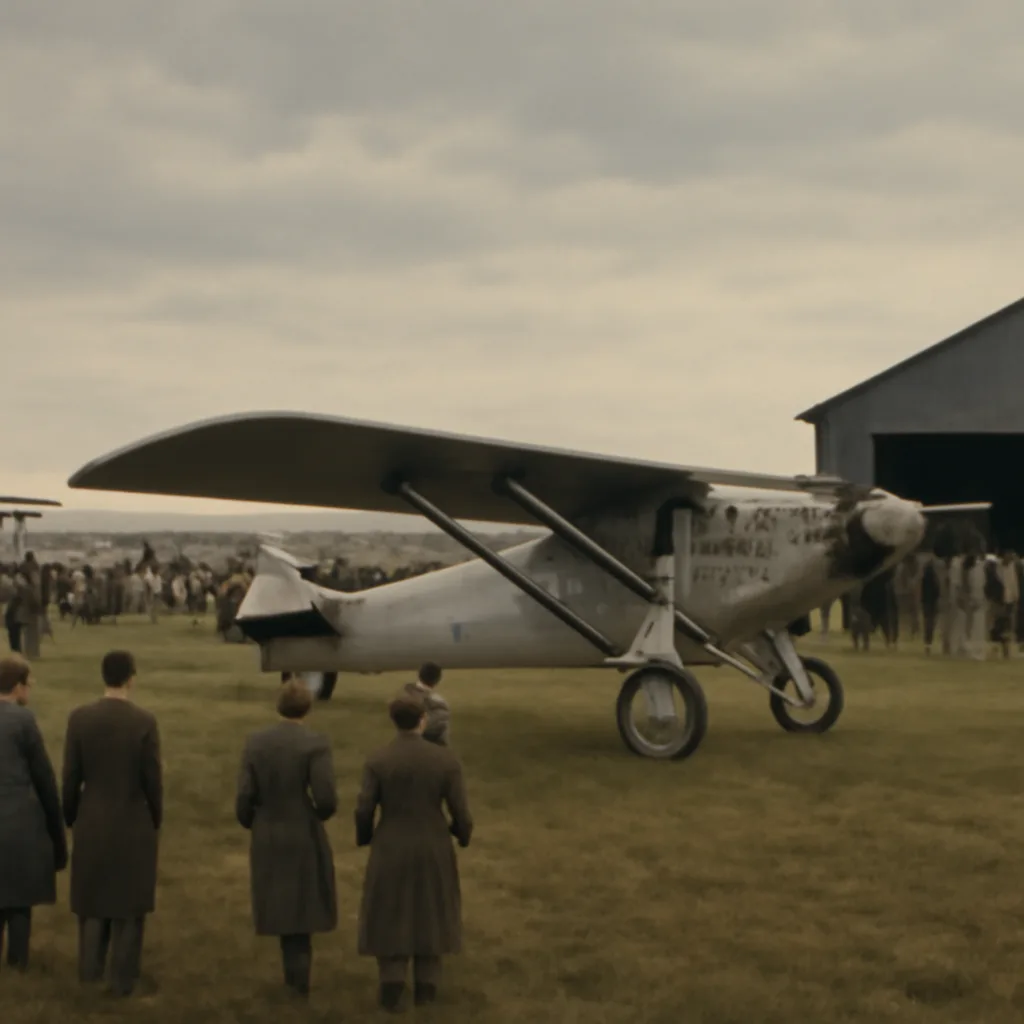
On May 21, 1927, Charles A. Lindbergh landed in Paris after flying solo nonstop from New York to Paris in the single-engine monoplane Spirit of St. Louis, marking the first solo transatlantic crossing and a landmark in aviation history.
Lindbergh, a 25-year-old airmail pilot and barnstormer from Minnesota, planned the flight as a solo attempt to reduce weight and complexity. The Spirit of St. Louis was a custom-built, single-seat, high-wing monoplane optimized for long range. To maximize fuel capacity, designers placed fuel tanks in the forward fuselage, which obstructed a forward view; Lindbergh relied on a periscope and side windows for visibility. The airplane carried more than 450 gallons of fuel and was stripped of nonessential equipment.
The crossing was hazardous and demanding. Lindbergh flew through darkness, fog, icing, and intermittent storms while navigating primarily by dead reckoning and limited radio direction-finding aids available at the time. He suffered from fatigue and exposure, and at one point nearly turned back when weather deteriorated. Despite these challenges, Lindbergh maintained a steady course across the Atlantic, using compass headings, drift readings, and occasional celestial fixes when skies cleared.
At 10:22 p.m. Paris time on May 21 (5:22 p.m. New York time), Lindbergh touched down at Le Bourget Field, having flown approximately 3,600 statute miles (about 5,800 kilometers) in 33 hours and 30 minutes. Aware that he might be off course and low on fuel, he performed a precautionary landing in a field near the airport. He was met by a crowd that rapidly grew into a large public celebration, and he soon became an international celebrity.
The flight had immediate and lasting impacts. It demonstrated the potential of long-distance aviation and spurred public interest and investment in commercial and military aviation. The Orteig Prize was never awarded a second time; Lindbergh’s achievement effectively ended the competition. He received numerous honors, including the U.S. Distinguished Flying Cross (which had been created for his flight) and the French Legion of Honor, and he embarked on a worldwide tour that elevated him to the status of an international hero.
Historians note that Lindbergh’s flight also had complex consequences. His celebrity afforded him influence in aviation policy and technology, but later aspects of his life—his political positions in the 1930s and the controversial circumstances surrounding his private life—complicate his legacy. Nonetheless, the May 1927 crossing remains a pivotal moment in aviation: a technical milestone achieved under austere conditions that captured global imagination and helped accelerate the development of long-distance flight.
Sources for this account include contemporary newspaper reports from May 1927, Lindbergh’s own published memoirs (not quoted here), and later historical studies of early aviation. Where details are debated—such as exact flight path variations and some navigational choices—this summary reflects the widely accepted core facts of departure, duration, aircraft, and landing date.