
← Back
05/21/1957 • 7 views

First documented case of radioactive contamination in food, May 21, 1957
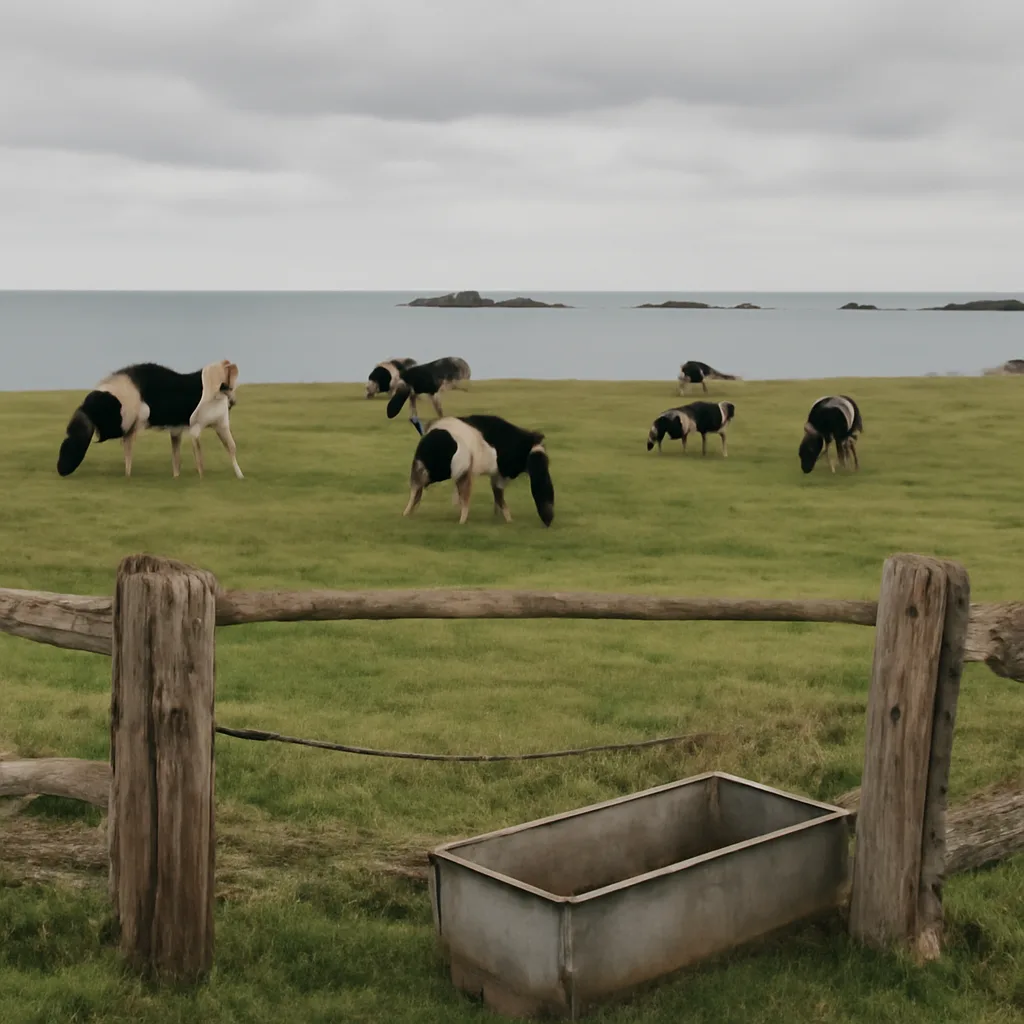
Cattle in a coastal Australian pasture in the 1950s with a distant view of low-lying islands offshore and a cloudy sky

On May 21, 1957, officials reported the first widely recognized incident of radioactive contamination entering the food supply when fallout from British nuclear tests above the Montebello Islands in Western Australia contaminated local livestock and dairy, prompting public alarm and regulatory response.


On May 21, 1957, authorities and contemporary press accounts recorded what is commonly cited as the first well-documented case of radioactive contamination of food following atmospheric nuclear testing. The event was linked to British nuclear detonations conducted in the Montebello Islands (off the coast of Western Australia) and to atmospheric testing more broadly during the 1950s, when radionuclide fallout began to be detected in pasture, livestock and milk supplies.

Background: Atmospheric nuclear testing in the late 1940s and 1950s released radioactive particles—chiefly isotopes such as iodine-131, strontium-90 and cesium-137—into the atmosphere. These particles could be carried by winds and deposited on soils and plants, entering the food chain when animals consumed contaminated pasture or when crops were harvested from affected fields. Public health authorities and scientists were only beginning to understand the environmental pathways and health implications of these radionuclides in the 1950s.

The 1957 incident: Contemporary reports from May 1957 identified measurable radioactive contamination in livestock and dairy products in regions downwind of nuclear test sites, including areas affected by British tests near the Montebello Islands and by other atmospheric tests conducted by nuclear powers during that period. Milk was of particular concern because iodine-131 concentrates in the thyroid and transfers readily from contaminated pasture into cow’s milk, posing a risk—especially to children. The detection of radionuclides in foodstuffs led to immediate local investigations, advisory notices about milk consumption in some areas, and calls for more systematic monitoring.

Scientific and public responses: The event accelerated efforts to monitor radionuclide levels in food and prompted public health agencies to adopt testing protocols for milk and other staples. Governments and international scientific bodies began to coordinate surveys of fallout and to develop guidelines for permissible levels of radioactive contamination in food. The incident also fed into broader public debates about the safety and morality of atmospheric nuclear testing, contributing to growing pressure that later helped lead to the 1963 Partial Test Ban Treaty, which prohibited nuclear weapons tests in the atmosphere, outer space and underwater.

Uncertainties and scope: Historians and scientists treating this period note that smaller or localized instances of contamination may have occurred earlier but were not widely detected, reported, or linked conclusively to nuclear tests. The May 21, 1957 date corresponds to a widely cited public report and media coverage identifying contamination in food supplies; it is therefore commonly used as a reference point for the first well-documented, publicized food contamination incident tied to atmospheric nuclear fallout.

Legacy: The 1957 episode exposed shortcomings in environmental monitoring and food-safety protections of the era and helped spur the development of radionuclide surveillance, clearer communication strategies for public health risks, and international agreements limiting atmospheric testing. It remains an important case in the history of environmental health, nuclear policy and consumer protection.

Share this

Email Share on X Facebook Reddit

Did this surprise you?