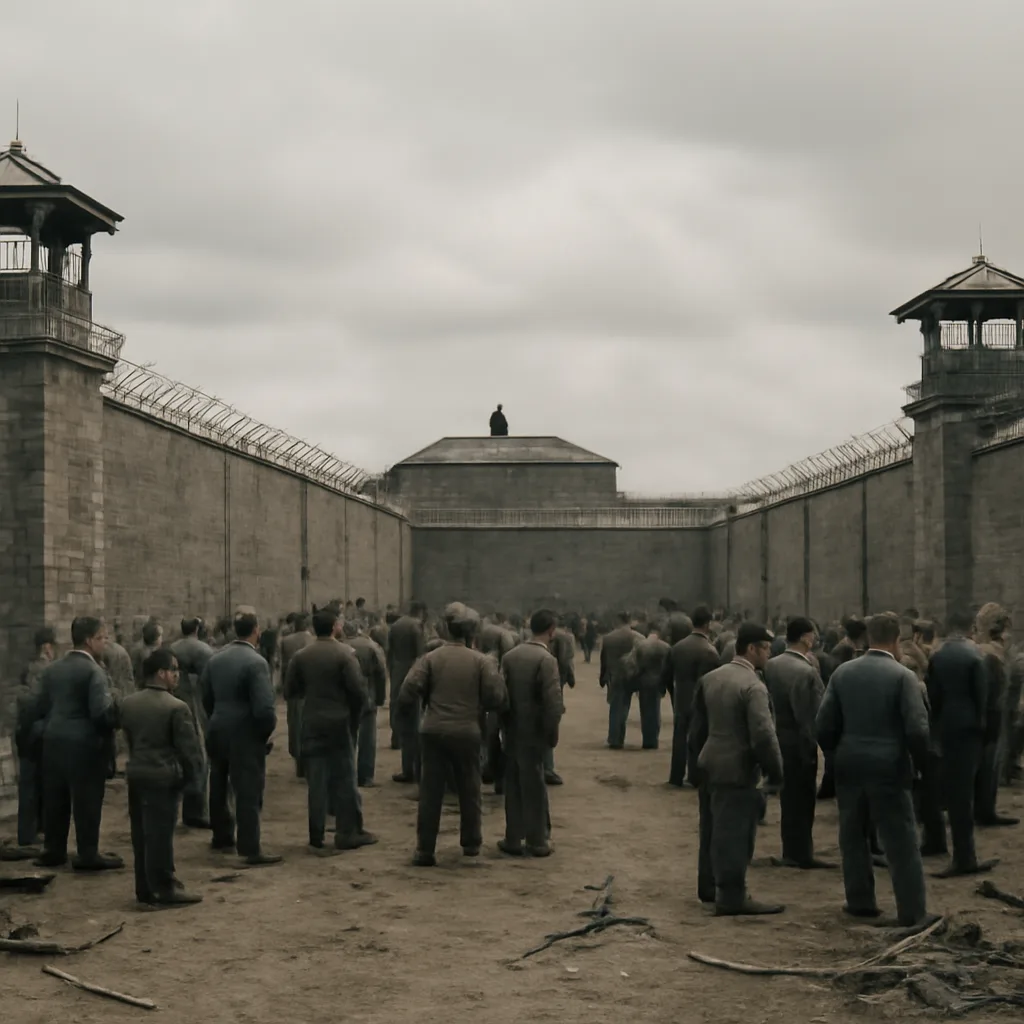
The 1934 Prison Uprising That Shaped Modern Penology
On May 21, 1934, inmates at San Quentin and other U.S. prisons sparked a series of coordinated disturbances that historians regard as the first documented example of a modern prison riot—marked by organized resistance, demands for reform, and a lasting impact on corrections policy.
On May 21, 1934, disturbances at San Quentin Prison in California and related unrest in other American penal institutions crystallized into what scholars commonly call the first modern prison riot. Unlike earlier episodic uprisings, the events of 1934 displayed elements—organized inmate leadership, explicit grievances about conditions, and coordinated action—that later commentators and criminologists recognized as characteristic of modern prison revolts.
Context
Economic strain from the Great Depression, overcrowding, punitive labor regimens, and harsh disciplinary practices produced volatile conditions in U.S. prisons during the early 1930s. Prisoners and reformers increasingly documented abuses: inadequate food and medical care, excessive use of solitary confinement, and brutality by guards. At San Quentin, tensions erupted after reports of guard violence and controversial disciplinary measures, while other facilities experienced similar pressures.
The events
On May 21, disturbances at San Quentin escalated into a sustained confrontation between inmates and authorities. Prisoners seized sections of the facility, held hostages in some accounts, and engaged in arson and clashes with guards. News of the San Quentin disturbance coincided with unrest in other institutions, contributing to a broader perception of coordinated insurrection across the penal system. Contemporary newspapers and later historical analyses treated the May incidents as a turning point because they combined inmate organization, public attention, and a policy response from state authorities.
Significance
Historians and penologists point to several reasons the 1934 disturbances are labeled "modern." First, inmates exhibited identifiable leadership and articulated grievances tied to systemic conditions rather than isolated personal disputes. Second, the incidents generated sustained public debate about corrections policy, prompting investigations, reforms, and changes in prison administration in some jurisdictions. Third, the state's response—deployment of armed forces in some cases, legal prosecutions, and administrative reforms—reflected a shift in how governments managed large-scale prison disorder.
Aftermath and reforms
In the wake of the 1934 disturbances, some states initiated reviews of prison conditions and implemented administrative changes aimed at reducing overcrowding and curbing abuses. The publicity surrounding the events energized reform-minded groups advocating for improved sanitation, medical care, and oversight. However, responses varied widely by state and facility; many reforms were limited or unevenly applied, and punitive measures against participants also increased.
Historiography and caveats
Scholars caution against oversimplifying the label "first modern prison riot." Earlier uprisings—such as 19th-century rebellions and workhouse disturbances—contained elements of collective resistance and organization. What distinguishes the 1934 events is the combination of scale, public visibility, and documented inmate organization within the context of a rapidly changing penal system. Primary-source accounts from the period include newspaper coverage, government reports, and legal records; secondary analyses by historians of corrections and criminal justice place May 1934 in a broader trajectory of penal reform and unrest.
Legacy
The May 1934 disturbances influenced how scholars and policymakers understood prison unrest, contributing to a framework that recognizes inmate agency and systemic causes. The episodes remain a reference point in discussions about prison governance, reform movements, and the balance between security and humane treatment. While improvements followed in some places, persistent challenges—overcrowding, inadequate healthcare, and the use of punitive isolation—underscore that the issues highlighted in 1934 continued to shape penitentiary debates for decades.
Limitations
This summary avoids presenting disputed specifics—such as exact casualty counts or individual responsibilities—because contemporary reports vary and some records remain incomplete. Readers seeking detailed archival documentation should consult contemporary newspaper archives, official state prison reports from 1934, and peer-reviewed histories of American corrections for primary-source citations.